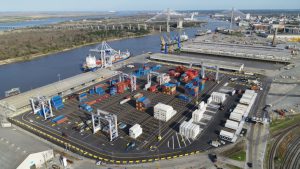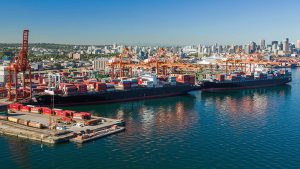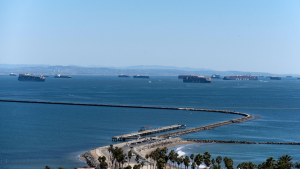
ILWU job action causing terminal gate delays in Los Angeles-Long Beach: PMA

“Significant delays” have hit some marine terminals at the ports of Los Angeles and Long Beach since the middle of last week, the Pacific Maritime Association (PMA) said Monday, in the latest job action by dockworkers linked to ongoing West Coast contract negotiations.

PMA, which represents terminal employers in the talks that have dragged on for more than 10 months, said longshore workers represented by Local 13 of the International Longshore and Warehouse Union (ILWU) have since last Wednesday refused to stagger their meal breaks as required, resulting in periods when no work is being done on the docks.

“As a result, longshore workers at the Ports of LA and Long Beach are not working the terminals between 12 pm-1 pm and 10 pm-11 pm, creating significant delays,” PMA said in a statement. “Because the contract is not in place, there is no option for PMA to arbitrate the matter and require the union to man the terminals continuously without interruption.”

PMA provided media with photographs showing trucks backed up Friday at the Fenix Marine Terminal at the Port of Los Angeles and the ITS Terminal in Long Beach, long queues it said was the result of the job action.

Longshore workers normally take staggered lunch breaks when the coastwide contract is in effect so as not to disrupt cargo handling. Typically, half of the longshore workers take their break from 11 am to noon and the other half from noon to 1 pm so terminal gates remain open for eight consecutive hours.

Two sources close to the contract negotiations told the Journal of Commerce the job action was directed by Local 13 in Southern California over an intra-union matter involving a manning change. Although the change involves only terminals in Los Angeles and Long Beach, it must be included in the coastwide contract for it to take effect.

Neither the PMA nor the ILWU commented specifically on the manning issue. But the fact the PMA statement specifically noted that ILWU Local 13 had stopped complying with the staggered lunch break requirement is telling because it suggests the disruptions in Southern California are not being directed by ILWU’s international leadership.

In a statement Monday, ILWU International President Willie Adams said longshore workers in Los Angeles and Long Beach are working every day according to terms agreed upon with the PMA. “Terminal operators, however, open and close their gates at will,” Adams said.

Meanwhile, the West Coast’s share of imports from Asia continues to erode as shippers divert discretionary cargo to the East and Gulf coasts in a bid to avoid the exact type of disruption taking place in LA-LB. Fresh data from PIERS, a sister product of the Journal of Commerce within S&P Global, shows that the share of Asian imports landing on the West Coast in February slipped to 53.2 percent, down from 54.5 percent in January and 60.4 percent last May when ILWU-PMA contract talks began.

Contract talks at 10 months and counting

PMA and ILWU began negotiations last May, and while some matters such as health benefits have been resolved, there has been no agreement to date on core issues such as automation, wages, and pension benefits. Sources close to the negotiations say they see no indication that progress is being made, despite a joint ILWU-PMA release issued in late February that the two sides expected a contract resolution “soon.”

Beginning last fall, dockworkers in Oakland and the Northwest Seaport Alliance of Seattle and Tacoma have taken similar job actions on a sporadic basis, sources at the port and terminal level have told the Journal of Commerce. However, the PMA had never issued a statement on port-specific job actions until now.

Source:

Mongelluzzo, B. (2023, March 20). ILWU job action causing terminal gate delays in Los Angeles-long beach: PMA: Journal of Commerce. ILWU job action causing terminal gate delays in Los Angeles-Long Beach: PMA | Journal of Commerce. Retrieved March 21, 2023, from https://www.joc.com/article/ilwu-job-action-causing-terminal-gate-delays-los-angeles-long-beach-pma_20230320.html
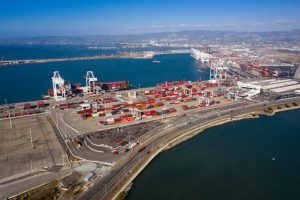
Labour talks casting long shadows over ports on US coasts

Following yesterday’s news that negotiations between US west coast terminal operators and dockers had reached agreement on some issues, the International Longshoremen & Warehouse Union and the Pacific Maritime Association broke their silence to reassure industry stakeholders that talks were continuing.

They emphasised that the long process (negotiations to renew the labour contract began last May) had not disrupted port operations and expressed hope of “reaching a deal soon”.

However, stakeholders have shown impatience, warning it could result in permanent loss of cargo flowing through the west coast ports, which likely impelled the two sides to speak.

They said a tentative deal had been reached on “certain key issues, including health benefits”, and expressed their commitment to resolve the other points “as expeditiously as possible”.

But observers are not convinced this will happen soon. One industry executive said no progress had been made on the critical issue of automation, nor on the controversy over cold ironing at the port of Seattle that derailed talks for months.

The glacial pace also raises concerns about contract talks on the east coast, where the master contract between union International Longshoremen’s Association (ILA) and the US Maritime Alliance (USMX), which represents ocean carriers and terminals, is set to expire next year.

On top of familiar issues like automation, pay and benefits, there is the dispute over work allocation at Charleston’s Leatherman terminal, which has affected operations at the South Carolina port. Since the $1bn terminal opened in 2021, the ILA and Ports South Carolina have been in dispute.

The bone of contention is who is eligible to operate cranes and lift equipment. The ILA argues this has to be performed by union members, in line with the master contract for all east and Gulf coast ports. SC Ports maintains it is not party to that agreement and has a long-standing policy under which non-union state employees work cranes and lift equipment, while ILA members perform all other jobs.

“Each side believes its position is right,” commented an industry executive close to the situation, which has escalated into a legal battle.

The port has enjoyed strong growth, which boosted its throughput to 2.8m teu last year, and it has invested a lot of money to accommodate further growth. Last summer, it strengthened the wharf, brought in taller cranes and improved the container yard at the Waldo Welch container terminal, broke ground on an intermodal facility with a capacity of one million rail lifts in phase one and launched a pool of 13,000 chassis. It has also invested in deepening the harbour to 16 metres.

It is expected that the Leatherman dispute will be on the table in the ILA-USMX contract negotiations, and some stakeholders hope the talks will resolve the issue, sparing everybody a lengthy legal battle that could go all the way to the Supreme Court.

On the other hand, there is concern the issue will complicate the contract negotiations and delay any agreement.

But even without an additional stumbling block, the talks should be challenging – although both sides have expressed “mutual respect and willingness to find a compromise”.

“There are big issues on the table,” said one observer, pointing to the thorny issue of automation. “Ports need the ability to handle more cargo without building new facilities.”

The dispute has caused one move at Charleston so far: At the end of last month, Hapag-Lloyd announced it was shifting its calls to the Wando Welch terminal, after, according to some sources, experiencing some fallout from the situation in Charleston at other US ports.

Source:

Putzger, I. (2023, February 24). Labour talks casting long shadows over ports on us coasts. The Loadstar. Retrieved February 27, 2023, from https://theloadstar.com/labour-talks-casting-long-shadows-over-ports-on-us-coasts/

West coast labour negotiations still stuck over Seattle strife

NEGOTIATIONS between the International Longshore Warehouse Union and the Pacific Maritime Association have remained deadlocked due to jurisdictional disputes in Seattle’s terminal 5, Lloyd’s List understands.

The ILWU and the International Association of Machinists and Aerospace Workers are feuding over who performs certain work in the newly-reopened terminal, and the former is holding up the contract negotiations with the PMA until the situation is resolved, people familiar with the matter told Lloyd’s List.

The ILWU did not respond to a request for comment.

Talks ground to a halt in September when terminal operator and PMA member SSA filed a complaint with the National Labour Relations Board against the ILWU after its dockworkers refused to work a Mediterranean Shipping Company ship that called at the terminal.

The vessel was set to be the first to be plugged into the terminal’s shorepower, and the work of plugging it in — known as cold ironing — had been assigned to the International Association of Machinists and Aerospace Workers.

While talks have resumed since the summer, little progress has been made since negotiations began, Lloyd’s List understands. The sides have not yet began discussing the key issues of wages, benefits, and automation.

The ILWU is trying to get the PMA to help resolve the jurisdictional dispute, one person familiar with the matter said, although the association has no influence on the NLRB, which is an independent federal agency.

The labour board is currently reviewing three different cases tied to the IAM-ILWU terminal 5 spat and will probably make a ruling on all of them around the same time, IAM assistant directing business representative Don Crosatto told Lloyd’s List. He estimated it could take up to six months for the board to decide the cases, but that any decision will likely get appealed by the losing side.

In addition to the cold ironing case, the ILWU has appealed the labour board’s 2020 ruling that assigned maintenance and repair works in the Seattle’s terminal 5 with the machinists’ union, Mr Crosatto said.

He estimated that cold-ironing work in the terminal is worth only about 12 weekly hours, and said that the ILWU’s dispute over it was merely a play to get the whole terminal, which currently employs about 25 mechanics.

Mr Crosatto said the work belongs with the machinists’ union because the terminal’s crane mechanics, who are the only workers suitable to perform it, are represented by them.

“[E]verywhere it’s done, it’s done by the crane mechanics. If they’re ILWU crane mechanics, they do it; if we have the crane mechanics, our guys do it. But its always done by crane mechanics.”

Documents obtained through a freedom of information request by Augusta Saraiva of Bloomberg News show that MSC filed a motion with the NLRB in October to intervene on the ILWU’s behalf in the cold-ironing case.

Mr Crosatto said the filing is an attempt by MSC to placate the ILWU and that several points made in it actually support the IAM’s claims.

“Whoever wrote the letter didn’t think about what they were actually saying,” he said.

According to the filing, MSC is the only carrier whose vessels called at the terminal since it reopened in January 2022.

The labour contract, which covers over 22,000 dockworkers in 29 west coast ports, expired in July, and negotiations on extending it began in May.

The prolonged, fruitless talks have led many shippers to divert their cargo to east and Gulf coast ports amid fears of industrial action. About 85% of the Port of New York and New Jersey’s gains in 2022 are estimated to be cargo diverted from the west coast.

Imports to the west coast declined substantially in the second half of 2022 compared with previous years as a result of the uncertainty.

The largest west coast ports – Los Angeles, Long Beach, Oakland, Tacoma, and Seattle, saw imports drop by a combined 7.9% compared with the second half of 2019.

The port of Los Angeles — typically the nation’s largest port — lost the monthly title to the port of New York and New Jersey from August through November, although it has regained it in December.

From August through December, throughput at the port of Los Angeles dropped below its five-year monthly average. The same was true for Long Beach between October and December.

Source:

Raanan, T. (2023, February 1). West coast labour negotiations still stuck over Seattle strife. Lloyd’s List. Retrieved February 6, 2023, from https://lloydslist.maritimeintelligence.informa.com/LL1143788/West-coast-labour-negotiations-still-stuck-over-Seattle-strife

POLB SEAFARER COVID-19 VACCINE PROGRAM DRAWS TO A CLOSE

NEARLY 12,000 MARINERS AT SAN PEDRO BAY PORTS VACCINATED

A Port of Long Beach COVID-19 vaccination program for mariners aboard cargo vessels calling in the San Pedro Bay will wind down by year’s end after delivering nearly 12,000 shots to sailors.

The successful program operated by the Long Beach Department of Health and Human Services in partnership with the Port and the National Guard offered free, onboard COVID-19 vaccinations beginning in the spring of 2021 for any cargo ships’ crews berthing in San Pedro Bay.

During the program’s 1½-year run, 11,766 crew members on 1,275 ships voluntarily received the one-dose Johnson & Johnson vaccine at no charge. In the Port of Long Beach alone, 5,971 crew members on 684 ships received vaccines. The program will come to an end on Dec. 31.

The innovative program helped protect the health of workers throughout the supply chain, helping to ensure the delivery of essential goods during the pandemic. Long Beach Health and Human Services dispatched mobile COVID-19 vaccination units to visit ships’ crews aboard docked vessels at both the Port of Long Beach and the Port of Los Angeles. The Long Beach Fire Department also helped administer vaccinations when health officials were needed elsewhere.

“We are proud to have sponsored free vaccines for sailors visiting the port. The Port is about more than just moving cargo, it’s about the people who move the cargo and keeping them healthy and safe,” said Port of Long Beach Executive Director Mario Cordero. “We’d also like to thank our Port of Long Beach staff, the Long Beach Department of Health and Human Services, the Long Beach Fire Department and former Mayor and Congressman-elect Robert Garcia for the collaboration and leadership on the ship vaccination program.”

“We are so pleased to have vaccinated so many international seafarers, many of whom had no opportunity to be vaccinated in their home countries,” said Long Beach Harbor Commission President Sharon L. Weissman. “The Long Beach community – the Port, the City, terminal operators and dockworkers – were able to help mariners coming to both our Port and the Port of Los Angeles. Together, we had a global impact in fighting the spread of COVID.”

Source: Port of Long Beach

POLB seafarer COVID-19 vaccine program draws to a close. polb.com. (2022, December 27). Retrieved January 3, 2023, from https://polb.com/port-info/news-and-press/seafarer-covid-19-vaccine-program-draws-to-a-close-12-27-2022/

Port of NY & NJ retains top spot amid nationwide import slowdown

THE PORT of New York and New Jersey has remained the US’ busiest seaport in November, recent figures from the port show.

Despite throughput falling 4.8% year on year, the east coast gateway handled 20.6% more cargo than in in November 2019, and 13.1% more than the port of Los Angeles, which ranked second nationwide.

Moreover, with one month left in 2022, the port handled almost 19% more cargo than it did in all of 2019, highlighting its extraordinary growth since the onset of the COVID-19 pandemic.

From August to November, the ports of Los Angeles and Long Beach saw imports drop 23.8% and 16% respectively from the year-earlier period. Year to date, imports to the ports declined 9.8% and 2.5% respectively.

In contrast, despite two consecutive months of declining volumes, the port of NY & NJ handled 4.6% more cargo between August and November than the same period last year, and volumes have increased by 8.1% so far this year.

US import volumes have been declining from their 2021 highs in the last few months, and November’s figures came within 2.8% of 2019 levels, according to the latest report by supply chain and logistics software provider Descartes.

However, the declines haven’t been distributed evenly across US ports, and those on the west coast – where dockworkers have been working without a contract since July – have borne most of the brunt.

The unresolved labour situation led many shippers to divert cargo eastwards, but an early peak season that led inventories to fill up well ahead of the holidays also took a toll on cargo volumes in the San Pedro Bay.

Defying the nationwide trend, import volumes to east coast ports had maintained year on year growth until recently. But as overall import demand fell, so did the rate of import growth, and aggregated import volumes across the four largest east coast ports declined by 0.2% in October, the first such year on year contraction in 2022.

Imports across the major east coast ports that have reported November totals – Savannah, Virginia, and Charleston – are down 12.7% year on year. November import figures for the port of NY & NJ are not yet available, but they are expected to come in lower than the year-earlier period.

On the Gulf coast, the port of Houston maintained its remarkable growth streak in November, the only major US port where imports increased year on year, although the rate of growth dipped below double digits for the first time since February 2021.

As imports slow down, port congestion and vessel backlogs continue unwinding. Lloyd’s List Intelligence data shows about 32 boxships anchored outside the ports of NY & NJ, Savannah, Houston, Virginia, and Charleston as of mid-day December 29; that figure stood at almost 100 in September.

Source:

Raanan, T. (2022, December 30). Port of NY & NJ retains top spot amid nationwide import slowdown. Lloyd’s List. Retrieved January 3, 2023, from https://lloydslist.maritimeintelligence.informa.com/LL1143446/Port-of-NY–NJ-retains-top-spot-amid-nationwide-import-slowdown

Ocean Network Express acquires terminals in US West Coast

OCEAN NETWORK Express has agreed to acquire a 51% stake in two terminal companies held by its Japanese parents.

Both TraPac LLC and Yusen Terminals LLC—owned by Mitsui OSK Lines and Nippon Yusen Kabushiki Kaisha, respectively—provide container terminal services in Los Angeles, with the YTL also operating in Oakland in the US west coast.

A definite agreement has been signed between the parties, while the deal remains pending regulator’s approval.

The acquisitions are part of the continued efforts by MOL and NYK to integrate their container shipping businesses into ONE.

“The recent disruptions to the supply chain due to the [coronavirus pandemic] have highlighted the importance container terminals play in keeping global trade flowing,” ONE said in a statement.

“The newly acquired container terminals will safeguard ONE’s access to terminal capacity in key and strategic gateways, support its growth ambitions and enhance its service offerings to customers.”

Source: The Lloyds’ List

CMA CGM to acquire two terminals in the growing port of New York and New Jersey

CMA CGM has agreed to buy two “flagship” terminals at the port of New York and New Jersey from Global Container Terminals.

The French liner giant will take control of GCT Bayonne and GCT New York, which have a combined capacity of 2m teu per year.

“While Bayonne terminal has the highest level of automation, the fastest truck turn time in the harbor, the closest ocean access, and an ability to service vessels of up to 18,000 teu, New York Terminal benefits from a highly productive labor force in the Port of New York and New Jersey and connects the dense New York hinterland with direct trucking and intermodal access,” the company said.

The group said it had significant development plans for the terminals, including expanding its combined capacity by up to 80%. The increase will serve the company as it seeks to further grow its shipping line calls in the New York area.

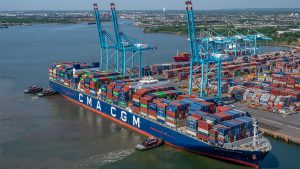
The move is part of CMA CGM’s strategy to develop its terminal business and increase its presence in the US, having also bought back Fenix Marine Services’ terminal in the port of Los Angeles in January.

Overall, the group has investments in 52 port terminals in 28 countries through CMA Terminals and its Terminal Link joint venture, including five terminals in the US.

“The acquisition of GCT Bayonne and GCT New York terminals is a strategic investment for the CMA CGM Group. It reinforces the services we provide to U.S. customers and their supply chain efficiency. It further consolidates our positions in the United States, a major market among the fastest-growing worldwide, and will help us continue our development,” said chairman and chief executive Rodolphe Saadé.

The announcement comes as the port of New York and New Jersey is on track for its strongest year on record, having grown 18.5% in 2021 from the previous year, and 9.4% in the year to date. It has taken the lead as the busiest port in the US in the past three months, overcoming both of its west coast competitors at Los Angeles and Long Beach.

A significant chunk of the port’s growth this year is due to cargo diversions from the west coast, where port congestion and a protracted labour dispute have led disruption-wary shippers to send their freight eastwards. It remains to be seen how much of the diverted cargo will remain in the port of New York and New Jersey and other east and gulf coast ports after the labour situation on the west coast is resolved.

After handling record levels of cargo for 26 straight months, the port of New York and New Jersey showed the first signs of slowing down in October amid a broader trend of declining imports to the US. Throughput declined by 0.5% year-on-year, while imports were down 4%, and the vessel backlog at its anchor has shrunk to average between two and three ships. Still, October’s throughput was 18.9% higher than in 2019, and while spot rates on the Shanghai-New York route were down 65% this year, they were up 12% on the New York-Rotterdam route and 17% on the Rotterdam-New York route, according to Drewry.

The acquisitions, announced late Tuesday, are subject to regulatory approvals.

Source: The Lloyd’s List

Port of Savannah to increase containership handling capacity

THE board of Georgia Ports Authority has approved a plan to renovate and realign the docks in the port of Savannah’s ocean terminal to better accommodate the port’s growing box volumes.

The terminal handles breakbulk and containers, and the transformation is part of a broader effort to turn it into a container-only operation.

The depot will continue containership and breakbulk operations during construction, said GPA chief operating officer Ed McCarthy.

The docks will be rebuilt to provide an additional 2,800 linear feet of berth space that could handle two 16,000 teu containerships simultaneously, which will be served by new ship-to-shore cranes.

The GPA plans to shift most breakbulk operations to the port of Brunswick, where construction has started on 360,00 sq ft of dockside warehousing, according to executive director Griff Lynch.

“Completion of this project will improve our flexibility and allow Georgia Ports to optimise cargo movement, supporting our customers in delivering goods to market efficiently,” he added.

Overall, the project “will bring expanded gate facilities and paving to allow for 1.5m twenty-foot equivalent units of annual capacity,” according to the statement.

The port of Savannah has grown tremendously over the past two years during the pandemic-induced import boom. It handled almost 20% more cargo in 2021 than in 2020, and has grown an additional 7.2% so far this year compared with the year earlier period. Volumes were further buoyed this year by the labour dispute on the west coast that led many disruption-wary shippers to divert their cargo eastwards.

The port logged its busiest month on record in August, handling 575,513 teu, while October (552,800 teu) and July (530,800 teu) were its second and third busiest months, respectively.

The increase in volumes has created a vessel backlog that hovered over 35 boxships during summer, and while it has come down significantly from those highs, Lloyd’s List Intelligence data shows that there were still 23 ships at anchor as of Monday afternoon, the most of any US port.

Port officials expect that volumes will ease as the year ends, and Mr Lynch said that the opening of a new container berth at the port’s Garden City terminal next summer coupled with the declining volumes will help expedite vessel service.

“While we are beginning to see an anticipated market correction, it is important that GPA move forward with projects like the ocean terminal enhancements to accommodate business growth,” said GPA board chairman Joel Wooten. “Through continued infrastructure improvement, we will ensure the free flow of commerce, and our ability to meet expanding customer demand.”

The GPA board has approved $1.17bn in infrastructure investments over the past year, according to the statement.

Source: The Lloyd’s List

Port of New York and New Jersey ends record-breaking run

A STREAK of year-on-year record cargo volumes at Port of New York and New Jersey has ended after 26 months.

The port handled 792,548 teu in October, a slight drop of 0.5% from the year-earlier period, and 5.9% lower than September.

But it remained the busiest in the US, overtaking the ports of Los Angeles and Long Beach for a third consecutive month.

New York and New Jersey’s overall throughput is up 10.6% year to date, while imports are up 10.4% through September (the port has not yet published a breakdown of October figures). However, a shrinking vessel backlog suggests that volumes in the port might be cooling.

Other ports on the east coast have also reported strong figures. After Hurricane Ian reduced the port of Savannah’s throughput in September, it rebounded with its second strongest month on record in October.

The ports of Houston and South Carolina had their best Octobers on record, and Virginia’s throughput was just 30 teu off its October 2021 record. Moreover, in contrast to the port of New York and New Jersey, October throughput at Savannah, Houston, Virginia, and South Carolina rose from September.

Combined, New York and New Jersey and Savannah — the two largest east coast ports — handled slightly more cargo than the San Pedro Bay ports, which traditionally dominate US cargo throughput.

The recent milestone illustrates the headwinds from the protracted west coast labour negotiations that led shippers to increasingly divert cargo eastwards. Imports from China to Los Angeles and Long Beach in October were down 48.0% and 31.6% year on year, respectively, according to supply chain and logistics software provider Descartes.

Despite the strong throughput figures, the broader trend of declining import volumes in the US could be catching up with the east and Gulf coast ports. Imports across the ports have grown by an average of 10.3% so far this year, but presented a mixed picture in October.

While Houston and Charleston recorded double-digit year on year growth, Savannah’s imports rose by a modest 1.2% despite the rebound from September, and Virginia’s imports declined for a second consecutive month.

In addition, the vessel congestion that has impacted the east and US Gulf coasts ports for months is easing, as the National Retail Federation and Hackett Associates project that November imports in the US’ top 10 biggest ports will be down 9% year on year, dropping below 2m teu for the first time since February 2021.

The average number of vessels anchored in the port of New York and New Jersey is down to three after settling in double digits throughout September.

In Houston, the backlog this week was down to single digits after nearing 30 ships in mid-September, Lloyd’s List Intelligence data shows. Port executive director Roger Guenther said there has not been “any slowing in Houston in recent months”. The port plans to implement a container dwell fee early next year to improve cargo fluidity.

Savannah remains the US’ most congested port. Its executive director, Geoff Lynch, said the number of ships anchored is trending downward.

Lloyd’s List Intelligence data showed the backlog consists of about 25 boxships on November 28 after lingering above 30 for much of the past few months.

Source: The Lloyd’s List

Boxship backlog cleared at Los Angeles and Long Beach ports

THE containership backlog at the ports of Los Angeles and Long Beach has petered out after more than two years, bringing an end to one of the most recognisable features of the pandemic-era supply chain crises.

No vessels were backed up at the San Pedro Bay ports on November 21 for the first day since October 2020, according to Kip Louttit, executive director of the Southern California Marine Exchange.

The backlog reached 42 ships in February 2021 before dropping to nine in June 2021 and then peaking in January this year.

“After 25 months, and with concurrence of the Ports of Los Angeles and Long Beach, the Pacific Maritime Association, and the Pacific Merchant Shipping Association, the container ship backup for the ports of Los Angeles and Long Beach has ended,” said Mr Louttit.

The ports have enough labour to handle current volumes and ocean carriers are sometimes delaying vessel arrivals to optimise their operations. It is therefore “time to move into a different phase of operations and declare that the backup has ended,” he said.

The boxship backlog reached a high of 109 vessels this January, removing fleet capacity and sending freight rates skyrocketing in the process, while also causing long delays in deliveries of goods to consumers.

The mounting congestion and protracted labour negotiations between west coast dockworkers and their employers led many shippers to divert their cargo to east and gulf coast ports, shifting much of the backlogs to their anchorages and terminals instead.

As US import volumes slow, those backlogs are also easing, but are still far from resolved.

The ports of Virginia, Savannah, and Houston had a combined total of 40 containerships at anchor on Tuesday night, Lloyd’s List Intelligence data show, of which 27 were in Savannah.

Source: Lloyd’s List