Rail strike Canada 2024: Latest updates on work stoppage

With Canada Industrial Relations Board (CIRB)  imposed a binding arbitration, it ordered the rail employees back to work to end the dispute that shut down the country’s two major railways.

Statement update as below:

CPKC: https://www.cpkcr.com/en/media/TCRC-bargaining-updates

CN: https://www.cn.ca/en/news/2024/08/cn-receives-order-of-binding-arbitration


Canadian ports, liner operators bracing for rail strike impact

Operations at Canada’s West Coast ports are slowing down vessel operations ahead of a potential rail strike that threatens to strand thousands of intermodal containers at terminals already reaching capacity. The country’s East Coast ports can absorb some cargo, but not for a prolonged work stoppage by Canadian rail workers.

As of late Wednesday, no agreement on a new contract has been reached between Canada’s two Class I railroads and the Teamsters Canada Rail Conference (TCRC), which represents over 9,000 conductors, engineers and other trades. In the absence of a new agreement, Canadian National Railway (CN) and Canadian Pacific Kansas City (CPKC) said they would lock out TCRC workers as of Thursday.

A shutdown of the railroads would directly impact Canada’s ports, most of which handle a high percentage of intermodal cargo going into the US. After both railroads started embargoing freight earlier this week, Canada’s major ports and container lines began offering workarounds for shippers and making contingency plans for container backlogs and berth delays.

The Vancouver Fraser Port Authority (VFPA) said in a statement to the Journal of Commerce that ocean carriers are being asked to slow down ships scheduled to arrive at the port to avoid vessel congestion.

Only four ships are at Vancouver’s berths with two vessels waiting to berth, according to the VFPA’s maritime data. Current vessel schedules for Global Container Terminals’ (GCT’s) Deltaport terminal show 20 ships are expected to arrive through Sept. 18. GCT’s Vanterm is expected to receive 11 ships through the same period of time.

Vancouver’s intermodal rail yard is already reaching capacity as measured by dwell time. VFPA data shows that intermodal boxes are sitting for five to seven days on dock, compared with four days in July.

“The impact to the Port of Vancouver will be significant, with approximately two-thirds of all cargo volumes at the port moved by rail, including 90% of international exports,” the VFPA’s statement said. “It took many months to clear the backlog of congestion from the 13-day strike by BC longshore workers in 2023 at the Port of Vancouver, with delayed shipments and overburdened infrastructure struggling to restore normalcy.”

GCT said in a statement to the Journal of Commerce that railcar supply to Vancouver has improved in recent weeks, allowing its Vancouver terminals to work down their backlog. However, GCT said its terminals will start seeing impacts should a strike last longer than a couple of days.

“Our terminals are now fluid, but any rail service outage greater than 48 hours will severely impact the fluidity,” GCT said.

DP World’s Centerm terminal in Vancouver is scheduled for 17 vessel arrivals through mid-September. Its Prince Rupert terminal, which is entirely rail-served, is expected to see 22 ship arrivals through the end of September.

While a potential strike would mean containers cannot be brought into terminals, cargo owners would be permitted to retrieve cargo that reached the destination terminal. For now, any work action would not impact terminal workers who load cargo onto trucks, or the gate operators letting drivers in and out of the terminal. Any cargo en route when a potential strike begins at 12:01 a.m. on Thursday would be held where it is located until the labor dispute is resolved. Part of the wind down in operations includes getting as much cargo to destination terminals on Wednesday or holding the cargo at official crew change locations rather than unsecured locations.

Ocean carriers weigh options

Ocean carriers have yet to completely halt liner services in Canada but are preparing workarounds for a rail strike. Maersk said Wednesday it will still accept bookings to Canadian ports along with inland destinations, but it’s reviewing “contingency actions.”

Hapag-Lloyd said Wednesday it will not take any export bookings from US inland destinations that are routed through Canada. For any intermodal cargo destined for Canadian ports, Hapag-Lloyd said it would provide other workarounds such trucking, subject to a $400 fee and the cost difference for the surface transportation leg.

CMA CGM is telling shippers to expect vessels to be diverted to US ports and plans to halt bookings for inland destinations served by rail, according to a report from ContainerXchange.

A US-based ocean carrier executive told the Journal of Commerce that he expects container lines will have to divert vessels or completely halt bookings to Western Canada because Vancouver and Prince Rupert will not have enough room to store intermodal cargo. Canada’s East Coast ports, however, have room to handle stranded intermodal cargo for about two weeks before they hit capacity.

“West Coast ports are operating at high capacity and have much less flexibility, essentially the ships alongside now at the start of a strike will be the last vessels worked,” the executive said.

The Port of Montreal’s overall container volumes are down slightly this year, providing it with buffer capacity to handle stranded intermodal containers. In addition, the Montreal Port Authority (MPA) said in a statement to the Journal of Commerce that it is looking at longer gate hours so more trucks can move intermodal cargo out of its terminals.

However, the MPA said that certain rail-served markets such as Ontario and the greater Toronto region “will face major challenges” if a strike commences.

A spokesperson for the Port of Halifax told the Journal of Commerce that while it is still receiving vessels, it expects “significant impacts if we have a rail service interruption.”

“Rail serves approximately 60% of containerized cargo business at the Port of Halifax,” the spokesperson said. “Canadian gateways have already seen a reduction of volumes due to the uncertainty around rail operations. We encourage all parties to work towards a resolution.”

Customers who use CN and CPKC outside Canada will not be impacted because the engineers and conductors are not TCRC members. Routes such as CPKC’s Mexico Midwest Express, the Falcon Premium between Mexico and Detroit, and CN’s trains between the US Gulf Coast and US Midwest will operate normally.

Source:

Angell, M. (2024b, August 21). Canadian ports, liner operators bracing for rail strike impact. Journal of Commerce. https://www.joc.com/article/canadian-ports-liner-operators-bracing-for-rail-strike-impact-5708554

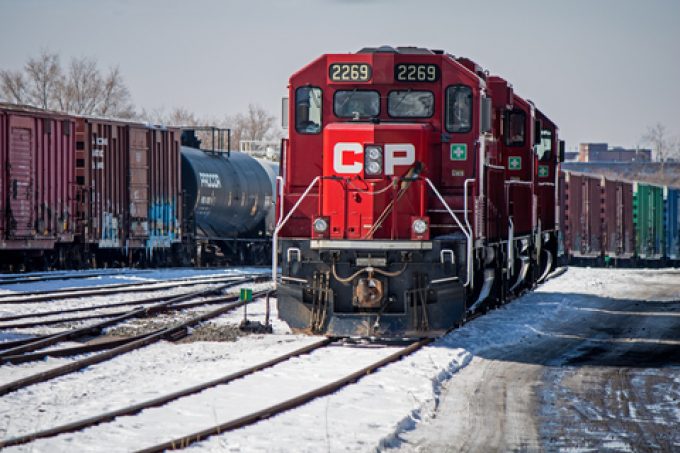
Canadian rail strike set for Thursday

Canada looks set to be hit by industrial action at its two main freight rail companies from this Thursday as employers and employees made their positions clear over the weekend with no deals in sight over labour agreements.

Canadian National Railway formally notified the Teamsters union in Canada on Sunday that it would start locking out union workers early on Thursday.

“Unless there is an immediate and definite resolution to the labour conflict, CN will have no choice but to continue the phased and progressive shutdown of its network which would culminate in a lockout,” it said in a statement.

“Despite negotiations over the weekend, no meaningful progress has occurred, and the parties remain very far apart.”

Canada’s other main rail operator, Canadian Pacific Kansas City, has already told the Teamsters union it will start locking out members early on Thursday.

The Teamsters also issued a 72-hour strike notice to CPKC late on Sunday.

“Unless parties reach last-minute agreements, a work stoppage will occur at 00:01 on Thursday, August 22,” it said in a statement.

From tomorrow, CPKC has said it will stop all shipments that start in Canada and all shipments originating in the US that are headed for Canada, the railroad said.

CN, meanwhile, has barred container imports from US partner railroads.

Both rail companies’ labour agreements expired at the end of 2023 and talks have been ongoing since.

Both companies have said that their trains running in the US will continue to work.

Details please refer to Splash news.

Source:

Chambers, S. (2024, August 19). Canadian rail strike set for Thursday. Splash247. https://splash247.com/canadian-rail-strike-set-for-thursday/

Ottawa rejects call to head off Canada rail work stoppage

The decision by Canada’s labor minister to not intervene in contract talks between the country’s Class I railroads and unions has upped the risk of a work stoppage within the next week, and both railroads have stopped accepting containerized freight in response.

Labor Minister Steve MacKinnon declined a request by Canadian National Railway (CN) to invoke a labor law the railroad had argued would “secure industrial peace” in contract talks with Teamsters Canada Rail Conference (TCRC), his office said in a letter sent Thursday.

CN made the request in early August, asking MacKinnon to force both sides to accept an agreement negotiated through binding arbitration because the union “has not engaged meaningfully at the negotiating table.”

In the letter, MacKinnon’s office said it’s up CN to bargain with the union, but that Canada’s mediation services would be able to help.

“It is your shared responsibility — Canadian National Railway Company and the Teamsters Canada Rail Conference — to negotiate in good faith and work diligently towards a new collective agreement,” the ministry wrote.

In November 2022, US President Joe Biden intervened to prevent a nationwide strike by union rail workers and brokered a tentative deal that was eventually approved by rank-and-file.

Phasing shutdowns

In response to the letter, CN said Thursday it has begun a phased shutdown of its Canadian network, adding that if no deal is struck with TCRC, it will lock out employees on Aug. 22. CN continued to argue that binding arbitration is necessary because it has made four offers to TCRC since January without a counteroffer.

“A prolonged shutdown of rail operations will have a significant impact on supply chains: creating delays, possible shortages and increasing costs,” CN said in a statement. Earlier this week, the railroad informed shippers that it would not be accepting new loads of hazardous materials.

On Friday, CN will extend the embargo to include intermodal cargo from several origins and destinations. That includes dry containers going from or to the ports of New York and New Jersey and Philadelphia, containers it interchanges with CSX Transportation that originate in the Ohio Valley, interchange cargo with Norfolk Southern Railway to the US West and East Coasts, and its joint Canada-US-Mexico service with Union Pacific and Ferromex.

The potential lockout would come just 13 days after the Canadian Industrial Relations Board (CIRB) issued a decision that railroad services would not be considered essential to public safety and health.

Canadian Pacific Kansas City (CPKC) on Thursday likewise said it will lock employees out on Aug. 22 if a deal is not reached. CPKC also said it would stop accepting new shipments of hazardous materials, though it will allow non-hazardous intermodal containers to be brought to its terminals until those facilities are full.

The largest impact of a lockout would likely be seen at the Port of Vancouver, Canada’s busiest container port, Scott Shannon, vice president of CH Robinson, told the Journal of Commerce. He said Vancouver already has a backlog of roughly 13,000 intermodal containers from previous rail slowdowns due to a port strike and wildfires in 2023 that disrupted train service.

Ships coming into Vancouver should still be able to discharge, and shippers should be able to transload freight to trucks, Shannon noted. However, he warned that if containers are not retrieved from Vancouver’s terminals in a timely manner, the port will become congested quickly given the absence of regular train service.

“The rail ramps there have been almost continually congested since the summer of 2023,” Shannon said. “Vancouver just hasn’t been able to catch a break or catch up.”

The Port of Prince Rupert receives the vast majority of its cargoes via CN.

Source:

Angell, M. (2024, August 15). Ottawa rejects call to head off Canada rail work stoppage. Journal of Commerce. https://www.joc.com/article/ottawa-rejects-call-head-canada-rail-work-stoppage_20240815.html

Frustrated shippers caught in Canadian rail congestion call for help

Predictions that congestion at rail yards in Canada’s interior would ease this month and next are not playing out so far, prompting frustrated importers and forwarders to ask for government intervention.

The problems are most pronounced at rail hubs around Toronto and Montreal.

“The Montreal rail terminal situation is still bad to very bad,” reported Karl-Heinz Legler, general manager of Rutherford Global Logistics, adding that the forwarder’s Toronto office describes the situation there as even worse.

Truckers have waited up to nine hours to collect cargo in Montreal, sometimes arriving at the terminal having been told containers are available, only to find they are still on the rail cars, he said.

Congestion disrupted intermodal flows to Canada’s large markets throughout the summer. Industry executives predicted improvement in autumn but this has failed to materialise so far, despite a decline in waterborne imports from Asia.

According to one forwarder, Canadian Pacific has initiated an embargo for containers from the west coast to Montreal for most of the last week of November.

In August, Canadian National (CN) set up relief container yards around Toronto and Montreal, pledging to move boxes as close as possible to their destinations, and charged customers shuttle fees ranging from $300 to $550.

According to the Canadian International Freight Forwarders Association (CIFFA), the situation has been exacerbated by government efforts to help reduce congestion at west coast container gateways (notably Vancouver), which only served to push the problem to inland rail facilities already struggling to cope with volumes.

Now, forwarders and importers are looking to the authorities for help to fix the problem. Bruce Rodgers, executive director of CIFFA, has asked federal agencies like Transport Canada and the Canada Border Services Agency to help.

“Recent decisions by government to clear the backlog at the Pacific gateway only resulted in a worsening situation. Without foresight, decisions were made, not to work on a solution to the problem, but to shift the burden inland.”

Trucking interest groups have also called for government intervention.

Flows from the port of Vancouver have suffered several massive disruptions from severe weather over the past couple of years, which prompted Ottawa to set up a task force to address supply chain issues.

Transport Canada released a report on supply chain problems in early October, in which it suggested policies – from addressing the labour shortage to supply chain data flow and digitisation – and also proposed the creation of a supply chain office to concentrate Ottawa’s approach to transport issues.

Industry bodies have welcomed the recommendations, but companies argue there is a need for immediate measures to deal with current issues. Their frustration with lack of improvement in supply chain flows is aggravated by storage charges levied by the rail companies.

“Trucking companies have no choice but to pass on increased operating costs and have to refuse, in many instances, container haulage because their equipment is tied up at terminals,” said Mr Legler.

“Freight forwarders often get stuck between clients refusing to pay extra charges beyond their control and there are horror stories of uncollectable charges for some, exceeding C$100,000 (US$73,484),” he added.

According to forwarders, the rail companies have not shown any leniency on those charges, a stance that angers importers and forwarders in light of the railways’ profits. CN tabled record results for the third quarter on 25 October reporting a 26% increase in revenue and a 44% surge in operating profit.

Source: THE LOADSTAR