
Hong Kong liner rapidly builds up links with Russia

Yesterday, Splash detailed the main container names operating in and out of Russia, with a slew of new capacity entering the region as many global carriers have exited in the wake of war with Ukraine.

One of the most ambitious new players is Hong Kong-registered OVP Shipping, formed in late 2020. OVP launched a first liner service linking China with Vladivostok in the middle of last year. It has seen launched a China – Novorossiysk service in mid-November, while, according to Alphaliner, its first China to St Petersburg service is underway now, and will become a fortnightly offering from next month when more chartered-in tonnage joins the OVP fleet. Alphaliner lists the Hong Kong carrier in 61st spot in its top 100 liner rankings.

While much has been written about the importance of Dubai to Russian-linked shipping operations in the wake of sanctions following the invasion of Ukraine, another important shipping enabler for Moscow has been the maritime hub of Hong Kong.

Box rates in and out of Russia remain “highly elevated” according to Linerlytica.

“New capacity continues to flow into the Russian trade with the latest newcomers Safetrans, Torgmoll/New New, Reel Shipping and OVP Shipping adding ships to the trade as congestion at the Russian Far East gateways of Vladivostok and Vostochny have generated demand for new services from Asia to the Black Sea and Baltic gateways of Novorossiysk and St Petersburg,” analysts at Linerlyica noted in its most recent weekly report describing the Russian freight scene as “thriving”.

Source:

Chambers, S. (2023, March 1). Hong Kong liner rapidly builds up links with Russia. Splash247. Retrieved March 2, 2023, from https://splash247.com/hong-kong-liner-rapidly-builds-up-links-with-russia/

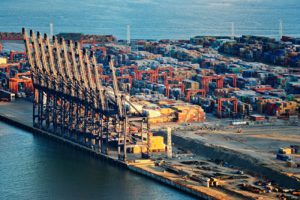
China eases Covid rules at ports

CHINA has relaxed its coronavirus restrictions at ports, including new rules that benefit crew changes, as part of a broader policy U-turn that will see the country co-exist with the virus.

In a newly published guideline for domestic port operations, the transport ministry has removed the mandatory requirement of nucleic acid tests for port workers, except for those on posts exposed to high risk of infection.

The positions include pilots, inspectors or stevedores that need to perform their duties by boarding international trading vessels.

Vessels calling at Chinese ports are no longer required to provide the digital health code and 48-hour virus test results of the crew on board before arrivals.

The new rule is expected to make vessel docking and crew rotation easier in China, according to shipmanagement sources.

China has also opened visa application for seafarers from eastern European countries, allowing them to enter the country and take over newbuildings via a process that involves seven days of quarantine, they said.

“This was not possible a few months ago,” said a Hong Kong-based shipmanager.

However, not all ports have followed Beijing’s order.

One executive from a Hong Kong-based tanker company said crew are still required to test negative before being allowed to enter ports in China.

“Beijing is moving fast,” said the person. “I think it will take some time for all ports to follow suit.”

And the changeover of foreign crew at Chinese ports continues to be a tall order.

Seafarers from some big crew nations, such as the Philippines, are unable to obtain Chinese visa, while the ban on repatriation of foreign crew remains largely in place, said sources.

China is one of the few countries in the world that still impose strict cross-border travel restrictions, including compulsory quarantine in designated hotels, for overseas arrivals.

That said, there are unconfirmed media reports which suggested Beijing was considering a reopening of its border early next year.

The transport ministry has also requested ports and pilot stations to establish contingency plans and reserve duty that can keep port operations normal in the event of an infection flare-up.

Source: The Llyod’s List

Decaying demand sees China’s ports building empty container mountains

Amid a “very quiet” end-of-year shipping season, empty containers are piling up at Chinese ports.

According to Alice Tang, China-Europe land transport planner at ITS Cargo, there has been a complete reversal of the severe equipment shortages of last year’s pandemic-induced cargo boom.

“Empty containers are piling up at ports including Guangzhou, Yantian, and Shekou,” she told The Loadstar.

“Some say they are already piling up on roads, while others say 90% of box spaces are occupied. Trailer drivers used to bring loaded containers to the terminal and pick up empty containers for the next load. Now, most of the drivers no longer pick up empty containers because there is no ‘next shipment’.

“Last year, forwarders were standing in a queue for the whole night to fight for an empty container, and joking that containers were probably worth more than their weight in gold.”

Ms Tang said Q4 had been “very quiet” and rates were “so low”, compared with 2021.

“We’ve been quoted $1,550 per feu from Shanghai to Gdansk, and less than $1,000 per teu for other China-Europe lanes. Lots of people are coming to ask me whether we have goods to ship.”

According to Linerlytica, freight rates from the Far East to Europe, the Middle East and Africa have continued their downward spiral and suffered the sharpest falls last week, amid “volume weakness across all tradelanes”.

The analyst added: “Carriers are pushing for a new round of general rate increases in December, but they are unlikely to succeed if surplus capacity is not removed. Contract rates for the 2023 season appear certain to fall by as much as 80%, as they mirror the drop in spot rates. The SCFI is already down by 73%, year on year.

“Although charter rates appear to have settled over the past week, there is still excess supply, with an abundance of sublet units available from carriers that are stuck with surplus tonnage. More ships to enter lay-up have appeared, with Matson and Pasha already mothballing their ships.”

Meanwhile, Ms Tang said congestion at European warehouses was also a challenge, explaining: “For e-commerce goods, unloading is hard as there are limited available slots in EU warehouses. They’re all full, as retailers increased stock earlier in the year because they were afraid of disruptions and delays.

“But now they cannot sell it all, as consumers reduced spending on shopping this year. Even Q1 next year may not be good.”

Source: theloadstar

China COVID rules make deep cuts in Hong Kong cross-border container volumes

Published Date: 2022-09-02

Hong Kong faces losing all its cross-border container traffic with Shenzhen and Guangdong Province if Chinese authorities continue to impose COVID-19 restrictions on trucking and feeder operations, the head of Hong Kong’s terminal operators’ group has warned.

Jessie Chung, chairwoman of the Hong Kong Container Terminal Operators’ Association, said the volume of containerized exports trucked from Guangdong Province for shipment through Hong Kong port has slumped since February when China imposed COVID-19 controls on trucking and barge operators. The association represents four of Hong Kong’s five terminal operators, including Hutchison’s Hongkong International Terminals, Cosco-HIT Terminals, Modern Terminals, and Goodman DP World.

“The situation worsened in June and July,” Chung told JOC.com Tuesday. She said the volume of export containers transported by cross-border truck to Kwai Chung container terminal fell 48 percent in June and 58 percent in July compared with a year earlier.

Hong Kong government figures show a year-on-year average monthly drop of 60 percent in total freight imports by truck from South China, to just 400,000 tons between February and June.

Cargo volumes moved to Hong Kong by barge from South China show an average monthly drop of 24 percent to about 3 million tons since January compared with last year.

“We have to liaise with Shenzhen and Guangdong authorities, otherwise we will lose all our cargo,” Chung said.

But Chinese authorities have rebuffed attempts by Hong Kong government officials for an agreement to ease restrictions on cross-border truckers and barge operators.

“There have been numerous meetings and plenty of emails and other communication on the cross-border trucking and barge operation issues,” Roberto Giannetta, chairman of the Hong Kong Liner Shipping Association, told JOC.com. “But in terms of progress, we can say there is zero improvement.”

No incentive for China to ease restrictions

Under the controls introduced in March, cross-border truck drivers are banned, while container-laden chassis can only be picked up and dropped off at designated Hong Kong-Shenzhen border crossings. Barge crews must also live on their vessels for extended periods without shore leave.

“Shenzhen has everything to gain by maintaining the existing obstacles — cargo flow through Hong Kong is being shifted to Shenzhen ports,” a senior shipping executive told JOC.com. “There is, therefore, very little motivation for them to ease restrictions that would restore smooth transport of containers through Hong Kong port.”

Chung pointed out the district government in Nansha, about 60 miles west of Hong Kong, has recently introduced a raft of incentives to encourage shippers to move cargo through Nansha, part of the Guangzhou port complex. These include cash bonuses for shippers who move into the district and to firms who increase freight volumes, especially reefer cargo.

Source: JOC news