
Post-strike recovery for western Canadian ports measured in weeks, not days: sources

It could take into September before the ports of Vancouver and Prince Rupert fully recover from the 13-day dockworker strike that idled both western Canadian ports and disrupted trans-Pacific sailing schedules, industry observers told the Journal of Commerce Friday.

The strike ended Thursday when the International Longshore and Warehouse Union (Canada) and the British Columbia Maritime Employers Association agreed on terms for a tentative four-year contract.

But forwarders, shipping lines and trucking interests say they are advising their customers it will take weeks — possibly into September — for operations at Prince Rupert and Vancouver — Canada’s largest port — to return to normal.

The rule of thumb in the port and marine terminal industry is that for each day a port is shut down, it takes three to five days to recover, Julia Kuzeljevich, director of policy and communications at the Canadian International Freight Forwarders Association, told the Journal of Commerce.

“Maybe end of summer, early September,” Kuzeljevich said when assessing the timeline for a full recovery of the ports.

Views on the recovery period vary, but it is clearly not a matter of days.

“We look at it in weeks — three weeks to recover for every week of [a] shutdown,” an executive at a carrier that calls at Vancouver said.

Given the fact that eastbound trans-Pacific volumes have been lighter than usual and Canada’s agricultural exports are not yet in high season, the time for recovery may be a bit shorter, the source said.

Still, David Bennett, chief commercial officer at Canadian forwarder Farrow, said he would be “surprised” if the recovery period is only four or five days per day of shutdown. Bennett said the actual recovery could take as long as 10 days per day of shutdown — more than four months — given how dependent Vancouver and Prince Rupert are on shipping containers via rail to their major hubs in Toronto, Montreal and Chicago.

He noted that Canadian railroads issued temporary bans on sending trains to the West Coast from day one of the dockworker strike, and it will take some time to reposition trains and cars to the ports.

“We anticipate it will be weeks before there is a return to normalcy,” Bennett said.

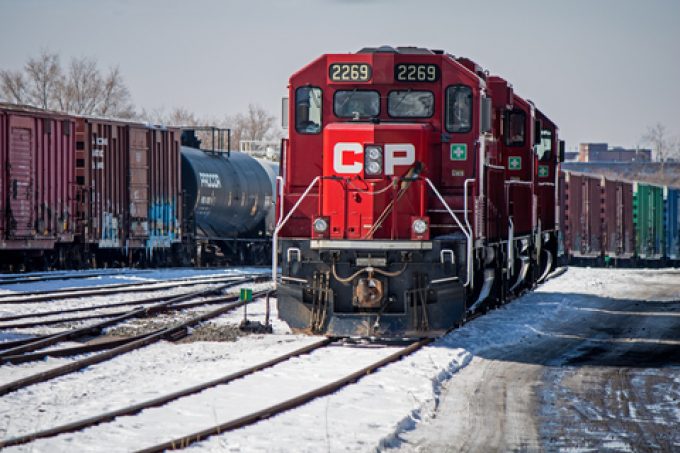
CPKC expects ‘prolonged’ recovery

Canadian Pacific Kansas City Railway (CPKC) said Friday it is working closely with customers and marine terminals to clear the traffic backlogs as quickly and efficiently as possible. However, “given the duration of this strike — nearly two weeks shutting down most terminals at Canada’s largest port — supply chain recovery is expected to be prolonged,” a CPKC spokesperson said.

A Canadian National Railway (CN) spokesperson said CN is “now focused on implementing its orderly resumption plans to resume its movements to and from the ports of Vancouver and Prince Rupert.”

David Earle, president and CEO of the British Columbia Trucking Association (BCTA), said two-thirds of the containers moving through Vancouver leave by rail, and clearing that backlog while receiving new inbound containers will take “weeks and weeks.” According to the Port of Vancouver website, rail container dwell times at all four of its container terminals were more than seven days, a level that is normally not reached.

As for truck gate traffic, Earle said BCTA members did not report any serious bottlenecks early Friday, although Vancouver did not reopen until Thursday’s evening shift.

A spokesperson at the Vancouver Fraser Port Authority said the port will apply a priority-based anchorage allocation system to balance the needs of all business sectors and commodities. Fourteen container ships were backed up outside of Vancouver when the strike ended Thursday.

“Recovery measures include close collaboration and monitoring to ensure port resources are assigned to best support time-sensitive cargo movement and ensure equitable distribution of shared resources,” the spokesperson said.

A spokesperson for the Prince Rupert Port Authority said operations there resumed Thursday evening and continued on Friday’s day shift, with both berths at the Fairview Container Terminal expected to be occupied.

“Operations have ramped up,” the spokesperson said. “The terminal is expecting to depart additional trains to begin the process of clearing backlogged cargo.” In addition to the two vessels at berth, three additional container ships were holding offshore Prince Rupert.

Source:

Mongelluzzo, B. (2023, July 14). Post-strike recovery for Western Canadian ports measured in weeks, not days: Sources. Journal of Commerce. https://www.joc.com/article/post-strike-recovery-western-canadian-ports-measured-weeks-not-days-sources_20230714.html
Western Canada port strike ends after deal reached on tentative four-year contract

The 13-day longshore strike that hit the Western Canadian ports of Vancouver and Prince Rupert ended Thursday after the International Longshore and Warehouse Union (ILWU) Canada and waterfront employers reached a deal on a tentative four-year contract.

The end of the strike came less than two days after Canada’s Minister of Labour ordered the federal mediator overseeing negotiations between the union and the British Columbia Maritime Employers Association to provide recommendations for a settlement. Those recommendations were presented to both sides on Wednesday, and they had 24 hours, or late morning Pacific time Thursday, to accept or reject the proposed terms. Rejection by either side would have forced the matter into the hands of the Canadian Parliament.

“The tentative agreement is subject to ratification by both parties, and subsequently, details of the agreement will not be released at this time,” the BCMEA said in a statement.

It added that it was “working closely with ILWU Canada and their locals and supply chain partners to safely resume operations as soon as possible.”

Marine terminals at Vancouver and Prince Rupert were scheduled to reopen for Thursday’s evening shift.

ILWU Canada was not immediately available for comment.

Working to restore terminal operations

The strike caused multiple ships to divert from Western Canada to Seattle and Tacoma, while also prompting at least two blank sailings. It also created a vessel backlog off Vancouver and Prince Rupert. There were 14 container ships at anchor or offshore at the Port of Vancouver Wednesday, according to the port’s website.

The Prince Rupert Port Authority said in a statement Thursday two of its seven terminals — DP World Prince Rupert’s Fairview Container Terminal and Drax’s Westview Wood Pellet Terminal – were “directly impacted” by the strike. PRPA added that five vessels are waiting at anchor or at sea to discharge at those terminals.

“PRPA, its terminal and rail supply chain partners and local labor will be working closely to re-establish fluidity and productivity so that we can begin to swiftly and effectively recover operations at the Port of Prince Rupert,” it said.

BCMEA said it “regrets the significant impact” the strike had on workers, customers and the Canadian economy. Earlier this week, the group said an estimated C$800 million of cargo was being disrupted daily by the longshore strike, representing 25% of the country’s total traded goods each day.

“We must collectively work together to not only restore cargo operations as quickly and safely as possible but to also rebuild the reputation of Canada’s largest gateway and ensure supply chain stability and resilience for the future,” BCMEA said.

Source:

JOC Staff. (2023, July 13). Western Canada port strike ends after deal reached on tentative four-year contract. Journal of Commerce. https://www.joc.com/article/western-canada-port-strike-ends-after-deal-reached-tentative-four-year-contract_20230713.html

Trans-Pacific carriers altering port rotations to avoid strike-hit Vancouver

Trans-Pacific carriers are changing schedule rotations so that US-bound cargoes can be unloaded in Seattle-Tacoma rather than Vancouver and will divert even more vessels as the strike by the International Longshore and Warehouse Union (ILWU) Canada enters its second week, sources said Monday.

Meanwhile, vessel backlogs are building outside of Vancouver and Seattle-Tacoma, although the backlog changes constantly because additional vessels are arriving in the Pacific Northwest almost every day. According to the Vancouver Fraser Port Authority website, 14 container ships were at anchor or offshore of Vancouver on Monday.

Forwarders and a terminal operator told the Journal of Commerce at least six container ships that had been scheduled to call in Vancouver had been diverted to Seattle-Tacoma as of Monday. The ocean carriers make the final decision as to where vessels will rest at anchor as they await resumption of cargo handling in Vancouver.

The National Retail Federation on Friday said the ongoing longshore strike at the ports of Vancouver and Prince Rupert should not have a “major impact” in the United States, but could still affect some retailers that move merchandise through Western Canada.

Vessel rotations to the North American Pacific Northwest often have Vancouver as the first port of call before the ships proceed to Seattle-Tacoma, so Vancouver-bound containers are stowed on the top rows of the vessels, a terminal operator told the Journal of Commerce. Since the ILWU in the US announced last week that it will boycott Canadian-destined cargo in a show of support for ILWU Canada, longshoremen in Seattle and Tacoma must remove Canadian-destined containers first in order to access the US-bound boxes. Then they reload the Vancouver containers onto the vessels.

No face-to-face talks Monday

Meanwhile, contract negotiations between ILWU Canada and the British Columbia Maritime Employers Association (BCMEA) were not held on Monday, although the parties “continue to engage with the federal mediators,” according to a source familiar with the negotiations.

ILWU Canada launched its strike on July 1. Both sides remain far apart over two key issues — wages and a demand by ILWU Canada to extend its jurisdiction over maintenance work.

Employers offered a 14% wage hike over a four-year contract, while the union is seeking a 17% increase over a two-year contract, plus a lump sum payment of $8,000, according to a source familiar with the negotiations.

Source:

Mongelluzzo, B. (2023, July 10). Trans-Pacific carriers altering port rotations to avoid strike-hit Vancouver. Journal of Commerce. https://www.joc.com/article/trans-pacific-carriers-altering-port-rotations-avoid-strike-hit-vancouver_20230710.html

Shipping industry braced for extended strike at BC ports

The container shipping industry in Western Canada is bracing for the possibility of an extended strike at the ports of Prince Rupert and Vancouver after longshore workers went on strike Saturday morning as threatened over a contract dispute.

The ports are adjusting operations to mitigate cargo buildup as both sides remain far apart on how to best fill existing heavy-duty maintenance jobs and whether the union’s remit should expand to other types of maintenance jobs at facilities, according to two sources close to the matter.

The Canada affiliate of the International Longshore and Warehouse Union and waterfront employers also face a wide divide on what they’ll accept in salary increases, paralleling the major stumbling block US West Coast employers and longshore labor finally overcame in announcing a tentative deal on June 15 after more than a year of negotiations.

Canadian shippers moving cargo through the British Columbia ports have few options for diversions. The US West Coast longshore union on Thursday signaled its solidarity in a letter to its Canadian counterpart. The International Longshoremen’s Association, which handles cargo on the US and East Coasts, went a step farther, pledging Wednesday to not handle any diverted cargo from Vancouver and Prince Rupert. Through connecting rail networks, US importers and exporters also ship goods through the British Columbia ports and have more alternative routing options.

After ILWU Canada workers began a strike at 8 a.m. Pacific time on Saturday, the Vancouver Fraser Port Authority said to mitigate backlogs it was adjusting how it directs and manages anchorage. For example, vessel anchorages in the inner harbor, where DP Centerm and GCT Vanterm operate, are now limited to 48 hours. Average rail dwell times at Vancouver marine terminals were under five days, according to port authority metrics, reflecting generally fluid cargo flow before containers stopped moving Saturday morning.

Late night bargaining sessions on Thursday and through Friday night between the Canada ILWU and employers, with from the assistance Federal Mediation and Conciliation Service, failed to produce a contract agreement to replace the one that expired at the end of March. The ILWU filed a 72-hour strike notice with the federal government on Wednesday.

Canadian West Coast employers locked out the ILWU for less than 24 hours in May 2019 after an impasse in contract negotiations. Semi-automation, centered on the then new rail project at GCT Deltaport, frustrated negotiations, and now color current talks due to the prospect of some level of automation at a planned C$3 billion (US$ 2.2 billion) Vancouver terminal, Robert Bank Terminal 2.

Federal Labor Minister Seamus O’Regan on Saturday tweeted that mediators were still at the table, adding that the Trudeau government “cannot emphasize this enough — the best deals for both parties are reached at the table.”

All eyes on Ottawa

The government took a similar approach in 2021 to Montreal port strikes, signaling support for both sides to work out their differences through negotiation and praising the merits of collective bargaining.  Parliament passed back-to-work legislation after four weeks of sporadic port disruption at Montreal, ending the strike and forcing an arbitrated contract.

With Parliament out of session and unable to potentially pass back-to-work legislation, the pressure is on the Trudeau government to use its political capital to force a deal between ILWU Canada and the British Columbia Maritime Employers Association. Prime Minister Justin Trudeau is generally viewed within the Canadian shipping industry as having acted too slowly — and weakly — when containerized supply chains were significantly disrupted over the last three years.

The stakes are high this time, given the size of Vancouver and Prince Rupert, the country’s largest and third-largest ports by volume, respectively. Vancouver and Prince Rupert handle more than C$800 million (US $604 million) in trade daily, equating to a quarter of all of Canada’s trade in goods, according to the BCMEA.

Canadian industry on Wednesday urged the government to act, though, it expressed its support for collective bargaining. Canada’s supply chains are already fragile and the strike will ripple through agriculture to manufacturing industries, while consumer and businesses grapple with inflation, wrote Robin Guy, vice-president and deputy leader of government relations at the Canadian Chamber of Commerce and David van Hemmen is vice-president at the Greater Vancouver Board of Trade.

“We are seeing signs that goods destined for Canada are already being routed to other ports, adding costs and increasing the environmental footprint of trade, all to Canadians’ detriment,” the duo wrote in the Globe and Mail.

Source:

Szakonyi, M. (2023, July 2). Shipping industry braced for extended strike at BC Ports. Journal of Commerce. https://www.joc.com/article/shipping-industry-braced-extended-strike-bc-ports_20230702.html

ILWU Canada plans to strike British Columbia ports on Saturday

Update with comments from OEC Chief Executive Marc Bibeau

Dockworkers on Canada’s West Coast plan to strike Saturday, saying they were “left with no choice” after failing to make progress during recent negotiations with maritime employers. The planned strike, which has no defined end date, would include Vancouver, Canada’s largest port and a gateway for goods landing in the US Midwest.

So far, there have been no operational slowdowns reported at British Columbia ports, and cargo is moving promptly, the head of one of Canada’s largest ocean forwarders said, who added that a strike would heap further economic pain on all port stakeholders who are already dealing with slower trade.

The International Longshore and Warehouse Union Canada (ILWU Canada) and the British Columbia Maritime Employers Association (BCMEA) said in separate statements Wednesday that the union sent formal notice that its members will walk off the job as of 8 a.m. West Coast time on July 1.

ILWU Canada said it filed the 72-hour strike notice because the BCMEA has “refused to negotiate on the main issues, and we feel we are left with no choice but to take the next step in the process.” The union, though, urged maritime employers to negotiate in “good faith” on wages and automation during contract talks that will continue ahead of the planned strike.

ILWU Canada said in its statement that its main goals are higher wages, protections for workers against automation and restricting the use of nonunion labor at port-related operations.

“We call on the BCMEA to drop all concessions and get serious about negotiating with the union in good faith,” it said, without addressing the specific concessions requested by the BCMEA.

Grain vessels will still be served during a strike, the BCMEA said, adding it is still negotiating with ILWU Canada about serving passenger ships.

The BCMEA said talks with the union, facilitated by federal mediation, will resume Thursday. The talks have been under federal mediation since March 28 when ILWU Canada first asked for the intervention.

The employers’ group said its members have put forth multiple offers “in good faith, with the objective of making progress and achieving a fair deal at the table.” It said it is willing to submit to binding arbitration if ongoing talks fail to reach a deal.

“Despite today’s regrettable development, we remain ready to reengage with our labor partners through the federal mediation process, with the desire of reaching a fair and balanced deal at the table that keeps our ports stable and goods flowing for Canadians,” the BCMEA said.

The potential impact of a strike on container operations at Vancouver is unclear at this point. Only five container ships are at berth at the port currently, with two of those having arrived Wednesday. It was not clear when they are expected to depart.

Marc Bibeau, president and chief executive of OEC Group Canada, told the Journal of Commerce that the Vancouver and Prince Rupert container ports are currently “100% fluid with no congestion and no delays.”

He said that he is “cautiously optimistic” that a deal can be struck soon to shorten, if not completely avert a strike. The talks between the two sides in Canada have only gone on for three months compared with the protracted, 13-month negotiation period for a US West Coast labor deal. The federal government may also look to intervene more forcefully if a strike were to hit British Columbia ports, Bibeau said.

With a tentative deal at US West Coast ports all but assuring labor peace, Bibeau said Canadian ports risk losing more cargo amid an already soft market that has hurt all port stakeholders.

“The economy is already soft, so we can’t afford to lose more volume, which also affects the labor pool” Bibeau said. “Both sides have to come to a deal because volumes are already down double digits.”

The Canadian strike threat comes two weeks after the ILWU on the US West Coast and waterfront employers reached a tentative deal on a new six-year contract after 13 months of contentious talks.

Source:

Angell, M. (2023, June 28). ILWU Canada plans to strike British Columbia ports on Saturday. Journal of Commerce. https://www.joc.com/article/ilwu-canada-plans-strike-british-columbia-ports-saturday_20230628.html

UPDATE: ILWU Canada votes to strike if contract talks fail

(Updating with results of strike authorization vote).

Members of Canada’s International Longshore and Warehouse Union (ILWU) have voted in favor of a strike should the union and maritime employers not come to terms over a new coastwide contract.

The British Columbia Maritime Employers Association (BCMEA) said in a statement Monday that ILWU Canada has “confirmed a mandate in favor of a strike action if needed.”

The authorization, which was voted on last week, comes one day ahead of talks scheduled for Tuesday on a new collective bargaining agreement covering the ports of Vancouver and Prince Rupert. The Canadian government’s Federal Mediation and Conciliation Service (FMCS) will oversee the talks.

“The BCMEA remains committed to bargaining in good faith and seeking a fair and balanced deal that recognizes the expertise of the waterfront workforce, while ensuring West Coast ports remain competitive, resilient and affordable for all Canadians,” BCMEA’s first statement said.

The prior five-year agreement between the two sides expired at the end of March,

In response to a potential strike, the Canadian International Freight Forwarders Association (CIFFA) asked the federal government in a letter last week to do all it can to avert a work stoppage.

CIFFA warned that a disruption at Vancouver, Canada’s largest port, could cost more than the estimated C$40 million to C$100 million per week from similar job actions at the smaller Port of Montreal. The group added that its members are already dealing with the fallout of separate longshore work disruptions of the ports of Seattle and Tacoma.

“The continued challenges south of our border, where labor actions at ports on the West Coast have forced the closure of some terminals, disrupting supply chains and creating instability and uncertainty, make it even more difficult for Canadian businesses to export or import,” CIFFA’s letter said. “It’s frustrating that instead of taking advantage of the unreliability of US ports, to the benefit of workers and firms, we are instead imitating them.”

‘Cooling off’ end June 21

Should union members go ahead with a strike, the soonest it could happen would be June 24, following a 72-hour notice that would be given at the June 21 end of the “cooling-off” period mandated by the FMCS.

Along with wage increases, the talks are centering around plans to build a new container terminal in Vancouver, the proposed Roberts Bank 2, and how potential automation might impact longshore labor demand.

Source:

Angell, M. (2023, June 12). Update: ILWU Canada votes to strike if contract talks fail. Journal of Commerce. https://www.joc.com/article/update-ilwu-canada-votes-strike-if-contract-talks-fail_20230612.html

Arbitration call as Canadian port labour negotiations go off the rails

While contract negotiations between US west coast labour and marine terminals move at a snail’s pace, talks north of the border, in Canada, quickly came off the rails.

After a few sessions, barely two weeks after the start of talks, the International Warehouse & Longshoremen’s Union (ILWU) stepped back from discussions with the British Columbia Maritime Employers Association (BCMEA) for a new contract at Canadian west coast ports, and asked the federal government in Ottawa for conciliation.

And the face-off is also casting a shadow over Vancouver Fraser Port Authority’s (VFPA) plan to build a new container terminal.

Negotiations for a new contract on the west coast – including the ports of Vancouver and Prince Rupert – got under way on 6 March to replace the five-year deal expiring at the end of the month.

Nobody was expecting a quick settlement, previous contract talks had dragged on for a year or more, but the speed the negotiations hit an impasse was a surprise. After five rounds of talks, the ILWU asked the government to appoint a conciliator to get the negotiations back on track.

“ILWU Canada is taking this action because there has been no meaningful progress with the BCMEA,” the union declared.

A conciliation officer has to be appointed within 15 days, and the process is set for 60 days, but can be extended upon request from both sides. They have gone through this on previous occasions without reaching a compromise.

In the run-up to the negotiations, the ILWU signalled it would be seeking “significant” wage increases for its members, and benefits and working conditions were also expected to produce some tough negotiations.

Probably the biggest stumbling block, however, is the thorny issue of automation of container terminals – just like south of the border, where the ILWU has taken a firm stand.

The issue had been a flashpoint in the previous round of Canadian contract negotiations in 2019, which culminated in a brief lock-out. The two sides worked out a compromise soon afterwards with the help of an arbitrator and, in the aftermath, the union commissioned a study on terminal automation.

This concluded that an automated terminal could operate with 50% to 90% fewer workers than a manually operated one.

The issue has risen again as VFPA is planning a new container terminal close to the port’s Deltaport facility and the union is fighting to prevent automation.. It argued that this would not only affect employment at the new site, but have a knock-on effect at the port’s existing container facilities, which would be forced to follow suit to remain competitive.

In February, the ILWU sent an open letter to the government in Ottawa expressing concern over the impact of the planned facility on jobs and on the environment.

VFPA has been lobbying hard to gain environmental approval for the new terminal and asked the union to join its effort, but the ILWU rejected this – even after the port authority dangled a carrot in the shape of 800 or more guaranteed jobs if the facility got built. This was dismissed by the union, which said the VFPA had previously argued that decisions on automation would be up to terminal operators.

Ottawa’s conciliation officer is facing a near-impossible task, as both sides appear set to battle for their objectives.

Source:

Putzger, I. (2023, March 30). Arbitration call as Canadian port labour negotiations go off the rails. The Loadstar. Retrieved April 3, 2023, from https://theloadstar.com/arbitration-call-as-canadian-port-labour-negotiations-go-off-the-rails/

British Columbia dockworker negotiations fail to progress

The International Longshore & Warehouse Union Canada (ILWU Canada) bargaining committee has filed a notice of dispute with Canada’s Federal Mediation and Conciliation Service in connection with its negotiations with the British Columbia Maritime Employers Association (BCMEA), which represents 49 of B.C.’s private-sector waterfront employers and operators. The union and employers are currently in talks to renew two collective agreements with more than 7,400 longshore workers and foremen at Canada’s West Coast ports. The current agreements expire on March 31.

ILWU Canada said in a statement that there has been no meaningful progress in the discussions.

In filing the notice of dispute, the bargaining committee is seeking to have Canada’s minister of labour appoint a conciliation officer to assist the parties in the negotiations.

The conciliation period would last for at least 60 days unless extended by mutual agreement. Union members and casuals would continue to work as usual during that period.

Source:

Biggar, K. (2023, March 25). British Columbia Dockworker negotiations fail to progress. Splash247. Retrieved March 27, 2023, from https://splash247.com/british-columbia-dockworker-negotiations-progress/

ILWU Canada triggers federal intervention in contract talks with employers

Just over two weeks into formal negotiations, the longshore union manning the ports of Vancouver and Prince Rupert has asked the Canadian federal government for help in reaching a new contract with maritime employers, citing a lack of “meaningful progress.”

The International Longshore and Warehouse Union (ILWU) Canada filed a “notice of dispute” with the Minister of Labor in Ottawa, triggering a process during which a federal conciliation officer appointed within 15 days “will assist and support the parties to achieve a renewed collective agreement,” the British Columbia Maritime Employers Association (BCMEA) said in a statement Tuesday.

It’s the same process the parties have used in prior rounds of collective bargaining negotiations, BCMEA noted. ILWU Canada’s existing contract expires at the end of March.

Talks began March 6

ILWU Canada and its 12 locals in Western Canada, and BCMEA, which represents container lines and terminal operators, began formal negotiations on March 6 for a new contract to replace the existing five-year agreement. The two sides have had five face-to-face bargaining sessions since then.

“ILWU Canada is taking this action because there has been no meaningful progress with the BCMEA in discussions to renew the … collective agreement,” the union said in a statement about its filing to the federal government.

ILWU Canada is seeking significant wage increases, while automation of cargo-handling equipment, a source of tension in past contract negotiations, will likely once again be a prominent issue.

“BCMEA looks forward to meetings being scheduled in the near future with ILWU Canada and [the federal conciliation officer] in order to achieve a renewed agreement without further disruption to Canada’s supply chain,” the employers association said.

The conciliation period will last 60 days unless mutually extended by both sides.

Source:

Mongelluzzo, B. (2023, March 22). ILWU Canada triggers federal intervention in contract talks with employers: Journal of Commerce. ILWU Canada triggers federal intervention in contract talks with employers | Journal of Commerce. Retrieved March 23, 2023, from https://www.joc.com/article/ilwu-canada-triggers-federal-intervention-contract-talks-employers_20230322.html

Frustrated shippers caught in Canadian rail congestion call for help

Predictions that congestion at rail yards in Canada’s interior would ease this month and next are not playing out so far, prompting frustrated importers and forwarders to ask for government intervention.

The problems are most pronounced at rail hubs around Toronto and Montreal.

“The Montreal rail terminal situation is still bad to very bad,” reported Karl-Heinz Legler, general manager of Rutherford Global Logistics, adding that the forwarder’s Toronto office describes the situation there as even worse.

Truckers have waited up to nine hours to collect cargo in Montreal, sometimes arriving at the terminal having been told containers are available, only to find they are still on the rail cars, he said.

Congestion disrupted intermodal flows to Canada’s large markets throughout the summer. Industry executives predicted improvement in autumn but this has failed to materialise so far, despite a decline in waterborne imports from Asia.

According to one forwarder, Canadian Pacific has initiated an embargo for containers from the west coast to Montreal for most of the last week of November.

In August, Canadian National (CN) set up relief container yards around Toronto and Montreal, pledging to move boxes as close as possible to their destinations, and charged customers shuttle fees ranging from $300 to $550.

According to the Canadian International Freight Forwarders Association (CIFFA), the situation has been exacerbated by government efforts to help reduce congestion at west coast container gateways (notably Vancouver), which only served to push the problem to inland rail facilities already struggling to cope with volumes.

Now, forwarders and importers are looking to the authorities for help to fix the problem. Bruce Rodgers, executive director of CIFFA, has asked federal agencies like Transport Canada and the Canada Border Services Agency to help.

“Recent decisions by government to clear the backlog at the Pacific gateway only resulted in a worsening situation. Without foresight, decisions were made, not to work on a solution to the problem, but to shift the burden inland.”

Trucking interest groups have also called for government intervention.

Flows from the port of Vancouver have suffered several massive disruptions from severe weather over the past couple of years, which prompted Ottawa to set up a task force to address supply chain issues.

Transport Canada released a report on supply chain problems in early October, in which it suggested policies – from addressing the labour shortage to supply chain data flow and digitisation – and also proposed the creation of a supply chain office to concentrate Ottawa’s approach to transport issues.

Industry bodies have welcomed the recommendations, but companies argue there is a need for immediate measures to deal with current issues. Their frustration with lack of improvement in supply chain flows is aggravated by storage charges levied by the rail companies.

“Trucking companies have no choice but to pass on increased operating costs and have to refuse, in many instances, container haulage because their equipment is tied up at terminals,” said Mr Legler.

“Freight forwarders often get stuck between clients refusing to pay extra charges beyond their control and there are horror stories of uncollectable charges for some, exceeding C$100,000 (US$73,484),” he added.

According to forwarders, the rail companies have not shown any leniency on those charges, a stance that angers importers and forwarders in light of the railways’ profits. CN tabled record results for the third quarter on 25 October reporting a 26% increase in revenue and a 44% surge in operating profit.

Source: THE LOADSTAR