
Fed up with cargo congestion, freight forwarders flee O’Hare airport

Cargo congestion has gone from bad to worse at Chicago O’Hare International Airport, forcing importers to wait several days to retrieve shipments and prompting two large logistics companies to migrate airfreight operations an hour west to an uncrowded facility in Rockford, Illinois.

There is so much cargo piling up at O’Hare that airline-handling agents for the first time in memory are actually renting warehouses in surrounding townships to hold the overflow until it can be sorted for customer pickup, local trucking and logistics professionals say.

The problem stems from the rush of ad hoc all-cargo aircraft being substituted for grounded passenger jets amid the travel downturn combined with the surge in e-commerce orders, inventory replenishment and ocean shipping backlogs that have companies turning to air to move their goods. Major gateways like O’Hare are used to a mix of traffic, including scheduled freighters and frequent international passenger flights that bring freight in smaller chunks.

The onslaught of shipments is colliding with staffing shortages at airport warehouses, which are unable to quickly break down or consolidate shipments for transfer to other supply chain parties.

“The wave of freight that’s come through in the last couple of months has just been enormous. Most of the airlines don’t have enough room. So many times we go to deliver export freight and they’re turning us away because there’s just no room on the floor for them to accept freight,” Joe Valdez, the airport department manager for R&M Trucking, said last week during a virtual meeting of the International Air Cargo Association of Chicago.

“At times, when we go to certain airlines, there are pallets sitting out in the yard where drivers have to go around them because they just don’t have room in the building,” he added.

Cargo volume by weight at O’Hare grew 14.8% in 2020 to more than 2 million metric tons and freighter flights increased 25% to 30,399, according to the Chicago Department of Aviation. Critically, international imports carried on widebody jets jumped 22%, more than any other major gateway in the U.S., including Memphis, Tennessee, and Louisville, Kentucky, home to the respective global air hubs of parcel giants FedEx and UPS, an analysis by consultant Logistics Capital & Strategy shows.

Cargo bottlenecks are nothing new at O’Hare. Many terminals are outdated, lack modern technology, have limited truck access and dock doors, and haven’t adopted appointment systems, according to industry officials.

The situation deteriorated last year when a constant stream of freighters began arriving with personal protective equipment and other medical supplies from Asia to help combat the COVID-19 virus. At the same time, third-party ground handlers released many workers when airlines scaled back passenger flights and lost others to illness. Social distancing also makes warehouse operations less efficient and cargo-only passenger flights require larger crews to hand more boxes in the cabin.

Ground handlers say they’ve had difficulty rehiring workers because of generous federal unemployment benefits and stimulus checks during the pandemic.

There has been no letup since then. Swamped ground handlers are taking nearly a week to sort freight from arriving flights and trucking is scarce for airport pickups and local deliveries, freight forwarders say.

Many shared warehouses have shortened their hours and stopped giving out import freight between 10 p.m. and 3 a.m., a period that serves as a valuable release valve so everyone doesn’t congregate in the middle of the day, R&M President Jerry May said at the meeting.

R&M has 135 drivers dedicated to airport shuttles and their idle time per day went from three to five hours to almost 12 or more, according to company officials.

“They’re just sitting in a line. They went from doing up to four turns per day to one or one and a half,” Valdez said. “That’s how bad it’s gotten in the last 90 days.”

Sometimes the carrier has to bring in substitute drivers to replace those who use up their on-duty hours, which are capped by highway safety regulations.

A manager for a leading forwarder that does business at the airport, who asked not to be named so as not to jeopardize business relationships, said truckers can wait several hours for a load only to reach the counter and discover the freight isn’t ready because the ground handler hasn’t communicated with the forwarder.

The source described reports of how attempts to secure faster service have even been digitized. Yesterday’s discreet passing of paper currency to a warehouse employee has been replaced with a few discreet taps on a smartphone and a funds transfer via electronic means.

A common practice for years is for warehouses to allow high-volume trucking companies to pre-stage trucks. The forwarder described one location that recently had seven dock doors with trucks waiting for import freight but no drivers. “There’s arrangements being made by recovering truckers to stake out doors in return for service. That reduces the available capacity” for others, he said.

The cargo volume is so overwhelming that some ground handlers, including those for China Eastern and China Cargo Airlines, are renting warehouse space in neighboring jurisdictions outside the airport because they can’t handle it all in their existing facilities, the forwarder said. In some cases, warehouse operators are subcontracting to competitors.

“Then it becomes a guessing game to a certain extent over which warehouse is my freight going to be in. So if one gets full, it goes to the other, and you have people spending two to three hours at the wrong warehouse,” he explained.

In January, the Chicago City Council approved a lease agreement with a development firm to expand O’Hare’s Northeast Cargo Facility, which will boost the airport’s cargo capacity

Rockford refuge

The overcrowded conditions and service delays at O’Hare have pushed German logistics providers DB Schenker and Senator International to relocate some airfreight operations to nearby Chicago Rockford International Airport (RFD).

The freight forwarders have signed long-term leases to occupy more than half the space in two airside warehouses currently under construction by the Greater Rockford Airport Authority.

Regional hubs for UPS and Amazon have driven rapid growth in recent years at the cargo-centric airport, which is also attracting more independent freighter operators that often run regular flights for logistics customers.

Both DB Schenker and Senator contract with all-cargo carriers to operate dedicated flights under long-term charters in which they control the schedule and the freight that goes on the aircraft. They continue to manage shipments through O’Hare, either on passenger aircraft, pure freighters or charters, but Rockford will handle flights for their private-label airlines. DB Schenker’s contract carriers include AirBridgeCargo Airlines, Atlas Air, Cargolux, Magma Aviation and National Airlines.

The challenges at O’Hare warehouses last fall finally convinced DB Schenker to look for an alternative gateway for its own-controlled aircraft. The last straw was when leased freighters had to wait in Anchorage, Alaska, on a couple of occasions because all the parking spots at O’Hare were taken, Benno Forster, senior vice president and head of operations and procurement for the Americas, said in an interview.

“The lines for picking up freight are very long. We see the same issues on the export side. In order to make the cutoff, we have to go very early. So we had to be innovative to find ways to help our customers” and avoid penalties for not fulfilling door-to-door transit commitments, he said.

The service experience is completely different in Rockford, where the forwarders say they get personalized attention as the main customers.

“You touch down and five minutes later your plane is parked. That’s really difficult to beat,” Forster said. “The handling agent is able to unload the plane, load it directly on our trucks and within no time we arrive in our warehouse in Chicago.”

Sometimes freight gets to the DB Schenker warehouse in Chicago faster when it lands in Rockford instead of O’Hare, he added.

DB Schenker’s uses several carriers for its private air network, including this Icelandair passenger aircraft with the seats removed. (Photo: DB Schenker)

When the warehouse near Chicago began running out of space, DB Schenker asked the handling agent at RFD to deconsolidate large container shipments so they could be trucked directly to individual customers. That quickly led to discussions about co-locating within a new cargo center under development. 

The first building is nearly complete and scheduled for occupancy in July. Schenker will share it with Senator for a few months until the second building is finished and then move over to its permanent 50,000-square-foot home.

Forster said DB Schenker doesn’t view RFD as a temporary solution. Even if passenger services return to previous levels, the company needs a buffer warehouse because the Chicago facility is already too small. 

Beyond speed and efficiency for processing cargo, secondary airports like RFD also have a cost advantage.

Tim Kirschbaum, the CEO of Senator International, said O’Hare is very expensive to use because of high landing fees and fuel consumption that cargo airlines bill to the customer.

“You burn a lot of money by burning a lot of fuel just to get to the runway,” he said. “From your parking spot to the runway, in the worst case, can take you 1.5 hours when there is rush hour. Your engines are running and burning fuel.” Even with sharply reduced passenger traffic today, it can still take an aircraft up to 30 minutes taxiing to the runway, he added.

The COVID-related delays in Chicago accelerated Senator’s pre-pandemic plan to start operating at Rockford in 2021 or 2022, Kirschbaum said. Instead, the Hamburg-based forwarder began regularly scheduled charter flights last summer with partner Magma Aviation. The airport’s ground handler, Emery, quickly set up a tent and freed up some hangar space for temporary freight processing because there weren’t any available warehouses for general cargo at the time.

Kirschbaum said Senator initially wasn’t looking at the move strictly for congestion avoidance but as a way to differentiate itself to customers with faster, price-competitive service. The forwarder currently brings in two flights per week and expects to add another frequency in September. Long-term plans call for more flights to RFD.

Senator is paying for several unique features to mirror those at its airside warehouse at the Greenville-Spartanburg airport in South Carolina. They include a drive-in pit that makes it easier to load and offload flatbed trucks because they are at the same height as the warehouse floor; a 40,000-pound overhead crane for lifting equipment and extra-large loads; and a cryogenic freezer shipped from Germany by Siemens to store MRI medical machines, which prevents expensive helium from seeping out and stretches out the delivery window.

Back at O’Hare, the outlook is for more of the same with air cargo demand expected to remain at peak levels all year and labor challenges until extended unemployment payments expire this summer.

“It’s just been brutal — the lack of accountability, the lack of visibility, not being able to recover the freight in a timely manner and to always have to explain to the customer what is going on,” said the logistics source. 
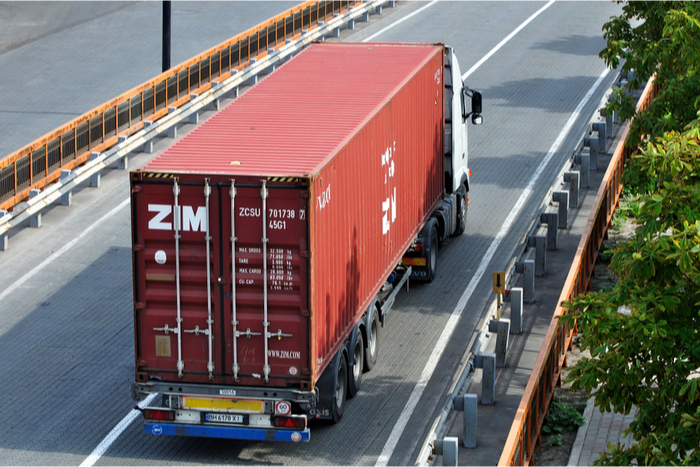

Zim expedited Asia service gives Oakland another first-in US port call

Zim Integrated Shipping Services later this month will launch its third expedited trans-Pacific service in a year in response to still-growing e-commerce demand, and give Oakland its second first-in-country US call on an Asian service. 

The service, set to launch April 29 and deploying ships with roughly 4,250 TEU of capacity, will connect Kaohsiung, Shanghai, and Ningbo with Oakland and Los Angeles. CMA CGM in January launched an Asian that gave Oakland a long-sought-after first US inbound port of call, propelling its ability to tap growing e-commerce imports. 

Maritime analyst Alphaliner noted the new service its weekly newsletter Tuesday; JOC confirmed the new service details with Zim. 

In a November interview with JOC.com, Zim CEO and President Eli Glickman said the carrier would launch new services to attract cargoes that normally moved via air transport before air freight rates rocketed as passenger jets were parked amid the COVID-19 pandemic. Glickman said Zim prides itself on its ability to roll out new services in weeks, rather that the months it takes larger carriers.

Zim last June reentered the Asia-US West Coast trade with expedited service to Los Angeles, and then in February launched a Southeast Asian express service to Los Angeles and Tacoma that in seven weeks will also begin calling Yantian, China.

In March, the Israel-based carrier said it expects an even stronger 2021 performance on forecasts of continued volume and rate strength, after achieving net income of $542.2 million for 2020, the highest in its 75-year history.

Suez disruption ripples to be felt for months: carriers

Shippers on the Asia-Europe and Asia-US East Coast trades should expect months of supply chain disruption and capacity cuts even once the Suez Canal is reopened, carriers have warned. 

The cascading effects of re-routing of ships around Africa to Europe, and even through Panama to the US East Coast, to avoid the blocked Suez Canal will limit available shipping capacity and equipment at a time when demand for container shipping is high. 

“Companies should expect the Suez blockage to lead to a constriction in shipping capacity and equipment, and consequently, some deterioration in supply chain reliability issues over the coming months,” Caroline Becquart, senior vice president and head of Asia and the 2M Alliance service network at Mediterranean Shipping Co. (MSC), said in an update Saturday. 

“Unfortunately, even when the canal re-opens for the huge backlog of ships waiting at anchorage this will lead to a surge in arrivals at certain ports, and we may experience fresh congestion problems. We envisage the second quarter of 2021 being more disrupted than the first three months, and perhaps even more challenging than it was at the end of last year.” 

Evergreen Marine Corp. said in a statement Saturday that efforts to clear sand and mud around the ship’s bow would take “at least two to three days” before the required depth was reached to refloat the ship. 

MSC’s 2M Alliance partner Maersk also warned the impact on the container supply chain would continue well beyond the physical removal of the vessel. “For every day the canal remains blocked, the ripple effects on global capacity and equipment continues to increase,” Maersk said in a Saturday update. “We have already started to proactively manage our capacity and will not be accepting cargo where we cannot ensure space.” 

Maersk said once the canal was reopened, shipping convoys would aim to run continuously, but with the backlog of vessels Saturday, the carrier expects it will take three to six days for all waiting ships to pass through the canal. 

The 2M carriers have 22 vessels waiting to enter the canal, with five expected to reach the Suez Saturday. 

Sea-Intelligence Maritime Analysis noted in its latest weekly newsletter that carriers re-routing ships around Africa or through Panama would absorb an amount of carrying capacity equal to 6 percent of the globally available container vessel capacity. The analyst said 6 percent of the global fleet was equal to 1.48 million TEU of capacity, or the equivalent of 74 ultra-large 20,000 TEU container vessels. 

“It is evident that such an amount of capacity absorption will have a global impact and lead to severe capacity shortages. It will impact all trade lanes, as carriers will seek to cascade vessels to locations where they have the greatest need,” Sea-Intelligence wrote.

Global supply chain stretched 

The Suez disruption is hitting a container shipping system where all the buffer capacity and resilience has already been deployed in full to deal with the ripple effects from the pandemic. 

“The market is under severe stress already, with all seaworthy container vessels already in deployment,” Sea-Intelligence said, outlining a litany of already severe problems constraining the ocean trades and affecting schedule reliability. 

“Charter rates are hitting new highs every week and fixture lengths are increasing, as carriers are extremely eager to secure tonnage. The empty container shortage problem has not yet been solved. Port congestion remains a problem, not only in major US ports, but also across the world, hitting ports such as Singapore, Auckland in New Zealand, and Chittagong in Bangladesh.” 

Becquart shared a grim assessment of her own. “There’s no doubt that the current Suez Canal blockage is going to result in one of the biggest disruptions to global trade in recent years, and we are working around the clock to manage our fleet and services so we can keep cargo moving and keep trade flowing as best we can under the circumstances,” she said in the weekend MSC update. 

To keep container flows moving, carriers are diverting greater numbers of ships around Africa or via the Panama Canal. The 2M Alliance has so far diverted 14 of their vessels, but Maersk said this number was expected to increase as salvors struggle to free the Ever Given. 

“While efforts to dislodge the Evergreen vessel from the Suez Canal continue, hundreds of ships are caught up in the traffic snarl in both directions,” Maersk said. 

CMA CGM said Saturday two of its vessels have been diverted around Africa, and for cargo not yet loaded, alternative maritime routes, rail services, or air freight solutions with CMA CGM Air Cargo were being considered. 

Hapag-Lloyd said Friday its partners in THE Alliance — Yang Ming, Ocean Network Express (ONE), and HMM — are rerouting three Asia–Europe vessels and three Asia–US East Coast ships around Africa’s Cape of Good Hope, a move that can add about 10 to 14 days to the trip for Europe-bound ships. 

As ocean carriers reroute more vessels away from the canal, shippers will face further delays and higher costs, according to a report from Commodities at Sea, a sister product of JOC.com within IHS Markit. 

“Even a two days delay would further add to the supply chain disruption slowing the delivery of cargo to businesses across the UK and Europe,” the report noted.

Given that a routing around the Cape of Good Hope at the southern tip of Africa would add more than 3,000 nautical miles, ships would have to burn approximately 1,000 tons of additional fuel, equating to approximately $500,000, to increase speeds by two knots to maintain their weekly schedule, according to IHS Markit research.

Trans-Pacific carriers adding PNW, Oakland capacity for LA–LB diversions

With the ports of Los Angeles and Long Beach expected to be grappling with terminal congestion and vessel backlogs for at least the next two to three months, trans-Pacific carriers are boosting capacity to Oakland and Seattle-Tacoma. 

According to Wednesday’s issue of Alphaliner, ZIM Integrated Shipping Services will launch a service beginning Feb. 21 that will call in Southeast Asia, Los Angeles, Tacoma, and Vladivostok, Russia, before returning to Laem Chabang, Thailand. 

Alphaliner also reported that Wan Hai Lines in mid-March will double its current two trans-Pacific strings to four, which includes a new Pacific Northwest service from North Asia to Seattle and Oakland that will not call in Southern California. 

While these developments demonstrate the continued importance of Los Angeles-Long Beach to trans-Pacific services, the new Wan Hai service also highlights a move by carriers to increase their direct calls to the Northwest Seaport Alliance of Seattle and Tacoma, and to Oakland, to bypass congested Southern California ports. 

The executive directors of Oakland and the Northwest Seaport Alliance told JOC.com this week carriers are in advanced stages of planning additional services to their ports. Those services will be designed for intermodal shipments to the US interior that otherwise could have moved through Los Angeles-Long Beach, but more importantly, will serve distribution warehouses and e-commerce shipments in Northern California and the Pacific Northwest. 

Danny Wan, executive director of the Port of Oakland, said his pitch to carriers is not so much that Oakland is an alternative to Los Angeles-Long Beach, but rather that it is the closest port to the large consuming market in the San Francisco Bay area, and to import distribution hubs in Northern California, Reno, Salt Lake City, and Denver. 

“Yes, we may pick up some business diverted from Southern California, but once they come here they will stay here because Oakland is more convenient to these markets,” Wan said. 

Oakland and Seattle-Tacoma are assuring carriers that they have the terminal capacity to handle an influx of cargo, and that upon arrival their vessels will be able to proceed immediately to berth. 

“We have no vessels at anchor here,” said John Wolfe, executive director of the Northwest Seaport Alliance of Seattle and Tacoma. “Every terminal here has unused capacity.” 

Due to a sustained cargo surge that is now in its eighth month, and is projected to continue well into the spring, Los Angeles-Long Beach is experiencing vessel backlogs and congested marine terminals. Vessel delays in the port complex average about seven days, according to the Signal platform published daily by the Port of Los Angeles. Container dwell times at the terminals in December averaged five days, or twice what they were last spring, according to the Pacific Merchant Shipping Association. 

Terminal operators in Los Angeles-Long Beach told JOC.com that container volumes will remain much stronger than in past years this spring, and they said the ports will contend with congestion well into the second quarter. 

Carriers have already begun to circumvent Southern California with new services to Oakland and Seattle-Tacoma. In the past two months, carriers have announced two new trans-Pacific services to North America’s Pacific Coast that do not call Los Angeles-Long Beach first. CMA CGM launched its Golden Gate Bridge service (a restructuring of the former SeaPriority Express service) with a rotation of Yantian, Oakland, Seattle, Shanghai, and Yantian. 

Also, Mediterranean Shipping Co. in December started its Chinook service with a rotation of Yantian, Shanghai, Busan, Vancouver, and Yantian.

Oakland, Seattle-Tacoma advantages 

The port directors in Seattle-Tacoma and Oakland told JOC.com other announcements of direct services to their gateways could follow this spring, although they did not specify which carriers they are speaking with. They said their discussions with carriers begin with the logistics advantages their ports offer. 

Wolfe stressed the ability of vessels to proceed directly to berth in Seattle-Tacoma without having to wait at anchor. He said container discharges begin quickly upon berthing, and the first train with intermodal shipments destined for the Midwest leaves within 48 hours of container discharges from the vessel. Except for some sporadic equipment shortages, the railroads have provided the rail-car capacity the port complex requires, he said. 

When a vessel berths in Oakland, it is usually turned in one, two, or three eight-hour shifts, depending upon the container exchange, said Bryan Brandes, the port’s maritime director. Container moves to and from trains at the port’s on-dock rail yard are likewise rapid, he said. Also, the port offers transloading operations within its boundaries at the former Oakland Army Base, which has been redeveloped as a logistics hub for import and export operations, Brandes noted. 

Oakland, however, continues to grapple with lengthy truck turn times. In January, turn times averaged 96 minutes, higher than the 88-minute average in Los Angeles-Long Beach, according to the Harbor Trucking Association (HTA), which measures turn times in both gateways. Average truck turn times in Oakland the past year have been in the range of 82 to 98 minutes, while turn times in Los Angeles-Long Beach were in the 70 to 88-minute range, according to the HTA’s truck mobility data. 

Oakland International Container Terminal (OICT), which handles about 70 percent of the port’s volume, pushed up the port’s total average turn times last month as one of its four berths was out of commission for 16 days while OICT discharged three new ship-to-shore cranes, Brandes said. He expects turn times to improve now that the cranes have been installed at OICT. 

Wolfe and Brandes commended the longshore labor force, which continues to work through the COVID-19 pandemic conditions without serious disruption. According to the Pacific Maritime Association, which manages the coastwide waterfront contract with the International Longshore & Warehouse Union, only about 100 longshore workers combined in the northern ports of Oakland, Portland, and Seattle-Tacoma tested positive for COVID-19 in December. Los Angeles-Long Beach recorded 360 positive cases, which contributed to labor shortages in Southern California. 

Oakland and Seattle-Tacoma are not marketing themselves as temporary refuges for carriers to escape crowded conditions in Los Angeles-Long Beach, but rather as long-term investments in gateways that provide immediate access to rapidly growing distribution complexes, direct rail access to intermodal hubs in the US interior, and affluent consumers that generate a strong base of on-line shopping. 

“It’s because of that stickiness that Oakland warrants services of its own” Brandes said. 

While Oakland seeks to attract new trans-Pacific services, Larry Burns, president of Lawrence Burns Consulting and former senior vice president of trade and sales at HMM, said simply changing the rotation of a Pacific Southwest service to call first in Oakland and then in Southern California would allow a carrier to quickly discharge local and intermodal cargo in the Northern California gateway while not having to bypass Southern California altogether, which would offer certain advantages to carriers and their customers. 

Carriers could carry time-sensitive inbound loads for the regional market in Northern California without the schedule disruption that comes from calling first in Southern California. They would also take delivery of export loads in Oakland, which has consistently strong export volumes. The vessels would then call in Los Angeles-Long Beach to pick up empty containers for repositioning in Asia, where there are severe shortages of empty containers.

“The carrier keeps to its schedule and also picks up empties in LA. Suddenly the empties become more valuable,” Burns said.


Shippers diverting cargo away from Montreal as labor truce runs out

With a truce between Montreal waterfront employers and longshore workers expiring in approximately five weeks, importers have been diverting cargo away from Canada’s second-largest port rather than risk disruption similar to the 19 days of strike actions that crippled the port last summer. 

The Maritime Employers Association (MEA) and Canadian Union of Public Employees (CUPE) were back at the negotiating table this week, capping a 14-day “mediation blitz,” Kuehne + Nagle told customers in a Friday advisory. Negotiations deteriorated several weeks ago but have since restarted, according to two shipping executives close to the matter. 

A misconception about the August 2020 strike at Montreal was that it was settled; it wasn’t. Rather, what ended the 19-day series of work stoppages on Aug. 21 was a truce that left critical work rule issues unresolved. That leaves open the real possibility that after the temporary agreement expires on March 20, disruption could resume. It took eastern Canadian ports months to recover from disruption over the summer, as a shortage of railcars at Halifax and Saint John due to a surge of cargo at Vancouver and Prince Rupert delayed cargo diverted from Montreal, and Montreal terminals had to clear a 11,500-container backlog. 

At the time, Pierre Fitzgibbon, Quebec’s minister of economy and innovation, said the closure of the port had a greater economic impact on Canada than the COVID-19 pandemic itself. 

Now, with personal protective equipment (PPE) still critical amid a multi-month surge of Asian cargo into Canada and the United States, strike actions would be even more disruptive to cargo flows through eastern Canada and the country’s economy. 

Further disruption would also hurt Montreal’s competitiveness as it faces growing competition from existing and planned Eastern Canada ports for so-called discretionary shipments moving to and from inland regions. As has been seen on the US West Coast, shippers have long memories and will permanently redirect cargo through alternative gateways when they perceive a port to have elevated labor risk. 

Some major shippers have told the Montreal Port Authority that they’ve instructed container lines to divert cargo away from the port if no agreement was reached by mid-January, said Tony Boemi, vice president of growth and development for the port authority. Two Canada-based importers who asked not to be identified told JOC.com they began diverting cargo away from Montreal months ago, with one using the Canadian West Coast and other routing more goods through Halifax. 

In the truce announced Aug. 21, employers and labor agreed to not speak to the media, but both sides said they were confident they would reach a deal before the truce expires. The current MEA-CUPE labor contract expired at the end of 2018, with labor seeking higher wages through more days off per year and greater control of hiring, and employers resisting such demands.  Starting in early July, port longshore workers engaged in two four-day strikes before launching an indefinite strike on Aug. 10 that ended up lasting 12 days. 

In a Feb 4 interview with JOC.com, Jean-Jacques Ruest, president and CEO of Canadian National Railway, said the railroad is better prepared to handle potential diversions from Montreal to Saint John and Halifax than it was over the summer. When longshore workers issued the first 72-hour strike notice in late July, it was a surprising escalation of simmering tensions and there was plenty of inbound cargo already on the water headed to Montreal, he said.

Ruest said shippers should ready diversion strategies, whether moving through Halifax and Saint John or with the railroad’s joint service with CSX Transportation connecting to the Port of New York and New Jersey. Cargo destined for Montreal could also be trucked up from New York-New Jersey. Ruest warned that if Montreal-bound cargo is diverted, the railroad will prioritize cargo not bound for greater Montreal and imports for Montreal might not be transported to the region until labor actions end, as CN has limited capacity to handle all the potentially delivered volumes.

The Montreal strikes also spurred Canadian Pacific Railway to begin providing intermodal rail service to Saint John to handle three Hapag-Lloyd ships and one Maersk ship diverted from Montreal over the summer. In extending its agreement with CP, Hapag-Lloyd, which has the largest presence in serving Canada, said it would add Halifax to its new service network, which is generally announced in the spring.


CMA CGM’s new Oakland service offers Southern California alternative

CMA CGM’s newly restructured Asian service that makes Oakland its first US port call rather than Los Angeles allows e-commerce shippers and other importers to avoid Southern California port congestion and get their cargo loaded onto trains days faster. 

The Golden Gate Bridge service, formerly known as SeaPriority Express, offers a 12-day transit from Yantian and a 19-day transit from Shanghai. The service is the first Asian service with Oakland as its first call, a long sought-after designation that makes the port more attractive to time-sensitive shippers.  

After its first call at Oakland on Feb. 12, the restructured service will call on Seattle before looping back to Kaohsiung, Taiwan; Shanghai; and Yantian, mainland China. The ships will each have capacities in the ranges of 3,718 to 6,282 TEU. In its original form, the service called only Los Angeles and Yantian. 

“We had to find an alternative solution that allows supply chains to remain relatively intact and improve transit times so we made that bold move to Oakland,” Ed Aldridge, president of CMA CGM and APL, United States, said in an interview Monday. Aldridge said he does not expect congestion to clear up in Southern California until June at the earliest and the restructured service will be permanent. 

And while ocean reliability from Asia to the US West Coast has sunk — falling to 22.1 percent in December — the service will not be delayed by the harbor backlog at the Los Angeles and Long Beach port complex. As of Sunday, there were 29 container ships at berth and 36 at anchor, according to the Marine Exchange of Southern California, the agency that manages ship traffic. 

Through advance work with Union Pacific and BNSF railroads and SSA Marine’s Oakland International Container Terminal, CMA CGM aims to provide a rail dwell time — the time it takes for a container to be unloaded from a ship and loaded onto a train — of under one-and-half days, Aldridge said. Comparatively, average dwell times in Southern California during non-congestion times is roughly four days, he said. 

Aldridge said US importers that are tapping the newly restructured service include a mix of brick-and-mortar retailers pulling for e-commerce channels, strictly e-commerce apparel and garment shippers, and even some shippers looking to truck goods down to Southern California.

The newly restructured service, he said, shows how CMA CGM is boosting its ocean and landside capacity to help shippers amid a record rush of Asia imports that began in the second half of last year and has not relented. Between May and December, CMA CGM deployed 25 extra-loaders on the trans-Pacific, boosting capacity by 114,500 TEU, and upgraded the sizes of 13 ships on Asia-US services. Ultimately, CMA CGM increased total capacity on the trade by 39 percent between the first and second half of 2020.

The carrier is also doubling its dedicated chassis fleet serving Southern California to 3,600, and expanded the number of dray providers it works with.

US port delays force ‘structural’ blank sailings on Transpacific Trade lane

With Hapag-Lloyd — and by extension its partners in THE Alliance — advising customers of 21 de facto canceled sailings in February in the eastbound trans-Pacific due to schedule disruptions, importers should anticipate even tighter capacity in the coming months. 

Unlike blank sailings made by carriers in response to weak cargo volumes, these missed voyages are structural in nature. When a vessel has been delayed for a week or longer at a given port, the carrier will then institute a “structural” blank for that ship’s next sailing to rectify the service schedule.

 “The sailings are sliding. Other alliances will also see sailings slide,” Uffe Ostergaard, Hapag-Lloyd’s Americas president, told JOC.com Monday. Hapag-Lloyd is a member of THE Alliance along with Ocean Network Express (ONE), Yang Ming, and HMM. 

Ostergaard said Hapag-Lloyd’s changes to its service schedule are necessitated by vessel bunching at congested ports due to near-record cargo volumes in the Asia-North America trade. Import volumes exploded when the North American economy began to recover last summer following the lifting of initial COVID-19 lockdowns. Eastbound liner reliability from Asia to both US coasts was under 30 percent for both coasts in December, according to Sea-Intelligence Maritime Analysis. 

The worst congestion in the US has been at the ports of Los Angeles and Long Beach, with numerous container ships delayed a week or longer, according to the Marine Exchange of Southern California. Ostergaard also cited Oakland and Vancouver as being West Coast gateways that have experienced late vessel arrivals and congestion.

Carriers may need further blank sailings 

The current round of de facto blank sailings could be the first of several “corrections” that Hapag-Lloyd, and possibly other carriers and vessel-sharing alliances, may have to make in the coming months. “This will be a recurring theme,” Ostergaard said. 

Lars Jensen, CEO of SeaIntelligence Consulting, told JOC.com Tuesday that although no other carrier or vessel-sharing alliance has announced structural blank sailings, he anticipates more will be coming. 

A spokesperson for ONE in Singapore told JOC.com that schedule delays have become so bad that the carrier is considering whether to void sailings during the Lunar New Year so it can reposition ships to restore schedule reliability. 

“Heavy schedule delays are being caused by global terminal congestion resulting from low productivity and lack of labor due to the COVID-19 pandemic,” she said. “Vessel schedules on each service are also heavily affected by the congestion and the schedule delay may result in a lack of vessels to meet a full service after Chinese New Year.” 

Christian Sur, executive vice president of sales and marketing at non-vessel-operating common carrier (NVO) Unique Logistics International, said he received Hapag-Lloyd’s customer advisory late last week, and he would not be surprised if the 2M and Ocean alliances issue advisories as well. 

“They have similar issues,” Sur said.

Import volumes may not slow appreciably 

Sur added that US imports from Asia remain exceptionally strong for this time of year, and with a backlog of merchandise building at Asian factories in the run-up to the Lunar New Year holidays beginning Feb. 12, vessels will likely continue to be overbooked at Asian load ports through the first quarter. 

Vessel disruptions due to blank sailings could lead to a situation that ports such as Los Angeles and Long Beach faced last March when empty containers congested the terminals, import distribution centers, and truck yards in Southern California, and carriers were not providing enough westbound trans-Pacific capacity to return the empties to Asia. 

Carriers at the time deployed “sweeper” ships to Los Angeles-Long Beach to vacate the empties, but Ostergaard said that strategy may not work this time. Carriers have few idle ships in the fleet, and even if they can secure some, the sweeper ships will face continued congestion at the ports. 

“Even the sweeper ships can’t run on schedule,” he said.

With reports from Asia indicating some factories are planning to remain open through the Lunar New Year, US import volumes may not drop significantly as they normally do during the holidays, so vessel space at Asian load ports is likely to remain tight for some time, Sur said.

Shipping Delays Feared as California’s Two Largest Ports Face COVID Outbreaks

COVID-19 infections among dockworkers and a pandemic-fueled torrent of imports have created a perfect storm at California’s two busiest ports.

The Los Angeles Times reported that nearly 700 dockworkers at the ports of Los Angeles and Long Beach have contracted COVID-19, and hundreds more have had to take virus-related leave, creating the potential for a debilitating slowdown. As of Jan. 20, a total of 45 ships were waiting to unload—the largest bottleneck in six years. 

“We’ve got more cargo than we do skilled labor,” Eugene Seroka, executive director of the Port of Los Angeles, told the LA Times. “We are told 1,800 workers are not going on the job due to COVID right now. That can [include] those who are isolating through contact tracing or awaiting test results. Or maybe [those who] fear … going on the job when a lot of people are sick.” 

At the beginning of the pandemic, the U.S. saw a slowdown of products coming from China, which was then the epicenter of the virus. At that point, container volume at the Port of Los Angeles dropped about 19 percent. But, in the second half of 2020, as more people worked (and shopped) from home, volume rose by about 50 percent. 

California’s infection rates are on the decline from the mid-January peak seven-day average of 44,197, but still at a current seven-day average of 25,576 new cases. In the last two weeks, Los Angeles County alone reported about 153,000 total cases.

According to the the International Longshore and Warehouse Union, positivity rate at the Port of Los Angeles is currently 65%, and 71% at the port of Long Beach. Those numbers could be misleading, however, due to inconsistent self-reporting (more on that in a bit).

As essential workers, dock employees are theoretically a priority for vaccination. But vaccine shortages and logistical issues have been a problem. 

“Right now we’re moving fairly slowly because we just don’t have enough vaccine,” LA County Health Department director Barbara Ferrer said, according to the Times.

Los Angeles Mayor Eric Garcetti, Long Beach Mayor Robert Garcia and other officials wrote to California Gov. Gavin Newsom and the state’s health and human services secretary to push them to speed up the vaccination effort among Southern California’s 15,000 dockworkers.

So far, according to Seroka, not a single longshore worker at the two ports has gotten a vaccine yet. 

The worst case scenario right now for Los Angeles and the U.S. overall, relying on the major West Coast port, would be shutdowns, as laid out by California Reps. Nanette Diaz Barragan and Alan Lowenthal.

“Without immediate action, terminals at the largest port complex in America may face the very real danger of terminal shutdowns,” they wrote to California and LA County health officials this month. “This would be disastrous not only for the communities of the South Bay, but also the entire nation, which relies upon the vital flow of goods through these ports.” 

Another issue at the ports has been the alleged failure to comply with California reporting mandates. As we saw with the ports’ slightly inland neighbor, Los Angeles Apparel, the state requires immediate notification if a workplace has three or more confirmed COVID-19 cases in 14 days. 

Representatives for three Southern California longshore workers unions said only one of the ports’ combined 12 terminals has reported an outbreak since last March. It involved 15 workers. 

“This is not being done by terminal operators at the San Pedro Bay port complex,” the representatives said. “The vast majority of terminal operators are failing to report at all.”

Seroka and Mario Cordero, executive director of the Port of Long Beach, told the LA Times that they don’t expect “any imminent terminal shutdowns,” but they don’t want to leave the issue going until it’s too late and they do need to issue shutdowns. 

“If we don’t do something fast, we are jeopardizing the fluidity of the movement of cargo,” Cordero said.

Most promo suppliers have domestic stock on hand, lessening the immediate impact of shipping delays from China. But the longer port slowdowns draw on, the greater the chance delays could affect orders as the year plays out.

Maersk Essen loses 750 boxes into the Pacific

Another container ship has spilled up to 750 boxes into the sea, just weeks after the ONE Apus lost around 1,900.

Maersk Essen, enroute from Xiamen to Los Angeles and carrying up to 13,092 teu, reportedly during severe weather, lost a “very significant number of containers overboard in the Pacific Ocean on 16 January”, according to cargo casualty management company WK Webster.

According to FleetMon, up to 100 floating containers are drifting north-west of Honolulu. 

While it is thought up to 750 containers may have been lost overboard, and it is also likely that, like with the ONE Apus, others will be damaged in affected stacks. These boxes will need to be removed and repositioned, noted WK Webster.

But unlike the ONE Apus, the Maersk Essen is continuing to its destination of Los Angeles, where it is expected to arrive on Saturday. WK Webster is arranging for surveyors to investigate and carry out cargo surveys. 

It said the ship, set to go to Cai Mep, Vietnam next, would likely be delayed and anyone that had insured cargo onboard the ship should contact WK Webster as soon as possible. 

More on this story coming later.

Import surge, labor shortages worsen LA-LB congestion

Congestion at the already-clogged ports of Los Angeles and Long Beach has gotten worse in just the past month, demonstrated by rising truck turn and container dwell times, more ships waiting at berth, and anecdotal reports from individual terminal operators. Worsening delays came despite terminals working longer hours. 

The overriding problem, terminal operators say, is that six straight months of near-record cargo volumes have congested the entire Southern California supply chain beyond its capacity. Terminal operators can’t vacate laden import containers fast enough to keep up with the import surge and make room for the discharge of new arrivals. 

“There is no room on the terminals,” said Anthony Otto, president of Long Beach Container Terminal (LBCT). 

Key performance metrics for truck turn times, container dwell times at the terminals, vessels at anchor, and street dwell times for chassis at warehouses located as far as 60 miles from the Los Angeles-Long Beach port complex tell the story. 

Average truck turn times at the 12 container terminals that make up the LA-LB complex rose to 93 minutes in December, according to Harbor Trucking Association (HTA) truck mobility data, up from the record low of 58 minutes in June. The HTA began measuring turn times in 2013. 

The record low turn times came when US imports from Asia plunged during the COVID-19 lockdowns. The large increase in turn times over the past few months demonstrates how rapidly the terminals went from fluid conditions early in 2020 to virtual gridlock by the fall. 

While truck turn times reflect congestion at the terminal gates, increasing container dwell times highlight the congestion in the terminal yards. Otto noted that containers are sitting at the terminals for seven to eight days, compared with less than three days when import volumes were much lighter last spring and early summer. 

That is an indication container terminals are buckling under container exchanges from mega-ships that continue to discharge record imports week after week, said Weston LaBar, CEO of the Harbor Trucking Association. “It’s more volume than the terminals were designed to handle,” LaBar said. 

However, for historical perspective, December’s turn times are actually better than they were in the fall of 2014 and winter of 2015 when the average turn times were 100 minutes or greater for six consecutive months due to the labor disruptions during the West Coast longshore contract negotiations.

Also, LaBar noted that in December the HTA extended the geo-fence line at each terminal from which the turn times are measured to reflect the longer truck queues that formed last month. That move obviously was a source of concern from the terminal operators because it exaggerated somewhat the comparison of December’s numbers with previous months, but the HTA felt it was necessary to truly capture the time truckers were spending in long truck queues, LaBar said. 

And the ships keep arriving in port. There were 59 container ships in the Los Angeles-Long Beach port complex on Monday, with 25 of the vessels being worked and 34 at anchor awaiting berthing space, according to the Marine Exchange of Southern California. Another 15 container ships are scheduled to arrive in port through Thursday.

All terminals struggling, but for different reasons 

The truest indication of the impact six straight months of imports from Asia totaling about 800,000 TEU per month is having on the port complex is that all 12 of the container terminals are struggling to handle the volumes. That includes terminals that had consistently had the lowest truck turn times in the harbor. 

In December, the automated LBCT terminal, which for the past year had sub-40-minute average turn times, spiked to 94 minutes as import volumes surged. LBCT in the spring and summer months had been averaging 21,000 container lifts per week. In November and December, LBCT averaged 30,000 lifts per week, Otto said. 

“Our times used to be stellar. The fact is freight is not moving now,” he said. 

TraPac, the only other fully automated terminal in the port complex, had been registering sub-60-minute turn times last spring and summer. In December, it was the only terminal in the harbor to experience a lower turn time. Its 73-minute average was down from 80 minutes in November. Nevertheless, December’s turn times were higher than the 45- to 55-minute turn times last spring. 

The Matson-SSA terminal had likewise been consistently recording sub-40-minute turn times, but in December the average turn time increased to 46 minutes. “I’m not hearing complaints about Matson. It’s due to increased volume,” LaBar said. 

The three terminals SSA Marine operates in Long Beach — Matson-SSA, Pier A, and PCT — all outperformed the port-wide average in December. That’s in large part thanks to “dray-off” programs at the terminals, under which SSA moves inbound containers upon discharge from vessels to off-dock yards for overnight storage, thereby freeing up terminal space for more inbound loads. 

“The dray-off model really helps from an efficiency standpoint,” LaBar said. 

However, other terminal operators that may wish to duplicate SSA’s successful model are encountering pushback from some cities in Southern California that don’t want trucks in their communities. 

LaBar said the HTA has met “ad nauseam” with community leaders explaining how the increased tax revenue from container storage yards could help to replace revenues they are losing from reduced retail activity at local shopping malls due to the coronavirus disease 2019 (COVID-19), but to no avail.

The two largest container terminals in the harbor, APM Terminals in Los Angeles and Total Terminals International (TTI) in Long Beach, had the longest turn times in December, with APM at 137 minutes and TTI at 111.

Labor shortages rampant due to COVID-19 

LaBar said the busiest terminals have been especially challenged in getting sufficient workers during the COVID-19 pandemic because the allotment of longshore workers is rationed due to declining labor availability. “The labor shortages are COVID-related,” he said.

The Pacific Maritime Association (PMA), which represents West Coast employers, has steering committees in each region that assign labor based on the history of demand as well as the current demand for labor in each region, Jim McKenna, PMA president, told JOC.com. “So far these guys have been very accurate,” he said. 

However, the total labor force in Southern California has been reduced because of COVID-19, which means fewer longshore workers are being assigned to each terminal, McKenna said. “Today, 150 to 170 longshoremen are quarantined [in Southern California],” he said. That includes dockworkers who tested positive and others who have come in contact with someone who tested positive, he added. Workers in every area of the terminal, including the maintenance and repair longshore workers who repair chassis, have been affected. 

However, McKenna said, those longshore workers who are able to work are spending more time on the job. Each longshore worker in Los Angeles-Long Beach worked on average 5.2 shifts per week in December, up from 4.5 shifts in December 2019. In addition, the PMA and International Longshore and Warehouse Union have been adding 30 skilled equipment operators each month since last fall. “It’s an ongoing process,” McKenna said.

Chassis shortages continue 

Terminal operators say another critical element causing port congestion is a chassis shortage that has been ongoing since last summer. A spokesperson for APM Terminals said Pier 400 in Los Angeles opened on many days in December “with zero chassis.”

“This results in truck drivers sitting idle inside the terminal waiting for the next chassis to become available,” the spokesperson said. 

Key performance indicators on the website of the Pool of Pools, which is operated by DCLI, TRAC Intermodal, and Flexi-Van Leasing, show that street dwell times, which measure the time chassis sit at warehouses, averaged 7.8 days on Monday, or about twice the average of three to four days recorded in the first half of 2020. Out-of-service chassis at the 12 container terminals and four intermodal rail ramps totaled 3,835, according to the Pool of Pools website.

Ron Joseph, executive vice president and COO at DCLI, said the three intermodal equipment operators (IEPs) had reduced the out-of-service chassis to about 3,500 in early November by working extended hours and weekends. The terminals were closed for Christmas and New Year’s, so employers lost two workdays over the holidays. That affected all operations within the terminals, including the maintenance and repair dockworkers who fix out-of-service chassis. However, terminal hours and overtime work are being extended in the new year, so M&R work will increase and out-of-service chassis will be reduced, Joseph said. 

Also on a positive note, Otto said work continues on the final phase of an LBCT expansion project that will add much-needed terminal and berth capacity to the port complex. In addition to adding a third vessel berth, LBCT is enlarging its container yard, and installing ship-to-shore cranes. Capacity will be phased in beginning this spring, and when the work is completed by the end of 2021, the terminal’s annual capacity will be 3.3 million TEU 

However, carriers, non-vessel-operating common carriers (NVOs), and industry analysts project elevated import volumes well into the year, which means the largest US port complex could be grappling with congestion for some months to come.

“This December there was no rest, no time to recharge our batteries, because we were all so busy,” LaBar said, adding there is no relief in sight. “I’m being told to expect volumes to remain this strong at least through July.”