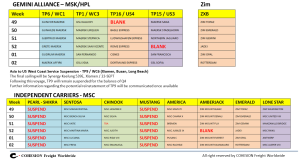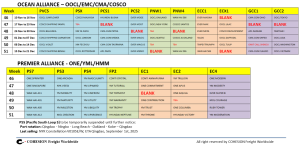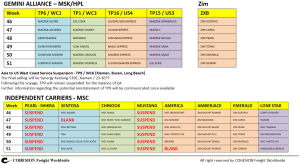
Traffic through Suez remains significantly lower than in 2023

100 days after the latest attack in the Red Sea, shipping continues to stay away in large numbers. But one segment has returned to a greater extent, according to a new analysis.

On Sept. 29, the most recent attack took place on shipping in the Red Sea when the ship Minervagracht was attacked by the Yemeni Houthi movement.

Although it has now been 100 days, and even though the Houthi movement has declared a complete halt to its attacks on shipping, shipping companies are still hesitant to sail through the Red Sea and thus also the Suez Canal.

This is stated in a fresh analysis by the shipping organization Bimco, which compares the number of transits in the fourth quarter of 2025 with 2023, before the attacks began.

“Despite this, traffic through the Suez Canal has not increased significantly and in the first week of 2026 remained 60% below the corresponding week in 2023, before ships started diverting around the Cape of Good Hope,” writes Niels Rasmussen, chief shipping analyst at Bimco, in an update.

Since January 2024, the quarterly tonnage that has sailed through the Suez Canal has been between 51 and 64% lower than in 2023.

In 2025, transits were between 57 and 64% lower, according to Bimco, which also provides information on how traffic has been distributed across ship segments.

Product tankers sail through more frequently

In the dry cargo segment, transits were 55% lower, while capacity in the container segment had fallen by as much as 86% since 2023. Conversely, oil tanker transits were 32% lower, and for product tankers the decline was 19%.

Bimco estimates that product tankers have returned to the Red Sea and the Suez Canal to a greater extent in order to take advantage of rising freight rates. In 2024, the reduction for product tankers was 45% below the 2023 level.

Virtually all container ships have avoided the Red Sea since the attacks began. However, CMA CGM recently announced that two of its services will once again sail through the waters. CMA CGM is the only major shipping company to have sailed some of its ships through the Red Sea with French military escort throughout the period.

Maersk has also sailed its first ship through the Red Sea, but has not yet announced any further voyages. The shipping company has announced that it is moving towards a gradual return, provided that the security situation remains stable.

“A normalization of ship transits now appears more likely than at any point during the last two years, but it remains unknown if, or how fast, this may happen,” says Bimco’s Niels Rasmussen.

“A return to the Suez Canal would reduce shipping companies’ costs significantly but also hurt ship demand. A full normalization is estimated to reduce container ship demand by approximately 10%, while other sectors could see 2-3% reductions,” he adds.

Source: SHIPPINGWATCH
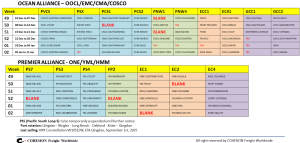
Soft volumes to keep West Coast ports congestion-free in early 2026

The big picture: Container gateways on the US West Coast in 2025 were able to hold onto market share gained in 2024 as importers frontloading seasonal merchandise from Asia due to tariff uncertainties took advantage of transit times that are at least two weeks shorter than East Coast routings. West Coast gateways remained relatively free from congestion throughout the year, and those conditions are likely to continue given the weak import volumes forecast for the first quarter of 2026.

A look back: Similar to the wider trans-Pacific market, US West Coast ports benefited from tariff-related frontloading in the first half of 2025, but that growth turned to double-digit percentage declines in the fall. Amid the roller-coaster demand movements, the ports of Los Angeles, Long Beach, Oakland and the Northwest Seaport Alliance of Seattle and Tacoma handled 59.2% of US imports from Asia through November, exactly the same share as in the first 11 months of 2024, according to PIERS, a Journal of Commerce sister product within S&P Global.

To handle the somewhat volatile swings in volumes — a record 1.2 million TEUs of laden imports crossed West Coast terminal docks in July, for example — port stakeholders continued to incorporate the lessons they learned during the COVID-19 pandemic. Improved shipment forecasts and information sharing among carriers, marine terminals, truckers, chassis providers, railroads and warehouses resulted in lower truck turn and container dwell times at the marine terminals and fluid operations at warehouses and inland rail terminals.

A look ahead: Cargo volumes at West Coast ports in 2026 will likely be impacted by macroeconomic forces in the US. With inflation increasing, consumer confidence declining and unemployment on the rise, US imports from Asia are not expected to see the typical pre-Lunar New Year surge in January and February. And unless some clarity and predictability in the Trump administration’s tariff policies are forthcoming, retailers are likely to be conservative in ordering spring and summer merchandise, extending year-over-year declines in West Coast imports through the first half of 2026.

The next inflection: If container lines return to the Suez Canal, East and Gulf coast ports could regain some of the market share they lost to the West Coast in the past two years.

Source: JOC

Port of Vancouver Operations Remain Fluid Amid BC Atmospheric Rivers and Highway Closures

To Port of Vancouver’s valued customers and stakeholders, 

A series of atmospheric rivers is bringing heavy rainfall to coastal areas in British Columbia. The Province of BC’s Ministry of Transportation and Transit has issued a travel advisory for areas in the Fraser Valley and has closed major highways between the Lower Mainland and the Interior due to flooding, falling rock and debris, and high avalanche hazards. The Ministry is assessing highways and related infrastructure.  

Terminal and rail operations at the Port of Vancouver remain fluid and operational. While CN and CPKC remain unaffected at this time, BNSF Railway has announced that some BNSF subdivisions are out of service due to weather-related issues. For more information, please visit BNSF’s website here 

Additional precipitation is expected to continue in the region over the coming days. We are working closely with our terminal operators, railways, and all levels of government to monitor conditions and will provide updates as they become available.  

For the most up-to-date information on road conditions and road closures, please visit DriveBC. 

Resources

  • Port performance insights: access live video feeds from around the port and updates on import rail performance, truck terminal turn times, container vessel on-time performance, and vessel traffic at anchor/berth through the port authority’s website (Performance Insights)
  • PortVan eHub app: access real-time insights into Port of Vancouver operations via the port authority’s mobile app eHub.  Download from the port authority’s website (eHub) or through the App Store (search for “PortVan eHub” or “Port of Vancouver”)
  • The Ministry of Transportation and Transit travel advisory  

Source: Port of Vancouver

Vancouver’s new scheduling system gives 96-hour advance notice of vessel arrivals

The completion of a centralized scheduling system at the Port of Vancouver will provide marine terminals with at least four days of advance notice of container ship arrivals, allowing for better labor and equipment planning to mitigate import surges.

The system, launched two years ago by the Vancouver Fraser Port Authority, helps coordinate the five different types of vessels, ranging from bulk to cruise ships, that call on some 29 marine terminals in three different districts. The port also presents unique navigational challenges, from confined waters to changing river flow conditions, said Capt. Gord Cooper, chair of the Fraser River Pilots Committee.

Through the centralized scheduling system, the nearly 450 port stakeholders now have a “port-wide view” of vessel arrivals, said Sean Baxter, the port’s harbor master and director of marine operations. Similar to other North American West Coast ports, Vancouver experiences seasonal container cargo surges tied to the pre-Lunar New Year and holiday shipping seasons.

Baxter said the centralized scheduling system will allow vessel operators to optimize vessel speeds when moving to berth or anchorage, terminal operators will have greater visibility to vessel arrivals and Canadian National Railway (CN) will be better able to handle CN trains run over the Second Narrows Rail Bridge, which must be raised regularly to allow vessels to pass underneath.

“This helps us to meet the moment,” he said.

Source: JOC

Rolf Habben Jansen expects gradual reopening of Suez Canal

It will take two to three months to resume sailing through the Red Sea and Suez to avoid bottlenecks in the ports, says the Hapag-Lloyd chief exec.

No timetable has yet been set for the resumption of shipping through the Suez Canal, but when shipping does resume, it will be gradual.

This was stated by Rolf Habben Jansen, chief executive officer of Hapag-Lloyd, the world’s fifth-largest container shipping company, during a teleconference with the company’s customers on Thursday, according to international news outlet Reuters.

However, there will be a transition period of 60-90 days to adjust logistics and avoid congested ports.

Shipping companies have been taking the longer and more expensive route south of Africa since November 2023 due to attacks on traffic in the Red Sea by the Houthis in Yemen.

Source: SHIPPINGWATCH

Strike in Belgium causes congestion in shipping traffic

A three-day strike has caused massive disruptions to land, sea and air traffic.

Belgian trade unions orchestrated a widespread strike this week, which ended on Wednesday. However, it continues to cause challenges for shipping traffic in and out of Belgian ports, states container shipping company Hapag-Lloyd in a message to customers on Thursday.

“Shipping traffic has now resumed, and port operations are gradually stabilizing. However, there is still significant congestion at this time,” the statement from Hapag-Lloyd reads.

The shipping company expects the problems to cause delays in shipping traffic into next week.

“We are working closely with our partners and port authorities to manage the situation and ensure that delays are kept to an absolute minimum,” the statement reads.

Ship traffic and port operations in Belgium have been completely halted since Monday as a result of the strike, which has also affected train, bus, and air traffic.

The strike is the latest in several protests against the Belgian coalition government’s proposals for pension and labor market reforms.

Source: SHIPPINGWATCH

USTR port fee pause broadly welcomed, but labor decries ‘free pass’ for China

The deal struck by the US and China to pause reciprocal port fees for one year starting Monday has generally been welcomed by shipping, agricultural and manufacturing interests as well as port industry players, the US Trade Representative said, although the move has been criticized by labor unions.

The USTR said in a statement Sunday it received 73 responses during a 48-hour comment period it held last Thursday and Friday to garner feedback from the pause in port fees and tariffs targeting China.

“Many [respondents] noted that suspension of the action would lower shipping costs and avoid commercial disruption,” the USTR said, adding the pause would provide an opportunity for the US to negotiate with China “on the issues raised in this investigation and permit additional time to find solutions to increase investment in US shipbuilding.”

The USTR also confirmed in its statement that planned 100% tariffs on China-built ship-to-shore cranes and other cargo handling equipment, due to take effect Monday, have also been suspended for a year.

It said it is still accepting comments until Tuesday on proposals to impose tariffs of up to 150% on certain cargo handling equipment produced in China, including rubber tire gantry cranes and related components. But any action is likely to be stayed in the wake of the broad trade deal announced Oct. 30 between Washington and Beijing.

Highlighting the advantages of the port fee suspension, Joe Kramek, president and CEO of the Washington, DC-based World Shipping Council, said the pause would support the “continued use of US small and medium-sized ports, and contribute to lower costs for US farmers and manufacturers who rely on ocean liner transportation to move $335 billion in American exports each year.”

Kramek was one of several respondents to call for the USTR to make the suspension permanent.

More than 20 agricultural and farmer groups including cotton, citrus, almond, potato and dairy producers welcomed the port fee and tariff freeze, pointing out their ability to compete overseas would be otherwise undercut.

“Additional costs from port fees or equipment tariffs would directly harm US farmers and exporters, reduce export opportunities and weaken rural economies that depend heavily on agricultural trade,” USA Pulses CEO Tim McGreevy said in the group’s submission.

He also recommended agriculture’s “complete exemption from all related Section 301 fees, including port fees, vessel sourcing requirements, and tariffs on critical port equipment and components.”

China’s Transport Ministry, meanwhile, confirmed it had suspended its reciprocal port fees on US-linked ships from 1 p.m. local time Monday. The measure applies to US-owned, -operated, -flagged or -controlled ships.

Details please refer to the JOC news.

Source: JOC

USA sets date for suspending port fees

The shipping industry has faced increased costs and logistical hurdles due to port fees. A new U.S.-China economic and trade agreement, announced by the White House, will suspend U.S. port fees on Chinese-built and operated vessels starting November 10. In exchange, China will eliminate its retaliatory measures, including extending its market-based tariff exclusion for U.S. imports until December 31, 2026, and halting antitrust, anti-monopoly, and anti-dumping investigations into U.S. semiconductor firms.

During this period, both countries will address maritime issues through negotiations, while the U.S. will collaborate with South Korea and Japan to bolster its shipbuilding sector. The longstanding dispute over port fees, intended to counter China’s dominance in global shipping, has cost the industry an estimated $3.2 billion annually. Earlier this week, a 12-month fee suspension was announced, though initial details on its start date and specifics were not provided.

Source: SHIPPINGWATCH