
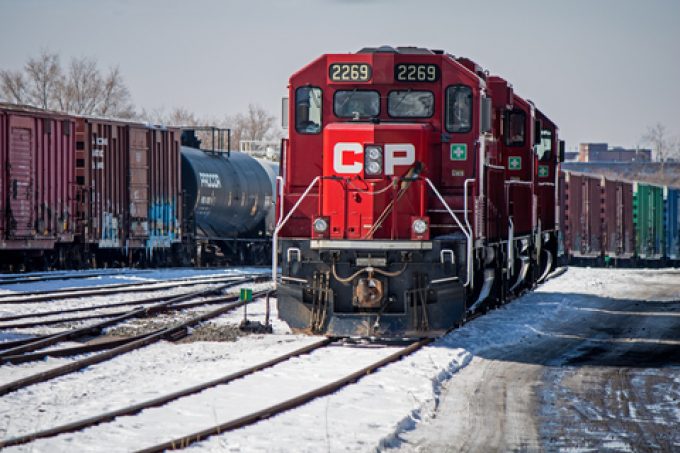
Frustrated shippers caught in Canadian rail congestion call for help

Predictions that congestion at rail yards in Canada’s interior would ease this month and next are not playing out so far, prompting frustrated importers and forwarders to ask for government intervention.

The problems are most pronounced at rail hubs around Toronto and Montreal.

“The Montreal rail terminal situation is still bad to very bad,” reported Karl-Heinz Legler, general manager of Rutherford Global Logistics, adding that the forwarder’s Toronto office describes the situation there as even worse.

Truckers have waited up to nine hours to collect cargo in Montreal, sometimes arriving at the terminal having been told containers are available, only to find they are still on the rail cars, he said.

Congestion disrupted intermodal flows to Canada’s large markets throughout the summer. Industry executives predicted improvement in autumn but this has failed to materialise so far, despite a decline in waterborne imports from Asia.

According to one forwarder, Canadian Pacific has initiated an embargo for containers from the west coast to Montreal for most of the last week of November.

In August, Canadian National (CN) set up relief container yards around Toronto and Montreal, pledging to move boxes as close as possible to their destinations, and charged customers shuttle fees ranging from $300 to $550.

According to the Canadian International Freight Forwarders Association (CIFFA), the situation has been exacerbated by government efforts to help reduce congestion at west coast container gateways (notably Vancouver), which only served to push the problem to inland rail facilities already struggling to cope with volumes.

Now, forwarders and importers are looking to the authorities for help to fix the problem. Bruce Rodgers, executive director of CIFFA, has asked federal agencies like Transport Canada and the Canada Border Services Agency to help.

“Recent decisions by government to clear the backlog at the Pacific gateway only resulted in a worsening situation. Without foresight, decisions were made, not to work on a solution to the problem, but to shift the burden inland.”

Trucking interest groups have also called for government intervention.

Flows from the port of Vancouver have suffered several massive disruptions from severe weather over the past couple of years, which prompted Ottawa to set up a task force to address supply chain issues.

Transport Canada released a report on supply chain problems in early October, in which it suggested policies – from addressing the labour shortage to supply chain data flow and digitisation – and also proposed the creation of a supply chain office to concentrate Ottawa’s approach to transport issues.

Industry bodies have welcomed the recommendations, but companies argue there is a need for immediate measures to deal with current issues. Their frustration with lack of improvement in supply chain flows is aggravated by storage charges levied by the rail companies.

“Trucking companies have no choice but to pass on increased operating costs and have to refuse, in many instances, container haulage because their equipment is tied up at terminals,” said Mr Legler.

“Freight forwarders often get stuck between clients refusing to pay extra charges beyond their control and there are horror stories of uncollectable charges for some, exceeding C$100,000 (US$73,484),” he added.

According to forwarders, the rail companies have not shown any leniency on those charges, a stance that angers importers and forwarders in light of the railways’ profits. CN tabled record results for the third quarter on 25 October reporting a 26% increase in revenue and a 44% surge in operating profit.

Source: THE LOADSTAR
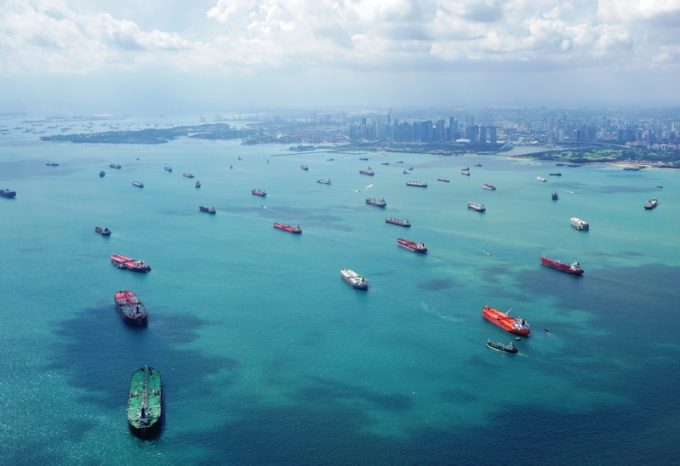
Carriers consider laying-up box ships as blanking fails to prop up rates

The idled containership fleet has breached the 1m teu capacity milestone – and is set to jump significantly higher as carriers prepare to temporarily suspend services rather than blank sailings

According to Alphaliner, as of 24 October, the number of inactive containerships either in drydock or seeking employment had reached 284, for a capacity of 1.2m teu, representing 4.6% of the global cellular fleet.

At the peak of demand in February, as carriers squeezed the charter market dry in pursuit of every serviceable vessel, the consultant recorded 154 ships, for a capacity of 442,000 teu, as inactive, many in drydock, representing just 1.8% of the global fleet, .

“Weakening cargo demand and declining freight rates have prompted carriers to cull some sailings and even temporarily suspend a number of services on major east-west tradelanes,” said Alphaliner.

The Loadstar has seen a big uptick in the number of blank sailing advisories from Asia-Europe and transpacific carriers in the past two weeks, with, for instance, some Asia-North Europe loops being voided in consecutive weeks.

However, Alphaliner does not count a ship as inactive unless it has been idle for more than 14 days – hence the proliferation of blank sailings does not figure in the capacity surplus analysis.

During Maersk’s Q3 earnings call yesterday, CEO Soren Skou reiterated the carrier’s strategy to “take out capacity to meet demand”, as the group recorded a year-on-year 7.6% decline in liftings against a downgraded market contraction for 2022 of 2%-4%.

The speed of the decline in exports from China has made the reactive blanking strategies of carriers ineffective at halting the erosion of spot and short-term rates, and more radical capacity reduction plans will be necessary to avoid a collapse in contract rates.

The Loadstar understands that some of the partners in the three east-west alliances are calling for their networks to adopt ‘winter programmes’ until mid-January, ahead of the Chinese New Year holiday.

“Nobody wants to be the first to cut out a loop and potentially lose market share,” one carrier contact told The Loadstar.

“There are hawks that want radical action and doves that want to carry on blanking, but everybody is suffering, that’s for sure, and getting concerned about next year,” he said.

Meanwhile, on the containership charter market, the increase in surplus open tonnage is putting more downward pressure on daily hire rates and materially reducing durations.

“Charter rates have continued to weaken for classic panamaxes of 4,000-5,300 teu in the past two weeks, with fixtures now typically concluded for periods of six months at a low-mid $20,000 a day,” said Alphaliner.

In fact, a broker source said this week, owners were now prepared to entertain much lower time-charter periods.

“We are talking with owners and charterers on some ships about extensions of 30 to 45 days, and for new fixtures three to four months,” he said.

Alphaliner noted that a daily hire rate of $20,000 for a panamax was “still decent by historical standards”, but was “ten times lower than what owners could achieve in early 2022”.

Source: THE LOADSTAR

US inventories stocked ahead of expected drop in imports

Retailers have prepared before peak season and have plenty of merchandise in stock

INVENTORIES of US retailers are fully stocked amid concern that imports are expected to decline to the lowest levels since early last year, according to a forecast.

The National Retail Federation and Hackett Associates expects a slowdown because retail sales for the first eight months of 2022 are 7.5% higher than 2021, and annual growth is expected to be between 6% and 8%.

“The holiday season has already started for some shoppers, and thanks to preplanning, retailers have plenty of merchandise on hand to meet demand,” said NRF vice-president Jonathan Gold. “Many retailers brought in merchandise early this year to beat rising inflation and ongoing supply chain disruption issues.”

US container imports fell 11% in September compared with the same period a year earlier, according to a report by logistics consultant Descartes, though volumes were 9% higher than in September 2019.

The NRF projects that October imports in major US ports will decline 9.4% year on year, while further declines of 4.9% and 6.1% are expected for November and December respectively. It forecasts second half of the year imports will drop 4% compared with last year.

However, it still forecasts that 2022 volumes will eclipse 2021 by 0.7%, owing to a strong first half of the year, which saw volumes rise 5.5% year on year. The NRF’s projection of 26m teu in 2022 is also 20% higher than 2019 volumes.

August was a particularly strong month for ports on the east and US Gulf coasts, as New York and New Jersey, Houston and Savannah handled record import volumes, while Virginia had its second-strongest month for imports.

While the port of Virginia expects volumes to remain consistent throughout the rest of the year, Georgia Port Authority executive director Griff Lynch said in September he expects volumes to soften. Port of Los Angeles executive director Gene Seroka echoed that view when he announced the port’s August imports figures, which came in at an eight-year low.

Data from ports and Lloyd’s List Intelligence suggests that vessel backlogs are easing in most major ports on the east and US Gulf coasts. The number of boxships at anchorages is down to about 70, a decrease of more than 25% from early September.

“The growth in U.S. import volume has run out of steam, especially for cargo from Asia,” said Hackett Associates founder Ben Hackett. “Recent cuts in carriers’ shipping capacity reflect falling demand for merchandise from well-stocked retailers even as consumers continue to spend.”

The closure of factories during China’s October Golden Week holiday coupled with the Chinese government’s continuing zero-Covid policy “have impacted production, reducing demand for shipping capacity from that side of the Pacific as well”, he added.

Source: Lloyds’ List

Ocean carriers cut trans-Pac services as blank sailings fail to stem rate slide

Mediterranean Shipping Co. Maersk, and CMA CGM are cutting three trans-Pacific services in response to a sharp drop in import demand and spot ocean freight rates.

The service changes, which amount to one post-Panamax service and two Panamax services, are not major capacity cuts and are likely to do little to prop up freight rates. But the moves demonstrate how fast carriers are pulling capacity as rates approach or fall below break-even levels.

2M Alliance members MSC and Maersk said last week in separate statements that their jointly run Sequoia/TP3 post-Panamax service will be suspended because of “significantly reduced demand” in the trans-Pacific. The Sequoia/TP3 service offers about 14,000 TEU in weekly capacity from Ningbo and Shanghai to Los Angeles.

The service will be merged into 2M’s 13,600-TEU Jaguar/TP2 service that calls Long Beach, Maersk said. Sea-Intelligence Maritime Analysis said the last sailing on the Sequoia/TP3 service, which was introduced in 2016, will be on the MSC Savona, which is scheduled to arrive in Los Angeles on Oct. 5.

Maersk also said two standalone services into the US East and Gulf coasts would be merged into one. The TP28 service, which the carrier debuted in 2022, would be merged into the TP20 service, which debuted in 2021, as of the final sailing of the Merkur Archipelago from Vietnam’s Vung Tau port on Oct. 13.

Calls at the ports of Norfolk, Charleston, and Houston on both services will be dropped, with the TP20 only calling New York-New Jersey and Mobile, Maersk said. Origin ports on the TP20 will include Jakarta, Vung Tau, Shanghai, and Ningbo. Both services use Panamax-size vessels of about 5,000 TEU.

Maersk said that consolidating services would offer better transit times for shippers and increase berth availability. It added that “as soon as cargo demand recovers, we will bring capacity back through relaunching TP3, TP28, upgrading of other services, and/or sailing extra-loaders.”

Separately, CMA CGM ended its Golden Gate Bridge service, which called the ports of Oakland and Seattle, according to Sea-Intelligence. The last sailing of the service, which offered about 8,500 TEU in weekly capacity, was on the CMA CGM Medea, which is currently berthed at Seattle.

Outside of the major ocean carriers, smaller lines have also been pulling ships from the trans-Pacific. Independent carrier CULines has ended a trans-Pacific express service that it jointly ran with Shanghai Jin Jiang Shipping since July 2021, after closing its TPN service in August, maritime consultancy Alphaliner said in a report. CULines has a second trans-Pacific express service that it still operates, Alphaliner said.

October capacity unchanged from a year ago

The service changes follow a series of blank sailings that carriers have laid out for October in a bid to cut capacity, but that have failed to halt a slide in spot freight rates. Sea-Intelligence said that ocean carriers as of last Friday planned to blank 48 planned voyages during the month. In comparison, carriers had only planned to blank 12 October voyages six weeks earlier, Sea-Intelligence said.

Those blank sailings are doing little to prop up spot ocean freight rates, which have slid 10 percent weekly since mid-August, according to a research report from investment bank Jeffries. Spot rates into the US West Coast are now hovering at $2,400 per FEU, close to the level where ships are only seeing break-even results.

Sea-Intelligence said the service cuts have mostly affected the surge capacity that was brought into the trans-Pacific amid high spot rates. Even with the service cuts, carriers will still have 1.56 million TEU of vessel space deployed in the trans-Pacific during October, essentially flat with totals from last year.

“With the blank sailings announced thus far, the carriers have merely reduced capacity down to the same level as we saw last year,” Sea-Intelligence said. “The relevant issue is the magnitude of capacity operated in the trade, and blank sailings might well be counteracted by larger vessels, new services, and possibly extra-loaders.”

Source: JOC news

China COVID rules make deep cuts in Hong Kong cross-border container volumes

Published Date: 2022-09-02

Hong Kong faces losing all its cross-border container traffic with Shenzhen and Guangdong Province if Chinese authorities continue to impose COVID-19 restrictions on trucking and feeder operations, the head of Hong Kong’s terminal operators’ group has warned.

Jessie Chung, chairwoman of the Hong Kong Container Terminal Operators’ Association, said the volume of containerized exports trucked from Guangdong Province for shipment through Hong Kong port has slumped since February when China imposed COVID-19 controls on trucking and barge operators. The association represents four of Hong Kong’s five terminal operators, including Hutchison’s Hongkong International Terminals, Cosco-HIT Terminals, Modern Terminals, and Goodman DP World.

“The situation worsened in June and July,” Chung told JOC.com Tuesday. She said the volume of export containers transported by cross-border truck to Kwai Chung container terminal fell 48 percent in June and 58 percent in July compared with a year earlier.

Hong Kong government figures show a year-on-year average monthly drop of 60 percent in total freight imports by truck from South China, to just 400,000 tons between February and June.

Cargo volumes moved to Hong Kong by barge from South China show an average monthly drop of 24 percent to about 3 million tons since January compared with last year.

“We have to liaise with Shenzhen and Guangdong authorities, otherwise we will lose all our cargo,” Chung said.

But Chinese authorities have rebuffed attempts by Hong Kong government officials for an agreement to ease restrictions on cross-border truckers and barge operators.

“There have been numerous meetings and plenty of emails and other communication on the cross-border trucking and barge operation issues,” Roberto Giannetta, chairman of the Hong Kong Liner Shipping Association, told JOC.com. “But in terms of progress, we can say there is zero improvement.”

No incentive for China to ease restrictions

Under the controls introduced in March, cross-border truck drivers are banned, while container-laden chassis can only be picked up and dropped off at designated Hong Kong-Shenzhen border crossings. Barge crews must also live on their vessels for extended periods without shore leave.

“Shenzhen has everything to gain by maintaining the existing obstacles — cargo flow through Hong Kong is being shifted to Shenzhen ports,” a senior shipping executive told JOC.com. “There is, therefore, very little motivation for them to ease restrictions that would restore smooth transport of containers through Hong Kong port.”

Chung pointed out the district government in Nansha, about 60 miles west of Hong Kong, has recently introduced a raft of incentives to encourage shippers to move cargo through Nansha, part of the Guangzhou port complex. These include cash bonuses for shippers who move into the district and to firms who increase freight volumes, especially reefer cargo.

Source: JOC news

New road-rail link boosts Prince Rupert’s transloading business

Published Date : 2022-08-31

Monday’s opening of a road-rail corridor that will streamline truck haulage in Prince Rupert without increasing traffic in the local community is seen as another step in an effort to attract more export and import transloading operations that the western Canadian port hopes will significantly boost its cargo volumes.

The Fairview-Ridley Connector Corridor, with a private freight roadway and rail sidings, will reduce the drayage distance from the existing transloading facilities to the port’s marine terminals from 12.4 miles to 3.4 miles while diverting the truck trips away from the community’s streets, according to Brian Friesen, vice president of trade development and communications at the Prince Rupert Port Authority (PRPA).

Daily truck traffic generated by the port has grown from a few trips 15 years ago to several hundred today.

“The road and rail corridor directly links Fairview Terminal, both current and future capacity, with future import and export logistics sites … that will offer new opportunities for Canadian businesses to reach global markets through containerized trade,” the PRPA said in a statement.

Prince Rupert has three transloading facilities where forest and agricultural products and plastic pellets are received in bulk cars on the Canadian National Railway and then transloaded into marine containers for export. Exports have increased from virtually none when the port opened in 2007 to more than 30 percent of its total laden container volume today, Friesen said.

Construction is scheduled to begin next year on a large export transloading facility to serve multiple tenants. Exports are expected to “explode” within the next few years to account for half of Prince Rupert’s total container volume, Friesen said.

Port to develop new import transloading facility

The port in the next few years also plans to develop an import transloading facility where laden import marine containers will be transloaded into 53-foot domestic containers that CN will carry to destinations in eastern Canada and the US. The empty marine containers will then be filled with export commodities at the export transload facilities.

“It will all happen behind the port fence,” Friesen said. “There will be no impact on the community.”

Through the first seven months of 2022, Prince Rupert handled 599,659 laden and empty TEU, down 2 percent from the first seven months of 2021, according to port statistics. The port handled 1.14 million TEU all of last year.

The port’s Fairview container terminal in September will be expanded to an annual throughput capacity of 1.65 million TEU from 1.35 million TEU at present.

New road-rail link boosts Prince Rupert’s transloading business

https://coh.oss-cn-shenzhen.aliyuncs.com/upload/attachment/2022/08/31/image002_0882ff24504646d896a44491d0082657.jpg

Monday’s opening of a road-rail corridor that will streamline truck haulage in Prince Rupert without increasing traffic in the local community is seen as another step in an effort to attract more export and import transloading operations that the western Canadian port hopes will significantly boost its cargo volumes.

The Fairview-Ridley Connector Corridor, with a private freight roadway and rail sidings, will reduce the drayage distance from the existing transloading facilities to the port’s marine terminals from 12.4 miles to 3.4 miles while diverting the truck trips away from the community’s streets, according to Brian Friesen, vice president of trade development and communications at the Prince Rupert Port Authority (PRPA).

Daily truck traffic generated by the port has grown from a few trips 15 years ago to several hundred today.

“The road and rail corridor directly links Fairview Terminal, both current and future capacity, with future import and export logistics sites … that will offer new opportunities for Canadian businesses to reach global markets through containerized trade,” the PRPA said in a statement.

Prince Rupert has three transloading facilities where forest and agricultural products and plastic pellets are received in bulk cars on the Canadian National Railway and then transloaded into marine containers for export. Exports have increased from virtually none when the port opened in 2007 to more than 30 percent of its total laden container volume today, Friesen said.

Construction is scheduled to begin next year on a large export transloading facility to serve multiple tenants. Exports are expected to “explode” within the next few years to account for half of Prince Rupert’s total container volume, Friesen said.

Port to develop new import transloading facility

The port in the next few years also plans to develop an import transloading facility where laden import marine containers will be transloaded into 53-foot domestic containers that CN will carry to destinations in eastern Canada and the US. The empty marine containers will then be filled with export commodities at the export transload facilities.

“It will all happen behind the port fence,” Friesen said. “There will be no impact on the community.”

Through the first seven months of 2022, Prince Rupert handled 599,659 laden and empty TEU, down 2 percent from the first seven months of 2021, according to port statistics. The port handled 1.14 million TEU all of last year.

The port’s Fairview container terminal in September will be expanded to an annual throughput capacity of 1.65 million TEU from 1.35 million TEU at present.


CN’s eastern Canada depots aim to relieve western port backlog

Published Date : 2022-08-19

Canadian National Railway (CN) is shuttling laden import containers from the ports of Vancouver and Prince Rupert to auxiliary storage yards in the eastern half of Canada to help clear the backlog of marine containers that has accumulated at the West Coast ports.

Yet the new storage, which CN says is already speeding up freight delivery, is adding to incremental costs for intermodal shippers already dealing with rising per diem fees and chassis and driver shortages in eastern Canada.

In a statement to JOC.com, CN said the opening of additional yard space in Toronto and Montreal is the result of requests from the country’s transport ministry, the ports, and trade groups looking to relieve “the surge of Canadian imports that are dwelling on dock or on an anchored vessel on the West Coast.”

Inland bottlenecks, most notably a lack of drayage capacity and chassis in Toronto and Montreal, have resulted in higher rail dwells at Prince Rupert and Vancouver, slowing the inland movement of imports since last summer. Average dwell times for rail containers at Vancouver terminals exceeded seven days in the first week of August, about the same as in late June, according to data from the Vancouver Fraser Port Authority. Dwells of longer than three days cause congestion problems, according to terminal operators.

In response, CN has started moving marine containers to one of four “relief” yards — two existing CN intermodal terminals in Mississauga and Valleyfield, near Montreal, and two third-party operated sites in Brampton and Mississauga — according to a Maersk customer advisory posted Tuesday. CN did not specify which containers, nor under what circumstances, freight would be diverted to one of the relief yards.

Effective Aug. 9, CN will charge shippers a shuttle fee of $300 per container for boxes moved to these relief yards, except for the Valleyfield yard, which will cost $550. Shippers will have one day of free time at the facilities, per the Maersk notice, which did not specify what demurrage charges would accrue after the expiration of free time.

CN said the fees cover the cost of operating the yards, adding that in helping to alleviate the backlog in Vancouver and Prince Rupert, the railroad has “moved containers as close as possible to their intended destinations.”

“The fees help offset the costs associated with that effort, especially in the context of a resource shortage of drayage and warehousing,” CN said in the statement. “The results of these efforts have been successful which, in turn, has decreased vessels at anchor as well as ground counts at the container terminals.”

New fees compound truck, chassis shortages

The CN shuttle fee comes ahead of other new costs facing intermodal shippers. Canadian Pacific Railway (CP) issued a new tariff effective Aug. 26 that raises demurrage for marine containers that linger at 11 of the railroad’s Canadian and US ramps.

The increases range from $75 to $125 per day for the first three days of storage past free time. Demurrage for subsequent days will increase by $75 to $275 per day, according to the notice.

CP said in a statement to JOC.com the tariffs were changed “to encourage customers to pick up containers in a timely manner to create more supply chain capacity for all stakeholders. We expect these changes to improve fluidity at those terminals.”

Bruce Rodgers, executive director of the Canadian International Freight Forwarders Association (CIFFA), told JOC.com the association’s members not only face the new shuttle fee, but additional trucking and demurrage costs if their freight gets diverted to the relief yards.

“This change has resulted in additional costs due to moving the containers between yards, splitting of shipments, and storage charges due to inability to obtain reservations,” Rodgers said.

In addition to the western Canada port backlog, a lack of truck and chassis capacity on the receiving end has exacerbated congestion at the eastern rail ramps, Chris Ford, who chairs CIFFA’s drayage practice, told JOC.com. He added that Canada’s largest chassis manufacturer won’t be able to deliver enough equipment to relieve the deficit for another year.

“There is little to no drayage capacity in Ontario, little to no container storage capacity in Ontario, and there is a container chassis shortage in Ontario,” Ford said. “The situation is a mess.”

CN’s eastern Canada depots aim to relieve western port backlog

https://coh.oss-cn-shenzhen.aliyuncs.com/upload/attachment/2022/08/17/image001_e6d4166ac47b4c38ae336949b1a61b6d.jpg

Canadian National Railway (CN) is shuttling laden import containers from the ports of Vancouver and Prince Rupert to auxiliary storage yards in the eastern half of Canada to help clear the backlog of marine containers that has accumulated at the West Coast ports.

Yet the new storage, which CN says is already speeding up freight delivery, is adding to incremental costs for intermodal shippers already dealing with rising per diem fees and chassis and driver shortages in eastern Canada.

In a statement to JOC.com, CN said the opening of additional yard space in Toronto and Montreal is the result of requests from the country’s transport ministry, the ports, and trade groups looking to relieve “the surge of Canadian imports that are dwelling on dock or on an anchored vessel on the West Coast.”

Inland bottlenecks, most notably a lack of drayage capacity and chassis in Toronto and Montreal, have resulted in higher rail dwells at Prince Rupert and Vancouver, slowing the inland movement of imports since last summer. Average dwell times for rail containers at Vancouver terminals exceeded seven days in the first week of August, about the same as in late June, according to data from the Vancouver Fraser Port Authority. Dwells of longer than three days cause congestion problems, according to terminal operators.

In response, CN has started moving marine containers to one of four “relief” yards — two existing CN intermodal terminals in Mississauga and Valleyfield, near Montreal, and two third-party operated sites in Brampton and Mississauga — according to a Maersk customer advisory posted Tuesday. CN did not specify which containers, nor under what circumstances, freight would be diverted to one of the relief yards.

Effective Aug. 9, CN will charge shippers a shuttle fee of $300 per container for boxes moved to these relief yards, except for the Valleyfield yard, which will cost $550. Shippers will have one day of free time at the facilities, per the Maersk notice, which did not specify what demurrage charges would accrue after the expiration of free time.

CN said the fees cover the cost of operating the yards, adding that in helping to alleviate the backlog in Vancouver and Prince Rupert, the railroad has “moved containers as close as possible to their intended destinations.”

“The fees help offset the costs associated with that effort, especially in the context of a resource shortage of drayage and warehousing,” CN said in the statement. “The results of these efforts have been successful which, in turn, has decreased vessels at anchor as well as ground counts at the container terminals.”

New fees compound truck, chassis shortages

The CN shuttle fee comes ahead of other new costs facing intermodal shippers. Canadian Pacific Railway (CP) issued a new tariff effective Aug. 26 that raises demurrage for marine containers that linger at 11 of the railroad’s Canadian and US ramps.

The increases range from $75 to $125 per day for the first three days of storage past free time. Demurrage for subsequent days will increase by $75 to $275 per day, according to the notice.

CP said in a statement to JOC.com the tariffs were changed “to encourage customers to pick up containers in a timely manner to create more supply chain capacity for all stakeholders. We expect these changes to improve fluidity at those terminals.”

Bruce Rodgers, executive director of the Canadian International Freight Forwarders Association (CIFFA), told JOC.com the association’s members not only face the new shuttle fee, but additional trucking and demurrage costs if their freight gets diverted to the relief yards.

“This change has resulted in additional costs due to moving the containers between yards, splitting of shipments, and storage charges due to inability to obtain reservations,” Rodgers said.

In addition to the western Canada port backlog, a lack of truck and chassis capacity on the receiving end has exacerbated congestion at the eastern rail ramps, Chris Ford, who chairs CIFFA’s drayage practice, told JOC.com. He added that Canada’s largest chassis manufacturer won’t be able to deliver enough equipment to relieve the deficit for another year.

“There is little to no drayage capacity in Ontario, little to no container storage capacity in Ontario, and there is a container chassis shortage in Ontario,” Ford said. “The situation is a mess.”


US box volumes to ease in second half

Threats of port disruptions saw volumes brought forward to the first half of the year. Even with an expected easing in the second half, import volumes will still exceed 2021

US CONTAINERISED imports are likely to see a net gain compared with last year, despite an expected slowdown in volumes in the second half of this year as the economy cools.

“Retail sales are still growing, but the economy is slowing down and that is reflected in cargo imports,” said National Retail Federation vice-president Jonathan Gold.

Data from the NRF and Hackett Associates showed that US ports handled 2.3m teu in June, the latest month for which figures are available. 

That was a 5.9% decline on the record 2.4m teu volumes imported in May but remains 4.9% above the corresponding month last year.

June’s results brought the first half of the year to 13.5m teu, a 5.5% increase year on year.

“The heady days of growth in imports are quickly receding,” said Hackett Associates founder Ben Hackett. “The outlook is for a decline in volumes compared with 2021 during the next few months, and the decline is expected to deepen in 2023.”

While numbers for July are not finalised, they are expected to see 3.2% increase over 2021, before the tide turns in August with a 3% year-on-year decline. The remaining months of the year are forecast to be between static or down on last year. 

Final numbers for the second half of the year are forecast at 12.8m teu, down 1.5% on the second half of 2021, while the full year will still come out 2% higher at 26.3m teu.

The NRF said that volumes had been front-loaded this year as shippers sought to avoid potential disruptions caused by the expiration of the US west coast labour contract on July 1, with early shipments driving second-quarter volumes. 

“Lower volumes may help ease congestion at some ports, but others are still seeing backups and global supply chain challenges are far from over,” said Mr Gold. “Our biggest concern is the potential for disruption because of separate labour negotiations at the west coast ports and the freight railroads. Concluding both sets of negotiations without disruption is critical as the important holiday season approaches.” 

News from Lloyd’s List by James Baker