White House Keeping Distance from Critical Rail and Dockworker Labor Talks For Now

https://gcaptain.com/wp-content/uploads/2021/11/2021-11-03T134343Z_2111301935_RC21NQ9Q3RIU_RTRMADP_3_GLOBAL-MARKETS-SUPPLY.jpg

The White House is monitoring labor talks in the logistics industry as unions representing 115,000 rail workers and 22,000 West Coast dockworkers negotiate fresh contracts, but won’t get directly involved in either bargaining process now, its supply-chain envoy said.

“The administration is watching as closely as it can be watched without being a point of interference, which would not be appropriate,” Stephen Lyons said in a virtual briefing Wednesday. “Negotiations are at a place where you’d think the negotiation should be at this particular point.” 

Labor impasses are spreading across the US logistics network in the busiest months of the year for shipping, as retailers stock up on back-to-school and year-end holiday goods. Dock- and railroad-worker unions are currently negotiating contracts with employers, with the latter threatening to strike as soon as July 18.  

Talks between the nation’s largest railroads and workers — which started in January 2020 — are in a 30-day cool-off period after a union rejected a binding mediation offer from the National Mediation Board. Next, the Biden administration could appoint a presidential emergency board to resolve the dispute. 

Rail Congestion Threatens Nationwide Logjam, LA’s Seroka Says

“We’ve got to get these folks some wage increases; we’ve got to address some of these issues,” Lyons said, adding he doesn’t want to get ahead of President Joe Biden as he makes a decision. “We’ll see what happens on the 17th. But I do think there’s a commitment there.”

Contract Discussions

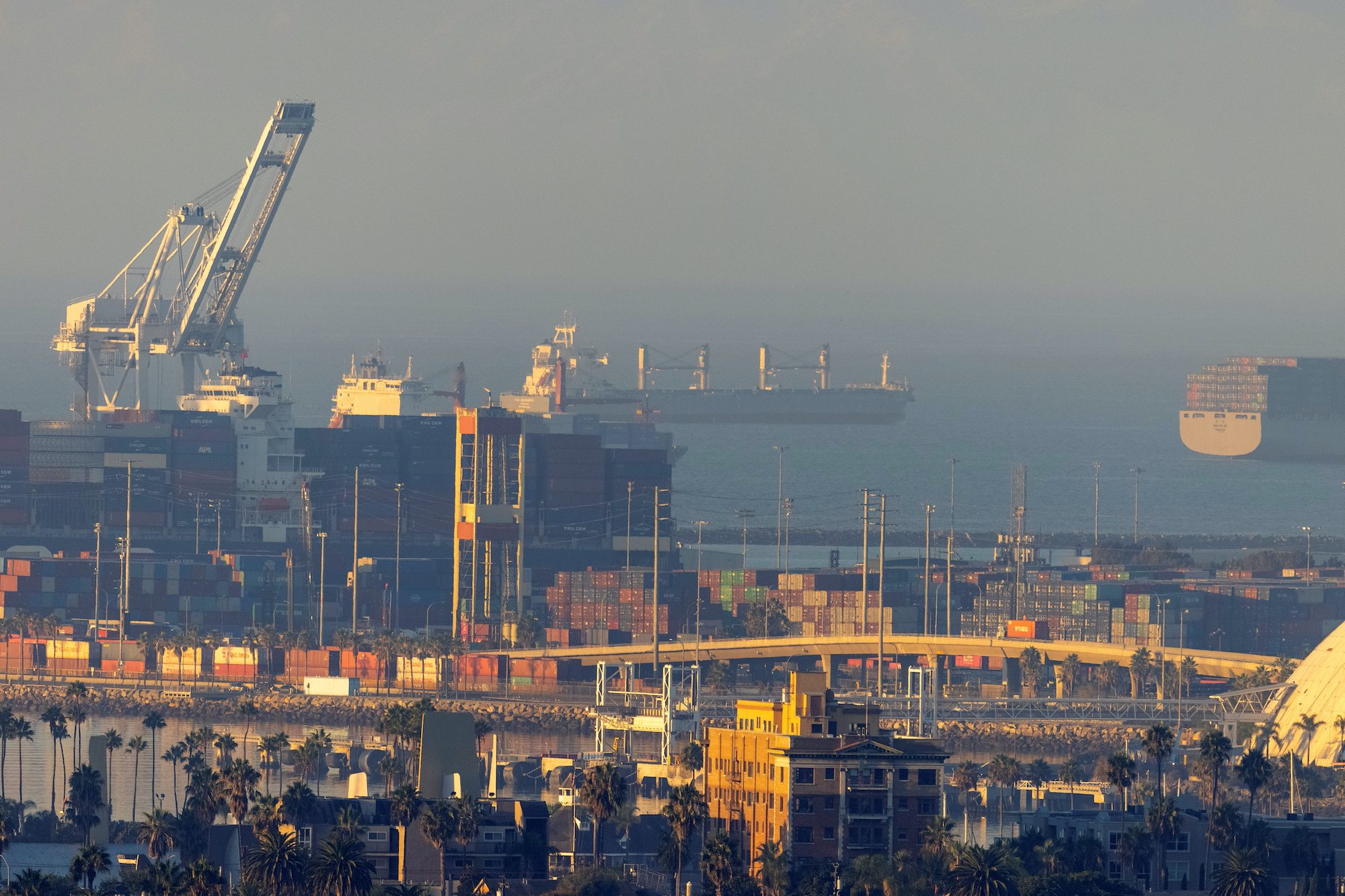
Separately, the International Longshore and Warehouse Union and the Pacific Maritime Association, which represents about 70 employers, began discussing a new contract in May and are continuing to do so after their previous pact expired July 1. Officials from the ILWU and the PMA, which represents employers, met with Biden when he visited the Port of Los Angeles last month and have recently reaffirmed their commitment to keeping cargo moving despite the lack of a contract.

Any slowdown in operations at the two ports that are responsible for 42% of all containerized trade with Asia could stoke annual inflation that’s running at the fastest pace since 1981, and damp economic growth.

Biden, who’s pledged to be the most pro-union president in US history, has directed Cabinet members and logistics-area experts to smooth out pandemic-era port logjams that spurred shortages and delays. Lyons and Labor Secretary Marty Walsh have been in touch with both parties, the port envoy said.

Port of Los Angeles Kicks Off Peak Season with Record June

Meanwhile, about 70,000 truck owner-operators in California — home to the nation’s biggest port complex at Los Angeles and Long Beach — are now in limbo as a local gig-work law starts applying to them.  

California’s Assembly Bill 5 requires workers satisfy a three-part test to be considered independent contractors, or else be seen as employees entitled to job benefits. The state’s truck owner-operators must now comply with AB5 after the Supreme Court on June 30 refused to review a case challenging the legislation that sets out the tests for employment-status classification.

‘So Critical’  

On Wednesday, truckers demonstrated against the changes at the port gateways of Los Angeles, Long Beach and Oakland, according to the Harbor Trucking Association. 

L.A. operations weren’t affected, and the port had planned for the protest days ahead Executive Director Gene Seroka said.  

“We gave them the breadth and depth and space they needed to voice their opinions but kept this cargo moving; these drivers are very respectful of just that,” Seroka said at the virtual briefing Lyons also attended. “They have a message to put out there and are continuing to do so. I applaud them for coming out here today.”

The Biden administration is still assessing the AB5 issue in California, Lyons said. 

“The truckers are so critical to their supply chain — we’ve got to make sure that we’re setting the conditions to take care of them to the best of our ability.”

US port congestion set to worsen as rail and truck strikes loom

America is facing the twin threats of rail and trucker strikes just as signs emerge that its ports on both coasts are getting overloaded once again. The ongoing negotiations between dockworker unions and employees on the US west coast is also fraying nerves for many involved in supply chains.

The US Chamber of Commerce has written to President Biden, urging him to “help resolve the ongoing labor negotiations between the Class I freight railroads and the twelve rail unions by following historic precedent and appointing a Presidential Emergency Board (PEB) comprised of individuals who are impartial, belong to the National Academy of Arbitrators, and have direct experience in resolving rail disputes.”

The chamber said, “It is imperative that the Administration act to prevent any disruption to America’s rail service.”

If President Biden does not establish a PEB before 12:01 am EDT on July 18, the railroads and unions could take action to stop work by the 115,000 affected workers, through either a lockout or a strike.

A work stoppage would exacerbate congestion at US ports on all coasts and add complications to already strained supply chains.

If a PEB is appointed, it will have 30 days to make recommendations to settle issues. During that period and for 30 days following release of the recommendations report, the two sides will be prohibited from stopping work.

A White House official said the administration “is going through the standard process that has been used in the past when considering a PEB,” according to a report from Reuters.

Meanwhile, a protest against a new state law, AB5, is set to see many truckers go on strike in California from as early as today with further strikes planned for Monday too.

AB5 intends to limit the deployment of independent contractors and will classify them as employees instead.

The twin threats of road and rail strikes during the peak season comes as data emerges showing congestion is growing at the country’s top two ports, Los Angeles and Long Beach. The number of import containers waiting for more than nine days at both ports has shot up this month to their highest figures in the year to date. Congestion on the east coast has been brewing for many weeks too.


https://coh.oss-cn-shenzhen.aliyuncs.com/upload/attachment/2022/07/13/image002_ef04f99b1f434901aeefd4cffb3f7181.jpg

CN adds second Halifax daily service amid growth expectations

https://coh.oss-cn-shenzhen.aliyuncs.com/upload/attachment/2022/07/07/image001_b38d0be63b4e4088bf0e2b34065236eb.jpg

Canadian National Railway has launched a second daily train service connecting Halifax to Toronto and the US Midwest in anticipation of rising volumes, despite a first-quarter decline in cargo handled at the eastern Canadian port.

The rail service, capable of hauling 250 TEU, connects Halifax to Montreal within 26 hours, Toronto in 35 hours, Chicago in 56 hours, and Detroit in 59 hours. Container volumes at Halifax were down 9.5 percent in the first quarter from the same period in 2021, according to the port.

“There are many factors driving the need for additional rail availability through Halifax,” Lane Ferguson, director of communications and marketing for the Port of Halifax, told JOC.com Friday. “Cargo volume is one aspect. This includes the new services through Halifax over the past year and anticipated steady volume over the remainder of 2022.”

Doug MacDonald, CN’s chief marketing officer, wrote in a LinkedIn post on Monday that the Halifax service was selling out daily.

“A second train plan was needed to split the workload and dramatically lowers time to market,” he wrote. “We simply want to get our goods to market as quickly as possible and added additional service on the East Coast. CN’s Eastern corridor has plenty of capacity to grow and add new trains.”

In April, PSA International completed a deal to become Halifax’s sole operator after acquiring the Fairview Cove Container Terminal, also known as Ceres Halifax.

California ports piling up again: Too many containers sitting too long

At the height of last year’s “will Christmas be canceled?” supply chain freak-out, the ports of Los Angeles and Long Beach — with the Biden administration’s backing — proposed a highly controversial fee on import containers that sat too long in terminal yards.

The mere threat of this fee, announced on Oct. 25 for implementation Nov. 15, seemed to initially chase more boxes out the gates, as designed. Every week since then, like clockwork, the ports have cited progress and announced that the fee enforcement would be postponed until the following week.

Now, the container dwell numbers are getting worse and becoming increasingly hard to sugarcoat.

Could that proposed fee — $100 a day for each container dwelling too long, compounding an additional $100 per day thereafter — ever actually be charged?

LA/LB long-dwelling boxes doubled since February

The two ports said last Friday that the fee would be delayed again due to a combined 31% drop in aging containers since late October. But if you run the numbers with a different start date you’ll get a very different picture.

The combined number of import containers at both ports dwelling for nine days or more has more than doubled since early February, to 48,932 as of Wednesday.

This is almost exactly the number of containers dwelling on Los Angeles and Long Beach on Nov. 15 (48,905), back on the day the fee plan was originally to be implemented.

The fee plan is designed to compel importers to pull boxes from the terminals and free up space. The concern is that the cure will be worse than the disease. During the inaugural meeting of the National Shipping Advisory Council in October, one member called the fee plan “catastrophic,” another called it “crazy” and another warned it would “cause more problems than we already have.”

Maersk warned a month ago that “the likelihood of the administration implementing the fee has risen significantly.” It still hasn’t happened, but American Shipper was told Wednesday that the fee is being reassessed weekly and could be implemented at any point.

Long-dwelling containers in Long Beach

The proposed fee would target import containers moving by truck that dwell nine or more days at the terminals and containers moving by rail dwelling six or more days. (Long Beach publicly discloses data on import containers dwelling nine days or more, segregated by truck and rail, but not rail-only containers dwelling six to eight days.)

As of Wednesday, Long Beach had 8,992 containers on its terminals for nine days or more on the trucking side, and 11,509 on the rail side, for a total of 20,501. Long Beach pointed out that this is down 22% versus Oct. 28, when it began compiling the numbers.

Sounds like a success. But move the start date just a few days forward and Long Beach’s gain disappears. As far back as Nov. 5, there were fewer containers dwelling nine days or more in Long Beach than there are now. The current count is 25% higher than on Nov. 20, over seven months ago, when there were 16,398 containers dwelling nine days or more at Long Beach.

The Long Beach count hit a low of 9,928 containers dwelling nine days or more on Jan. 28. It’s now more than double that.

Data from Long Beach clearly shows the culprit for the resurgence. Long-dwelling containers moving by truck are around half what they were seven months ago. In contrast, containers moving by rail are piling up, rising steadily since March.

Long-dwelling containers in Los Angeles

The Port of Los Angeles had a total of 70,290 import containers in its terminals as of Wednesday. It pointed out that this is down 26% versus Oct. 24, the day before the announcement of the fee plan. There were 28,431 containers dwelling nine or more days on Wednesday, down 24% from Oct. 24.

Sounds impressive, but yet again, it’s a matter of which dates you compare. In late January, the total number of import containers at the Port of Los Angeles hit a low of around 40,000. It’s up 76% since then.

The number of import containers in Los Angeles dwelling nine days or more sank to around 10,000 in early February. It’s now almost triple that.

‘It’s all about the rail’

As with Long Beach, rail delays are the major culprit in Los Angeles. On Wednesday, 17,010 of the containers dwelling nine or more days — 60% of the total — were on-dock rail containers waiting to load.

Of all the import containers on the terminal, 28,984 or 41% of the total were rail-bound containers.

Gene Seroka, executive director of the Port of Los Angeles, said during a press conference on June 14 that there are normally around 9,000 on-dock rail containers at the terminals, less than a third of the current tally, and there would normally be no on-dock rail containers dwelling nine days or more.

Los Angeles’ rail cargo has increased sixfold since February. Asked about the ongoing issue of long-dwelling containers, Seroka said, “Right now it’s all about the rail. We’re working all out to catch up with this rail cargo.

“If we were to strip out [the rail effect] and bring the rail product back to where it normally should be, we’d have no problem with aging containers and we’d be moving imports fluidly through this port complex.”

No immediate relief seen for Canada’s rail problems

A lack of drayage capacity in Toronto and Montreal for receiving cargo from Prince Rupert and Vancouver is increasingly putting upstream pressure on the West Coast ports, keeping rail dwells elevated at marine terminals and slowing the inland movement of Asian imports.

Vancouver has been grappling with persistent bouts of congestion since last summer due to a series of mishaps — wildfires and flooding that crippled road and rail infrastructure in British Columbia, and sub-freezing temperatures this winter that compounded the rail problems. Cargo flow through Prince Rupert has been relatively smoother. In addition to serving markets in eastern Canada, the ports also serve as gateways for US-bound cargo.

Cargo volumes this year highlight the fact that inland bottlenecks, not container volumes, are the cause of the ports’ woes. Vancouver’s container volume was down 13.7 percent in January through May from the year-ago period, according to the port. Prince Rupert data shows the port’s volume was up 1 percent through the first five months of the year.

“Rail dwell is challenging across the port due to capacity constraints in the network and inland terminals, and this is not isolated to terminals within the Port of Vancouver,” GCT Canada, which operates the Deltaport and Vanterm terminals in Vancouver, told JOC.com in a statement.

The congestion at rail hubs in eastern Canada is a direct result of drayage capacity shortages at those facilities. “It’s an on-going situation with both railroads (Canadian Pacific and Canadian National),” said Julia Kuzeljevich, public affairs manager at the Canadian International Freight Forwarders Association (CIFFA).

“There are fewer drivers in Toronto to handle the volume, creating a backlog/congestion issue. On a YTD basis, total truck visits declined by 18.5 percent,” CIFFA said in a bulletin to its membership. CIFFA noted that the drayage problem, which first surfaced in Toronto in May, has extended to Montreal.

Railroad metering cargo

As a result of the congestion at their inland facilities, the railroads are metering, or managing how many trains they are deploying to Vancouver and Prince Rupert. This is causing rail containers to back up at the marine terminals because of reduced train capacity. However, the situation at marine terminals is fluid, with rail dwells changing from day to day.

For example, at GCT Deltaport, the largest container terminal in Vancouver, containers for both railroads were dwelling an average of seven days or longer last Tuesday, according to numbers posted on the Port of Vancouver website. The average dwell on Wednesday dropped to five to seven days for CP containers, and three to five days for CN containers. On Thursday, the CP containers were still dwelling five to seven days, but the CN dwells shot back up over seven days, according to the port. Dwells of longer than three days cause congestion problems.

When the container dwells begin to build for one of the railroads, hampering operations, the terminals immediately push more containers to the other railroad because those containers can be vacated more smoothly, which helps to relieve overall congestion at the marine terminal. However, the second railroad’s operations can quickly become overloaded.

Canada’s whiplash

Although the whiplash effect of inland rail congestion on West Coast ports has been pervasive in the US the past year, it has not been a serious problem in Canada until recently.

“It never happened before,” Maksim Mihic, CEO and general manager at DP World Canada, told JOC.com. DP World operates the Centerm and Fraser Surrey Docks terminals in Vancouver and Prince Rupert’s Fairview terminal.

“We’re seeing elevated dwells because of (delays in) Toronto and Montreal,” said Brian Friesen, vice president of trade development and communications at the Port of Prince Rupert. However, DP World two weeks ago opened a near-dock surge yard near the Fairview terminal and has already begun to move containers there for temporary storage, so that timely move should prevent rail congestion at the port from worsening, Friesen said.

Neither the ports nor the railroads are ready to forecast a return to normal. “The drayage and warehouse capacity constraints in Toronto and Montreal have become so chronic that we are now in a situation of a potential back-up for some time until this gets addressed,” CN said in a statement.

CP, which said “heavy volumes” of intermodal cargo are also contributing to excessive container dwells at the ports, adds that the main issue in the supply chain can be traced to long-dwelling containers at the inland rail ramps. “To maintain network efficiency, all participants in the supply chain must work together to pick up and return equipment promptly,” CP said in a statement.


PMA-ILWU discussing earlier start times at West Coast terminals

West Coast longshore employers and dockworkers engaged in negotiations for a new contract are discussing a proposal that would allow marine terminals to open their gates at 6 a.m., according to the president of terminal operator SSA Containers. The potential change has the support of truckers who work the ports, saying it would add an hour to what they consider the most productive time of the day.

Allowing the so-called “double-flex” gates is not a controversial issue, said Ed DeNike, president of SSA Containers, who referenced the extended gate proposal at the JOC Port Performance webcast Tuesday. It’s just a matter of working out the details during the ongoing coastwide contract negotiations in San Francisco between the International Longshore & Warehouse Union (ILWU) and the Pacific Maritime Association (PMA), he said.

“It’s not possible under the current contract. We can flex at 7 a.m. Maybe there’s a chance to flex at 6 a.m.,” DeNike said. SSA Marine operates container terminals in Seattle, Oakland, and Long Beach.

Harbor truckers say getting earlier access each day to containers would fit in nicely with the schedules of truckers, shippers, and warehouses. “The expanded hours would definitely help,” Matt Schrap, CEO of the Harbor Trucking Association, told JOC.com Wednesday. “We’ve wanted this for some time.”

The long-standing work shifts, as specified in the current coastwide contract that expires July 1, are 8 a.m. to 5 p.m., 6 p.m. to 3 a.m., and the late night “hoot” shift from 3 a.m. to 8 a.m. The contract also allows terminals to “flex” the start times one hour early, but not by two hours. Longshoremen by contract provisions earn overtime pay whenever they start early.

Warehouses and truckers say the early-morning hours fit best into their operations. “The earlier the better,” said Scott Weiss, vice president technical sales at Performance Team, which operates warehouses throughout the country.

 ‘Big line of trucks’ for 7 a.m. start

In order to open their gates at 6 a.m. without the double-flex provision, terminals would have to run the entire hoot shift from 3 a.m. to 8 a.m., which is quite costly, as longshoremen on that shift are paid for eight hours of work for five hours on the job. The ports of Los Angeles and Long Beach, at the urging of the White House port productivity task force, have experimented sporadically with hoot shifts since last fall.

Terminals that have experimented with the hoot shifts said they generated little, if any, truck traffic because most warehouses in Southern California do not operate on a 24/7 basis. However, DeNike said trucks begin lining up at 6 a.m. each morning at SSA-operated terminals awaiting the opening of the 7 a.m. flex gate. “It’s quite a big line of trucks,” he said.

Schrap said that in order to make the 6 a.m. gates truly beneficial for truckers, all 12 container terminals in Los Angeles-Long Beach should open at that time so drivers can build those gates hours into their schedules. “The most important thing is consistency throughout the harbor,” he said.

The PMA and ILWU have a media blackout during the negotiations and do not answer questions on specific issues under discussion.

Ocean, air shipments face weeks of disruption on Shanghai COVID lockdown

Shippers in eastern China face weeks of disruption to freight movements after authorities imposed a two-stage lockdown in Shanghai beginning Monday to test all 26 million inhabitants for COVID-19 amid a continuing surge in cases.

Carriers said while Shanghai’s main container terminals at Yangshan and Waigaoqiao remain open with vessel operations, yard handling, and gate-in/gate-out operating normally, many depots and warehouses are shut, and trucking is severely curtailed.

“Coming so soon after the lockdown in Shenzhen, Shanghai’s lockdown will effectively shutter the world’s largest container port for the next 10 days,” a senior executive at a Hong Kong-based freight forwarder told JOC.com. “While city authorities will be determined to keep the terminals operating, the restrictions to factories, warehouses, and truck movements means little cargo will go in or out of the port.”

 “Shanghai has been beset by vessel delays, and the lockdown will likely lengthen vessel wait times,” the executive added.

Shanghai handled more than 47 million TEU in 2021, up 8 percent year on year.

Shanghai officials announced the city-wide lockdown Sunday after Shanghai reported more than 2,630 new COVID cases, the highest one-day number since China’s initial outbreak two years ago.

Under the lockdown rules, districts east of the Huangpu River, including the Pudong financial and commercial center, will be closed from Monday to April 1 to enable testing to be carried out. Areas west of the Huangpu, including older city center districts such as Puxi, will be locked down and tested between April 1-5. All bridges and tunnels connecting the two sides of the Huangpu, including metro lines, will be shut the entire time.

“We have been notified that the Shanghai ports, Waigaoqiao and Yangshan, are currently working as per normal,” a Maersk China spokesperson told JOC.com Monday. “However, local depots [and] warehouses, including Maersk’s wholly owned OceanEast warehouse in the Lingang area, and trucking services have been impacted due to the lockdown and we expect landside transportation efficiency will be reduced.”

Lingang is the main free trade zone in Shanghai’s Pudong district and the closest trade zone to the Yangshan deepwater port.

Some facilities were open, though. Maersk listed about 12 dry freight depots and three reefer depots that remained open for empty container pick-up and returns Monday.

“We expect most companies to work remotely during this period and factories to suspend manufacturing,” Marco Gaeta, managing director for Asia and the Middle East at Singapore-headquartered FIBS Logistics, told JOC.com. “Port and airport operations will inevitably be affected with the restrictions in movement.”

Luxembourg-based cargo airline Cargolux canceled flights to and from Shanghai for the rest of this week. Maersk said it’s likely many other airlines will be evaluating possible flight cancellations.

Airport workers were recalled at the weekend to create a closed-loop bubble to allow them to continue working during the lockdown, but FIBS Logistics said trucks outside Shanghai are unable to travel to either the airport or port area.

Maersk said handling of air cargo already in on-airport warehouses is likely to continue, but new cargo will be affected by labor shortages and delivery delays.

Trucking restrictions

Freight forwarders said the restrictions on truckers traveling between Shanghai and cities in adjacent provinces including Jiangsu, Anhui, and Zhejiang will make it virtually impossible for manufacturers in those provinces to truck products to Shanghai’s port and airport until at least next week.

Highlighting the impact on cargo shipments, Crane Worldwide Logistics said there were very few trucks on the road in Pudong Monday morning.

“Trucking and container drayage service between Shanghai and adjacent cities and provinces are now also suspended,” Crane said in an advisory. “That means cargo cannot be delivered by suppliers to our air freight warehouses and ocean CFS. Factory loadings cannot be performed. Delivery from ocean terminals and air import warehouses to Shanghai’s Puxi area and to other cities has become impossible.”

Maersk said trucking capacity in Shanghai alone is expected to drop by 30 percent as drivers are either required to stay home to undergo testing or are unable to enter the port districts due to the lockdowns.

“Most truck companies and warehouses in Pudong have been locked down. This includes FCL and LCL warehouses,” FIBS Logistics said in a customer advisory Monday.

“Trucking to Yangshan port from Ningbo should be hard to impossible,” the company added.

The lockdown in Shanghai came as operations in Shenzhen were returning to normal following its seven-day lockdown that ended March 20. “Trucking between Shenzhen and nearby cities has gradually recovered,” Maersk said in its customer advisory.

But other cities were continuing to face disruption. FIBS Logistics said while Qingdao port and airport was operating, operating efficiency was very low due to COVID-19 prevention measures and “the trucking situation is very serious.” Some customers were postponing bookings due to lockdowns in cities around Qingdao.


Air cargo market expects a healthy peak season as rates and volumes rise

Average vessel waiting times for berth and labour have improved significantly at the San Pedro Bay ports of Los Angeles and Long Beach in the past few weeks, halving the number of queueing ships to below 50.

Moreover, according to the latest data from the Los Angeles Signal port optimiser platform, the average waiting time at LA terminals has fallen to 3.1 days, with some facilities reporting little or no delay.

Supply chain disruptions in China, improving landside operations and the continuing coastal shift to the hitherto less-congested US east and Gulf coast ports are seen as the main reasons for the easing of congestion.

However, a report from New York-based supply chain and freight platform Shifl suggests that improved inventory levels and a downturn in consumer demand could also impact import volumes.

“The Fed’s decision to raise interest rates to address concerns about inflation could result in a slowdown in retail demand at a time when inventories appear to have reached levels last seen in March 2020,” said Shifl founder and CEO Shabsie Levy.

 “It appears that, after two years of turmoil, shops are finally fully stocked. What happens next on the world’s most important tradelane depends on how fast the Fed puts the squeeze on inflation,” he said.

However, despite the weakening fundamentals, the appetite of major BCOs to take charge of their supply chains by chartering their own ships appears not to have lessened. Indeed, shipbrokers continue to report new fixtures, including a two-month extension of the 2,756 teu X-Press Mekong at a massive $180,000 a day.

According to VesselsValue data, the sub-panamax ship is due to arrive at Vancouver, Canada today, on hire to Honolulu-based transport and logistics group Pasha Hawaii. However, The Loadstar understands that it has leased the ship on behalf of Canada’s automotive, hardware, sports and household goods retailer Canadian Tire.

At the TPM22 conference at Long Beach this month, Canadian Tire VP of transportation Gary Fast alluded to voyage and time charter deals that he said had assisted the retailer. He said: “When you can’t find capacity, you have to take care of your supply chain.”

Meanwhile, New York-based Blue Alpha Capital has published February throughput data for the top 10 US container ports.

While container imports to the east coast were up 27.3% in February, compared with the same month of the year before, to 1,029,183 teu, they were skewed by the earlier timing of Chinese New Year. However, February imports to west coast ports increased by just 5.9%, to 1,025,545 teu, emphasising the continued coastal shift of cargo.

The report’s author, John McCowan, said there were three factors driving the growth in imports through the east coast gateways. He said: “First, the initial pandemic volume surge disproportionately benefited the west coast ports, and that is impacting current comparisons. Second, shippers have elected to change routing decisions for loads that would have gone to west coast ports to east and Gulf coast ports to avoid the widely reported congestion.”

Mr McCown also identified a third reason: reduced linehaul costs from using east coast-calling vessels compared with the cross-country intermodal service via the west coast.

Yantian port back at full speed; box recovery could take a month

The backlog of vessels waiting to reach berths at the Port of Yantian, the largest container port in China, is gone since terminals returned to full operations on Thursday following a COVID-19 outbreak among dockworkers that significantly curtailed operations, according to an official at shipping giant A.P. Møller – Maersk.

But shippers shouldn’t expect supply chains to be immediately repaired. While Yantian officials believe they can eliminate the accumulation of stacked containers within a couple of weeks, the backlog of shipments piled up in factories and warehouses elsewhere in the Shenzhen region will take at least a month to clear, Akhil Nair, vice president of global carrier management and ocean strategy for SEKO Logistics, said during a press briefing last week.

“The backlog is physically impacting production at factories because they simply don’t have warehousing space to store finished goods that can’t ship out on time. Pretty much every forwarder or logistics provider that has a facility at any major seaport is being utilized for temporary storage,” he said.

Yantian International Container Terminals on Thursday began accepting vessels at all 11 berths after running the port at 30% of normal productivity since the third week of May. Earlier this month vessels were waiting up to two weeks for a berth.

Port officials said the number of laden containers allowed to enter the port by truck will increase to 9,000 per day after restricting movements to about 4,000 to 5,000 containers. In an effort to move cargo dwelling on the docks first, they are placing a seven-day window on new cargo entering the gate based on a booked vessel’s estimated time of arrival.

“There’s no backlog of vessels now, no waiting at anchor anymore. Berth availability is at 100%,” Maersk spokesman Thomas Boyd said in an email.

The reopening of Yantian is also bringing down wait times at the nearby ports of Shekou and Nansha, which had been handling much of the vessel overflow during the past month.

The slowdown in productivity has had a huge impact on global freight transportation. The system was already straining to keep up with a prolonged surge in demand bumping up against infrastructure, equipment and labor limits that have left ports overwhelmed and led to vessel delays, which put strong upward pressure on freight rates.

Hundreds of vessels skipped South China ports to avoid waiting at anchor seven days or more for a parking spot. In mid-June there was a estimated backlog of 160,000 containers, or about 320,000 twenty-foot equivalent units, Nair said. On average, about 15% to 20% of containers are getting rolled over to a future vessel sailing because carriers are overbooked and are prioritizing freight based on profitability or operational considerations.

Ocean executives at Flexport, a rapidly growing freight forwarder based in San Francisco, said in a presentation last week that shipping times have more than doubled this year. The transit time for an intermodal move from Shanghai to Chicago via Southern California ports, which typically takes 35 days, is now 74 days.

Ocean shipping experts say the cascade of released freight from Yantian will soon add to port congestion and vessel delays at major ports around the world, including in the U.S.

Carriers are now rediverting vessels back and resuming port calls in South China, Nair said. Ships coming to pick up export loads are likely to get first priority over vessels with empty containers to discharge so the terminals can reduce container density in their yards, he added.

Trucking restrictions in South China haven’t eased, with drivers still required to get COVID tests if they are bringing in containers from other provinces. The Port of Shekou, for example, will not accept any drivers who previously had been to Nanshan. Some terminals in the Dachang Bay area say drivers need to have a Shenzhen registration on their license plate and that they will hold drivers for 48 hours until test results are received.

Congestion backs into factories

While vessels stacked up in open water waiting to enter ports have gained media attention, out-of-public-view congestion is moving from the ports onto the factory floor.

Manufacturers in Asia are operating at full tilt as economies continue to reopen from the pandemic and consumers, flush with savings during the pandemic, flock to shopping from the convenience of their homes. After splurging on exercise equipment, electronic devices, hot tubs and other items for home recreation and offices, shoppers are buying makeup, clothing and luggage — things that improve their appearance in public or their travel experience. Meanwhile, businesses are increasing purchases of computers and machinery.

Products are being sold so fast, in many cases, that companies can’t restock shelves after inventories were depleted last year and face large order backlogs.

One furniture brand, for example, has sold out of inventory and can’t get replacements before August, said Brian Bourke, SEKO’s chief growth officer, in an interview during the spring. Another customer sold out of its top-selling fitness product.

101 Mobility, which provides home-access solutions for people with disabilities, has seen lead times to get ramps and other supplies go from several days to several weeks, with one manufacturing saying it can take three to four months to fill orders, Preston Holland, a business development manager, said on Friday’s edition of “What the Truck?”

SEKO Logistics has three warehouses in Shenzhen that are completely full with products that were supposed to be stored on a short-term basis but have been there for months, Nair said.

Retailers and other U.S. importers “want their purchase orders to continue to be manufactured and the suppliers are threatening to stop production if they don’t move the cargo out of their premises. That is leading to the increase in demand for warehousing space, particularly bonded warehousing space,” Nair said.

SEKO Logistics is advising clients to pull the trigger and execute purchase orders now for goods they need later this year, because supply chain delays combined with backlogged factories mean lead times could be six months or more compared to three months before the pandemic.

“There’s a lot of risk out there. But it seems the greater risk is not having any inventory to sell,” Bourke said.


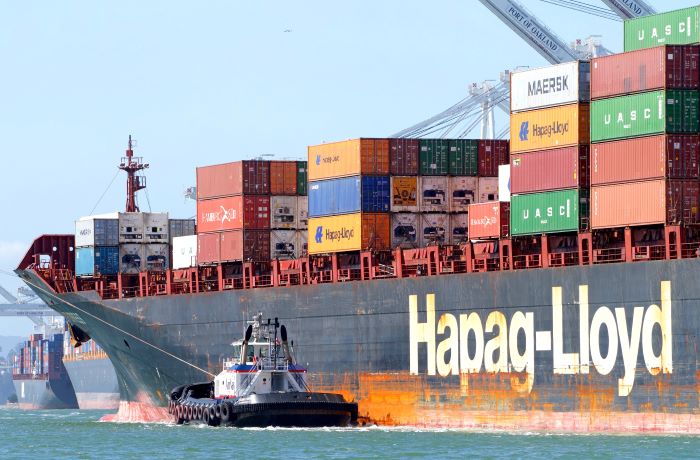
Hapag-Lloyd warns of shipping tightness through 2022

The head of US trades at Hapag-Lloyd said the carrier will not be able to add more containerships to the trans-Pacific for the rest of the year, despite expectations that Asian imports into the US will stay strong through the end of 2021.

The message from Uffe Ostergaard during a Thursday webinar underscores how US import demand is outpacing capacity, forcing retailers and others to prioritize which goods must be in the country and which can wait until next year. The unprecedented volume pressures that began in the spring have been greater than the new capacity container lines have shifted from other trades to the trans-Pacific.

“I would never have imagined we would see five-digit trans-Pacific rates,” said Ostergaard, Hapag-Lloyd’s president, Americas.

With extra trans-Pacific carrier capacity at its limit, shippers face elevated freight rates through 2022, he said. Ostegaard stressed that trucking capacity remains well below pre-COVID-19 levels.

He said Hapag-Lloyd will have added 500,000 TEU of additional capacity through the end of 2021 to meet the elevated demand. And it has another 210,000 TEU of newbuilds on order.

However, the additional ships and other assets needed to get freight to market right now will be scarce for the foreseeable future, barring a sudden drop in demand. Alphaliner’s last survey showed the idled containership fleet stood at 171 ships, or roughly 645,500 TEU, which is 2.7 percent of the global capacity.

“It’s not like we have a whole fleet of ships sitting somewhere that are waiting to be deployed,” Ostergaard said. “Everything is working. We don’t believe we will be able to get our hands on any additional ships in the second half of 2021.”

Curveballs hit sagging system

Ostergaard said that the containership industry has faced so many “curveballs” this year, including the Suez blockage and the Yantian closure, that have made it increasingly difficult to maintain schedule reliability and provide the capacity that shippers want.

Ostergaard’s views echo that of Charles van der Steene. Maersk’s head of North American sales, who said that delays and port congestion have completely offset the capacity that Maersk has injected into the trans-Pacific.

The number of container ships at anchorage along the US West Coast has dropped from 62 in the first quarter to 52 at the start of June, Ostergaard said. While there are fewer ship delays in the Los Angeles-Long Beach ports, the congestion has shifted to the Oakland and Pacific Northwest ports, he said, adding that ships are taking up to a week to unload.

“Those are the kinds of things creating a lot of delays, but also impacting overall carrier capacity because so much of it is just waiting there,” Ostergaard said.

Ocean capacity, of course, is not the only limit facing shippers right now. Citing the JOC.com For-Hire Trucking Employment Index, Ostergaard said the level of employment in the US trucking industry remains at about where it was in 2018. Across most major US coastal and inland freight hubs, the lead time to secure a truck is seven days or more.

Drayage capacity warning

The space constraints at marine terminals are one of the biggest limits on the ability to unload vessels in a timely manner, Ostergaard said. But until more trucks can be deployed to move import loads out, terminals will remain congested, he added.

“Truck availability is the biggest concern going into Q3 and Q4,” Ostergaard said. “I don’t see how it will get resolved.”

Tight rail capacity is also hurting cargo fluidity, but it is not a nationwide problem like trucking, Ostergaard said. However, truck and chassis supply are keeping Midwest railyards full, resulting in further bottlenecks in the supply chain.

“A lot of the rail yards are congested,” he said. “Congested yards prevent cargo from ports from moving inland and the storage costs associated with those containers increase.”

With limited ability to give more capacity to customers, Ostergaard said the carrier’s near-term initiatives at least aim to make it easier for shippers to deal with the current market. He said Hapag-Lloyd has hired 100 new customer service representatives for its US offices, which will be reopening shortly.

The carrier is also offering new online services that will make it easier for shippers to handle delays. One new service will allow shippers to buy added free time for a container at a “significant discount” in the event of container being held at a terminal or a warehouse.

The new services “don’t create additional slots on ships, but it gives customers much better ability to have access to information when changes happen,” Ostergaard said.