ILWU bankruptcy filing provides dramatic twist to long-running Portland dispute

A local labor dispute in Portland that started more than a decade ago is jeopardizing the financial health of the International Longshore and Warehouse Union (ILWU) to the point the union has resorted to filing for bankruptcy protection to avoid paying a $19 million court judgement.

The ILWU’s filing for Chapter 11 protection Friday in the US Bankruptcy Court for Northern California in San Francisco resulted from five years of work stoppages and slowdowns from 2012-17 at Terminal 6 in Portland. The US District Court in Portland in 2019 initially found the ILWU International and ILWU Local 6 in Portland liable for $93 million in damages to the operations of ICTSI Portland, which operated Terminal 6 at the time. The court in 2020 reduced the award to $19 million.

While sources say the complex case before the bankruptcy court could take weeks to sort out, the legal machinations are not expected to result in cargo-handling interruptions on the West Coast. The Port of Portland now operates Terminal 6.

“I would not expect there will be any job actions,” James McKenna, president of the Pacific Maritime Association (PMA), which represents terminal operators and shipping lines and negotiates the coastwide labor contract with the ILWU, told the Journal of Commerce Monday.

McKenna said that in the remote possibility the ILWU engages in any job actions, the grievance procedure in the new coastwide contract, which was ratified before Labor Day, would allow arbitrators to step in immediately to stop any interruptions.

Terminal operator ICTSI Portland told the Journal of Commerce Monday it does not believe the ILWU’s attempt to avoid the $19 million court-ordered payment via bankruptcy will succeed.

“The facts have already been legally established before the National Labor Relations Board and in numerous court proceedings, including before a Portland, Oregon jury, which in 2019 found the ILWU liable for its illegal conduct,” ICTSI said in a statement.

ILWU slams terminal operator’s ‘scorched-earth’ tactic

Details please refer to JOC news.

Source:

Mongelluzzo, B. (2023, October 2). ILWU bankruptcy filing provides dramatic twist to long-running Portland dispute. Journal of Commerce. https://www.joc.com/article/ilwu-bankruptcy-filing-provides-dramatic-twist-long-running-portland-dispute_20231003.html
Aggressive trans-Pac blank sailings likely through Lunar New Year amid freight downturn: sources

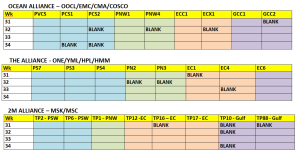
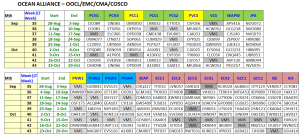
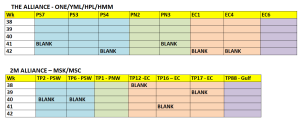
Ocean carriers in the eastbound trans-Pacific say capacity reductions they have implemented on the trade are likely to continue at least for the next five months because US imports from Asia are expected to remain muted through the Lunar New Year in February.

For importers and forwarders, the blank sailings mean the resulting schedule disruptions and “rolling” of cargo they are already experiencing at Asian load ports will force them to book more of their cargo with carriers they can count on to maintain schedule integrity.

“Blanks are making scheduling in the trans-Pacific unreliable. That’s why Matson is doing so well,” Jack Chang, president of the non-vessel-operating common carrier (NVO) CubeShip Consolidation, told the Journal of Commerce.

Matson Navigation charges a premium for its two express services from China to Long Beach.

“We try to protect our highest-priority cargo,” said a home furnishings importer who did not want to be identified. “We use Matson specifically for that purpose.”

A Matson spokesperson told the Journal of Commerce the carrier has had “no blanking to this point and no plans to blank,” adding its bookings this month have been strong.

Carriers, however, are emphatic that they will cancel even more sailings in the coming months if rates continue to move lower in the largest US trade lane.

“If spot rates go too low, carriers will do what they’re going to do — blank sailings,” a second shipping executive told the Journal of Commerce.

The Journal of Commerce spoke to five carriers, three NVOs, a third-party logistics provider and an industry analyst for this story.

The Lunar New Year holiday, when factories in Asia normally close for a week or two, begins Feb. 10. That means the slack shipping season and softening of spot rates in the eastbound trans-Pacific will likely extend through the end of the year and into March — or well beyond, according to some industry analysts.

“We will not see better rates than we have now,” Michael Braun, vice president of customer success and solutions at rate analytics platform Xeneta, told the Journal of Commerce. “We won’t see volumes coming back in 2024.”

Details please refer to JOC news.

Source:

Mongelluzzo, B. (2023, September 26). Aggressive trans-pac blank sailings likely through Lunar New Year amid freight downturn: Sources. Journal of Commerce. https://www.joc.com/article/aggressive-trans-pac-blank-sailings-likely-through-lunar-new-year-amid-freight-downturn-sources_20230926.html

‘Golden Week’ surge turns to bust as trans-Pacific rates fall, blank sailings rise

Ocean freight rates and vessel capacity in the trans-Pacific are sinking amid a widening cargo drought during what is typically a peak shipping season for US importers ahead of China’s Golden Week holiday in early October. The downward spiral in import demand looks set to continue until shippers start ramping up orders again ahead of the Chinese New Year in February.

Almost every ocean carrier filed a general rate increase (GRI) of $1,000 per FEU effective at the start of September for eastbound trans-Pacific spot freight, according to Sea-Intelligence Maritime Analysis. Hapag-Lloyd was the only exception, having filed for a $600 peak season surcharge (PSS)…..

“As we approach October’s Golden Week holidays, container volumes are weakening and load factors are falling despite a higher number of blank sailings,” investment firm Jefferies said in a Sept. 10 report. “The number of actual sailings over the next five weeks, after taking into account the cancelations, is the lowest since February.”

Details please refer to JOC news.

Source:

Angell, M. (2023, September 14). “Golden Week” surge turns to bust as Trans-Pacific rates fall, Blank Sailings Rise. Journal of Commerce. https://www.joc.com/article/golden-week-surge-turns-bust-trans-pacific-rates-fall-blank-sailings-rise_20230914.html

Panama Canal delays raise risks for shippers, but not yet biting

Vessel and draft restrictions on the Panama Canal have not affected most shippers — at least not yet — but the resulting queue of container ships waiting to transit the canal does bear watching for importers moving goods into the US for the coming fall and winter seasons.

On Tuesday, the Panama Canal Authority reduced the total number of ships that can pre-reserve a transit to 14 from 19, with that reduction expected to last through Aug. 21. The reduction means fewer than 34 ships can move through the canal in both directions daily, compared with the 34 to 42 it can handle at peak capacity. The reduction in the number of ships followed a move in June by the Authority that reduced the maximum draft for neo-Panamax vessels from 50 feet to 44 feet.

The latest restrictions come as a drought has reduced the level of Gatun Lake, which provides the fresh water for the canal’s locks, to about 79 feet, compared with a five-year average of 85 feet.

With the reduction in daily transits and maximum draft — the latter of which means vessels have to run lighter than usual — wait times on both sides of the canal are increasing. Port agency WaterFront Maritime Services said in a notice Thursday that neo-Panamax ships are waiting up to 18 days before transiting the canal northward, with similar delays for southbound transits.

So far, however, those delays have not translated into a significant increase in late arrivals at US East and Gulf coast ports. A cargo operations analyst at the Port of New York and New Jersey who asked not to be identified said there’s been “no impact so far” on vessel schedules to the largest East Coast seaport.

“Vessel capacity utilization is very low right now, so the impact shouldn’t be that significant since there’s capacity to absorb,” the analyst said. “It’ll be a few weeks” before delays are seen at the port.

A Gulf Coast cargo analyst said the Port of Houston’s draft limits are already below those of the canal, so vessels calling the region’s busiest gateway have not faced cargo limits.

Details please refer to JOC news.

Source:

Angell, M. (2023, August 11). Panama Canal delays raise risks for shippers, but not yet biting. Journal of Commerce. https://www.joc.com/article/panama-canal-delays-raise-risks-shippers-not-yet-biting_20230811.html


ILWU Canada contract ratification ensures BC port peace

Three-quarters of the longshore rank and file have agreed to a four-year contract at Vancouver and Prince Rupert, bringing labor certainty to western Canada that has eluded the port for more than a month. The deal ensures marine terminals in the coming weeks can clear a backlog created by a gridlock in negotiations.

The International Longshore and Warehouse Union (ILWU) on Friday announced that 74.66% of its membership voted for the contract, although neither the ILWU nor employers disclosed wage levels or how the two sides were able to move through an impasse over expanding job jurisdiction.

“The renewed collective agreement includes increases in wages, benefits and training that recognizes the skills and efforts of B.C.’s waterfront workforce, while providing certainty and stability for the future of Canada’s West Coast ports,” the British Columbia Maritime Employers Association (BCMEA) said in an Aug. 4 statement.

Canada’s ministers of labor and transportation on Friday praised the collective bargaining process, although Seamus O’Regan and Juan Pablo Rodriguez, respectively, said they were reviewing how such a prolonged disruption occurred and would look for ways to bring more stability to labor and business dependent on the ports.

“This dispute caused serious disruptions to our supply chains, risking our strong international reputation as a reliable trading partner. We do not want to be back here again,” the ministers said in a Friday joint statement.

Details please refer to JOC news.

Source:

Szakonyi, M. (2023, August 6). ILWU Canada contract ratification ensures BC Port Peace. Journal of Commerce. https://www.joc.com/article/ilwu-canada-contract-ratification-ensures-bc-port-peace_20230806.html

Western Canada port operations normal as next union contract vote looms

Cargo handling at the Western Canadian ports of Vancouver and Prince Rupert was proceeding normally Monday after the longshore union and waterfront employers said in a joint statement they had reached yet another tentative contract agreement in hopes of ending the uncertainty that has hung over the ports for the past month.

Those hopes hang on winning the approval of the rank-and-file of the International Longshore and Warehouse Union (ILWU) Canada. Union members have already rejected one tentative agreement put before them last week.

It wasn’t immediately clear what is different in the latest deal reached late Sunday between ILWU Canada and the British Columbia Maritime Employers Association (BCMEA).

Some clarity was provided by the Canada Industrial Relations Board (CIRB), which issued an order on Sunday calling for a ratification vote to be held no later than Friday; the Port of Vancouver expects voting to take place Thursday and Friday.

The CIRB also ordered that the union will not strike, nor will employers engage in a lockout until the results of the vote are known.

“The parties are recommending ratification of the collective agreement to the union’s membership and member employers, respectively,” ILWU Canada and BCMEA said their statement Sunday.

ILWU Canada’s rank-and file on Friday rejected a four-year agreement that would have increased the base dockworker wage by 19.2% and included a signing bonus of C$3,000.

But ILWU Canada President Rob Ashton, in a statement posted Sunday on the union’s website, indicated that wages were not the main sticking point in the membership’s rejection last week of the initial tentative contract agreement. It’s not known when exactly Ashton’s statement was posted, but presumably it was prior to the joint statement from the union and BCMEA on a new deal being reached.

“The critical issue is the practice of contracting out maintenance work that poses a significant threat to job security and the integrity of the ILWU workforce,” he said.

Ashton added that ILWU Canada wants a renewed commitment from employers to protect ILWU jobs through contract provisions that limit or regulate the extent of maintenance work that employers can contract out.

“By implementing clear guidelines, we can ensure that our members’ livelihoods are secure and that the skills and experience of the ILWU labor force are preserved for the benefit of Canada’s supply chain,” Ashton said.

Port operations normal

Officials at Vancouver, Canada’s largest port, said cargo handling was continuing without disruption Monday.

“Regular operations at the port continue and recovery plans remain in effect,” the port said in an advisory to customers, alluding to the 14 days of strike action by longshore workers that took place earlier in July. It added that six container vessels were at berth, three at anchor and two were waiting to enter the port.

A spokesperson for the Port of Prince Rupert said cargo handling there was also proceeding normally.

Source:

Mongelluzzo, B. (2023, July 31). Western Canada Port Operations Normal as Next Union Contract Vote looms. Journal of Commerce. https://www.joc.com/article/western-canada-port-operations-normal-next-union-contract-vote-looms_20230731.html

Western Canada port backlog to take weeks to clear: Canadian National

Canadian National Railway said it would take up to eight weeks to clear the cargo backlog from the 14 days of strike action at Western Canadian ports amid a weaker-than-expected peak season, while signaling some confidence that the longshore disruption is over as union members vote on the tentative deal reached last week.

“We are pleased to see an end to the work stoppage and we’re working hard to get those supply chains back in sync,” CN CEO Tracy Robinson said Tuesday during a second-quarter earnings call. “We expect to move most of the volumes that didn’t move during the first two weeks of July over the coming weeks.”

The result of the ratification vote by the rank and file of the International Longshore and Warehouse Union (ILWU) Canada isn’t expected to be released until Saturday at the earliest, according to two people close to negotiations. The last three weeks have been marked by the whiplash of a 13-day strike, a tentative deal rejected by a union caucus, a one-day wildcat strike, a federal labor board ruling the one-day strike illegal, the union issuing and then retracting a strike notice for last weekend, and finally union leadership accepting terms of the new contract.

Those terms have not been publicly disclosed…

Details please refer to the news from JOC.

Source:

Szakonyi, M. (2023, July 26). Western Canada Port Backlog to take weeks to clear: Canadian national. Journal of Commerce. https://www.joc.com/article/western-canada-port-backlog-take-weeks-clear-canadian-national_20230726.html

ILWU Canada caucus to vote on new tentative longshore contract deal

Longshore workers and employers in Western Canada have reached a second deal on a tentative new contract, and a caucus of the International Longshore and Warehouse Union (ILWU) Canada will decide later Friday whether to send the terms to its rank-and-file for ratification.

“There will be an emergency contract caucus on Friday … to vote on whether the tentative agreement will be sent to the membership for ratification,” ILWU Canada Local 502 said in a statement late Thursday.

The ILWU Canada caucus previously rejected an initial deal that was reached last week, setting off a chaotic string of events that included a brief strike Tuesday night, a federal labor board ruling that strike illegal, and then the union issuing — then retracting — a strike notice for this weekend.

The rollercoaster developments of the past three weeks, which began with a 13-day strike by ILWU Canada on July 1, have disrupted cargo handling at Vancouver, Canada’s largest port and a gateway to US and Canadian markets, and Prince Rupert, which likewise has extensive intermodal rail service to both markets.

The initial tentative contract between ILWU Canada and the British Columbia Maritime Employers Association (BCMEA) was reached with assistance from a federal mediator.

The initial tentative agreement called for a four-year contract, which ILWU Canada President Rob Ashton said was too long given the uncertainties in the international trade economy. ILWU Canada has also been pushing terminal operators to accept expanded union jurisdiction over mechanics jobs.

The July 1-13 ILWU strike and resulting vessel backlogs and inland supply chain disruptions have added to the woes of British Columbia ports that had already been feeling the effects of declining trade volumes. According to statistics from the ports, container volumes in Vancouver were down 13.8% through May and 27% lower in Prince Rupert.

Source:

Mongelluzzo, B. (2023b, July 21). ILWU Canada Caucus to vote on New Tentative Longshore Contract deal. Journal of Commerce. https://www.joc.com/article/ilwu-canada-caucus-vote-new-tentative-longshore-contract-deal_20230721.html