Blank Sailing

Blank Sailing
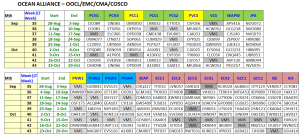
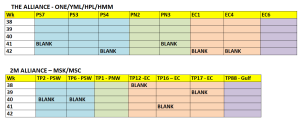
Vessel and draft restrictions on the Panama Canal have not affected most shippers — at least not yet — but the resulting queue of container ships waiting to transit the canal does bear watching for importers moving goods into the US for the coming fall and winter seasons.
On Tuesday, the Panama Canal Authority reduced the total number of ships that can pre-reserve a transit to 14 from 19, with that reduction expected to last through Aug. 21. The reduction means fewer than 34 ships can move through the canal in both directions daily, compared with the 34 to 42 it can handle at peak capacity. The reduction in the number of ships followed a move in June by the Authority that reduced the maximum draft for neo-Panamax vessels from 50 feet to 44 feet.
The latest restrictions come as a drought has reduced the level of Gatun Lake, which provides the fresh water for the canal’s locks, to about 79 feet, compared with a five-year average of 85 feet.
With the reduction in daily transits and maximum draft — the latter of which means vessels have to run lighter than usual — wait times on both sides of the canal are increasing. Port agency WaterFront Maritime Services said in a notice Thursday that neo-Panamax ships are waiting up to 18 days before transiting the canal northward, with similar delays for southbound transits.
So far, however, those delays have not translated into a significant increase in late arrivals at US East and Gulf coast ports. A cargo operations analyst at the Port of New York and New Jersey who asked not to be identified said there’s been “no impact so far” on vessel schedules to the largest East Coast seaport.
“Vessel capacity utilization is very low right now, so the impact shouldn’t be that significant since there’s capacity to absorb,” the analyst said. “It’ll be a few weeks” before delays are seen at the port.
A Gulf Coast cargo analyst said the Port of Houston’s draft limits are already below those of the canal, so vessels calling the region’s busiest gateway have not faced cargo limits.
Details please refer to JOC news.
Source:
Angell, M. (2023, August 11). Panama Canal delays raise risks for shippers, but not yet biting. Journal of Commerce. https://www.joc.com/article/panama-canal-delays-raise-risks-shippers-not-yet-biting_20230811.html
Three-quarters of the longshore rank and file have agreed to a four-year contract at Vancouver and Prince Rupert, bringing labor certainty to western Canada that has eluded the port for more than a month. The deal ensures marine terminals in the coming weeks can clear a backlog created by a gridlock in negotiations.
The International Longshore and Warehouse Union (ILWU) on Friday announced that 74.66% of its membership voted for the contract, although neither the ILWU nor employers disclosed wage levels or how the two sides were able to move through an impasse over expanding job jurisdiction.
“The renewed collective agreement includes increases in wages, benefits and training that recognizes the skills and efforts of B.C.’s waterfront workforce, while providing certainty and stability for the future of Canada’s West Coast ports,” the British Columbia Maritime Employers Association (BCMEA) said in an Aug. 4 statement.
Canada’s ministers of labor and transportation on Friday praised the collective bargaining process, although Seamus O’Regan and Juan Pablo Rodriguez, respectively, said they were reviewing how such a prolonged disruption occurred and would look for ways to bring more stability to labor and business dependent on the ports.
“This dispute caused serious disruptions to our supply chains, risking our strong international reputation as a reliable trading partner. We do not want to be back here again,” the ministers said in a Friday joint statement.
Details please refer to JOC news.
Source:
Szakonyi, M. (2023, August 6). ILWU Canada contract ratification ensures BC Port Peace. Journal of Commerce. https://www.joc.com/article/ilwu-canada-contract-ratification-ensures-bc-port-peace_20230806.html
Cargo handling at the Western Canadian ports of Vancouver and Prince Rupert was proceeding normally Monday after the longshore union and waterfront employers said in a joint statement they had reached yet another tentative contract agreement in hopes of ending the uncertainty that has hung over the ports for the past month.
Those hopes hang on winning the approval of the rank-and-file of the International Longshore and Warehouse Union (ILWU) Canada. Union members have already rejected one tentative agreement put before them last week.
It wasn’t immediately clear what is different in the latest deal reached late Sunday between ILWU Canada and the British Columbia Maritime Employers Association (BCMEA).
Some clarity was provided by the Canada Industrial Relations Board (CIRB), which issued an order on Sunday calling for a ratification vote to be held no later than Friday; the Port of Vancouver expects voting to take place Thursday and Friday.
The CIRB also ordered that the union will not strike, nor will employers engage in a lockout until the results of the vote are known.
“The parties are recommending ratification of the collective agreement to the union’s membership and member employers, respectively,” ILWU Canada and BCMEA said their statement Sunday.
ILWU Canada’s rank-and file on Friday rejected a four-year agreement that would have increased the base dockworker wage by 19.2% and included a signing bonus of C$3,000.
But ILWU Canada President Rob Ashton, in a statement posted Sunday on the union’s website, indicated that wages were not the main sticking point in the membership’s rejection last week of the initial tentative contract agreement. It’s not known when exactly Ashton’s statement was posted, but presumably it was prior to the joint statement from the union and BCMEA on a new deal being reached.
“The critical issue is the practice of contracting out maintenance work that poses a significant threat to job security and the integrity of the ILWU workforce,” he said.
Ashton added that ILWU Canada wants a renewed commitment from employers to protect ILWU jobs through contract provisions that limit or regulate the extent of maintenance work that employers can contract out.
“By implementing clear guidelines, we can ensure that our members’ livelihoods are secure and that the skills and experience of the ILWU labor force are preserved for the benefit of Canada’s supply chain,” Ashton said.
Port operations normal
Officials at Vancouver, Canada’s largest port, said cargo handling was continuing without disruption Monday.
“Regular operations at the port continue and recovery plans remain in effect,” the port said in an advisory to customers, alluding to the 14 days of strike action by longshore workers that took place earlier in July. It added that six container vessels were at berth, three at anchor and two were waiting to enter the port.
A spokesperson for the Port of Prince Rupert said cargo handling there was also proceeding normally.
Source:
Mongelluzzo, B. (2023, July 31). Western Canada Port Operations Normal as Next Union Contract Vote looms. Journal of Commerce. https://www.joc.com/article/western-canada-port-operations-normal-next-union-contract-vote-looms_20230731.html