Air cargo market expects a healthy peak season as rates and volumes rise

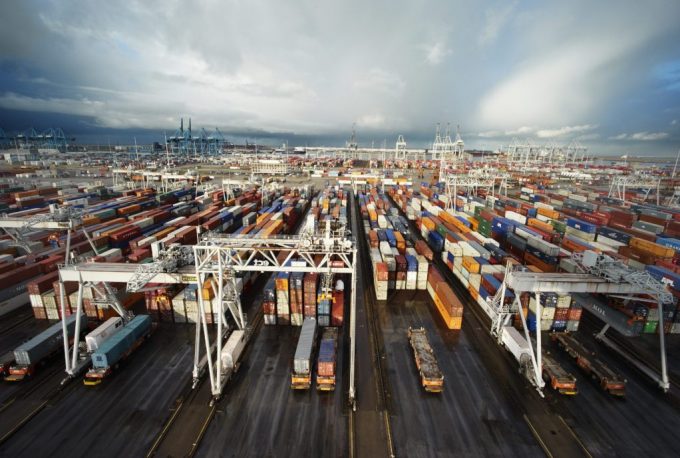
Average vessel waiting times for berth and labour have improved significantly at the San Pedro Bay ports of Los Angeles and Long Beach in the past few weeks, halving the number of queueing ships to below 50.

Moreover, according to the latest data from the Los Angeles Signal port optimiser platform, the average waiting time at LA terminals has fallen to 3.1 days, with some facilities reporting little or no delay.

Supply chain disruptions in China, improving landside operations and the continuing coastal shift to the hitherto less-congested US east and Gulf coast ports are seen as the main reasons for the easing of congestion.

However, a report from New York-based supply chain and freight platform Shifl suggests that improved inventory levels and a downturn in consumer demand could also impact import volumes.

“The Fed’s decision to raise interest rates to address concerns about inflation could result in a slowdown in retail demand at a time when inventories appear to have reached levels last seen in March 2020,” said Shifl founder and CEO Shabsie Levy.

 “It appears that, after two years of turmoil, shops are finally fully stocked. What happens next on the world’s most important tradelane depends on how fast the Fed puts the squeeze on inflation,” he said.

However, despite the weakening fundamentals, the appetite of major BCOs to take charge of their supply chains by chartering their own ships appears not to have lessened. Indeed, shipbrokers continue to report new fixtures, including a two-month extension of the 2,756 teu X-Press Mekong at a massive $180,000 a day.

According to VesselsValue data, the sub-panamax ship is due to arrive at Vancouver, Canada today, on hire to Honolulu-based transport and logistics group Pasha Hawaii. However, The Loadstar understands that it has leased the ship on behalf of Canada’s automotive, hardware, sports and household goods retailer Canadian Tire.

At the TPM22 conference at Long Beach this month, Canadian Tire VP of transportation Gary Fast alluded to voyage and time charter deals that he said had assisted the retailer. He said: “When you can’t find capacity, you have to take care of your supply chain.”

Meanwhile, New York-based Blue Alpha Capital has published February throughput data for the top 10 US container ports.

While container imports to the east coast were up 27.3% in February, compared with the same month of the year before, to 1,029,183 teu, they were skewed by the earlier timing of Chinese New Year. However, February imports to west coast ports increased by just 5.9%, to 1,025,545 teu, emphasising the continued coastal shift of cargo.

The report’s author, John McCowan, said there were three factors driving the growth in imports through the east coast gateways. He said: “First, the initial pandemic volume surge disproportionately benefited the west coast ports, and that is impacting current comparisons. Second, shippers have elected to change routing decisions for loads that would have gone to west coast ports to east and Gulf coast ports to avoid the widely reported congestion.”

Mr McCown also identified a third reason: reduced linehaul costs from using east coast-calling vessels compared with the cross-country intermodal service via the west coast.

Yantian port back at full speed; box recovery could take a month

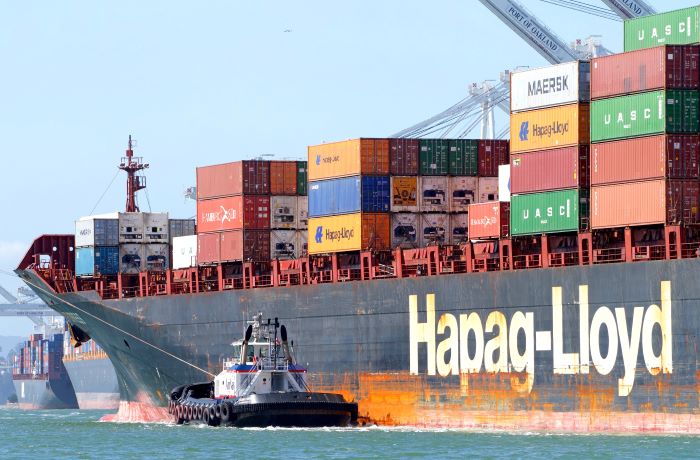
The backlog of vessels waiting to reach berths at the Port of Yantian, the largest container port in China, is gone since terminals returned to full operations on Thursday following a COVID-19 outbreak among dockworkers that significantly curtailed operations, according to an official at shipping giant A.P. Møller – Maersk.

But shippers shouldn’t expect supply chains to be immediately repaired. While Yantian officials believe they can eliminate the accumulation of stacked containers within a couple of weeks, the backlog of shipments piled up in factories and warehouses elsewhere in the Shenzhen region will take at least a month to clear, Akhil Nair, vice president of global carrier management and ocean strategy for SEKO Logistics, said during a press briefing last week.

“The backlog is physically impacting production at factories because they simply don’t have warehousing space to store finished goods that can’t ship out on time. Pretty much every forwarder or logistics provider that has a facility at any major seaport is being utilized for temporary storage,” he said.

Yantian International Container Terminals on Thursday began accepting vessels at all 11 berths after running the port at 30% of normal productivity since the third week of May. Earlier this month vessels were waiting up to two weeks for a berth.

Port officials said the number of laden containers allowed to enter the port by truck will increase to 9,000 per day after restricting movements to about 4,000 to 5,000 containers. In an effort to move cargo dwelling on the docks first, they are placing a seven-day window on new cargo entering the gate based on a booked vessel’s estimated time of arrival.

“There’s no backlog of vessels now, no waiting at anchor anymore. Berth availability is at 100%,” Maersk spokesman Thomas Boyd said in an email.

The reopening of Yantian is also bringing down wait times at the nearby ports of Shekou and Nansha, which had been handling much of the vessel overflow during the past month.

The slowdown in productivity has had a huge impact on global freight transportation. The system was already straining to keep up with a prolonged surge in demand bumping up against infrastructure, equipment and labor limits that have left ports overwhelmed and led to vessel delays, which put strong upward pressure on freight rates.

Hundreds of vessels skipped South China ports to avoid waiting at anchor seven days or more for a parking spot. In mid-June there was a estimated backlog of 160,000 containers, or about 320,000 twenty-foot equivalent units, Nair said. On average, about 15% to 20% of containers are getting rolled over to a future vessel sailing because carriers are overbooked and are prioritizing freight based on profitability or operational considerations.

Ocean executives at Flexport, a rapidly growing freight forwarder based in San Francisco, said in a presentation last week that shipping times have more than doubled this year. The transit time for an intermodal move from Shanghai to Chicago via Southern California ports, which typically takes 35 days, is now 74 days.

Ocean shipping experts say the cascade of released freight from Yantian will soon add to port congestion and vessel delays at major ports around the world, including in the U.S.

Carriers are now rediverting vessels back and resuming port calls in South China, Nair said. Ships coming to pick up export loads are likely to get first priority over vessels with empty containers to discharge so the terminals can reduce container density in their yards, he added.

Trucking restrictions in South China haven’t eased, with drivers still required to get COVID tests if they are bringing in containers from other provinces. The Port of Shekou, for example, will not accept any drivers who previously had been to Nanshan. Some terminals in the Dachang Bay area say drivers need to have a Shenzhen registration on their license plate and that they will hold drivers for 48 hours until test results are received.

Congestion backs into factories

While vessels stacked up in open water waiting to enter ports have gained media attention, out-of-public-view congestion is moving from the ports onto the factory floor.

Manufacturers in Asia are operating at full tilt as economies continue to reopen from the pandemic and consumers, flush with savings during the pandemic, flock to shopping from the convenience of their homes. After splurging on exercise equipment, electronic devices, hot tubs and other items for home recreation and offices, shoppers are buying makeup, clothing and luggage — things that improve their appearance in public or their travel experience. Meanwhile, businesses are increasing purchases of computers and machinery.

Products are being sold so fast, in many cases, that companies can’t restock shelves after inventories were depleted last year and face large order backlogs.

One furniture brand, for example, has sold out of inventory and can’t get replacements before August, said Brian Bourke, SEKO’s chief growth officer, in an interview during the spring. Another customer sold out of its top-selling fitness product.

101 Mobility, which provides home-access solutions for people with disabilities, has seen lead times to get ramps and other supplies go from several days to several weeks, with one manufacturing saying it can take three to four months to fill orders, Preston Holland, a business development manager, said on Friday’s edition of “What the Truck?”

SEKO Logistics has three warehouses in Shenzhen that are completely full with products that were supposed to be stored on a short-term basis but have been there for months, Nair said.

Retailers and other U.S. importers “want their purchase orders to continue to be manufactured and the suppliers are threatening to stop production if they don’t move the cargo out of their premises. That is leading to the increase in demand for warehousing space, particularly bonded warehousing space,” Nair said.

SEKO Logistics is advising clients to pull the trigger and execute purchase orders now for goods they need later this year, because supply chain delays combined with backlogged factories mean lead times could be six months or more compared to three months before the pandemic.

“There’s a lot of risk out there. But it seems the greater risk is not having any inventory to sell,” Bourke said.


Hapag-Lloyd warns of shipping tightness through 2022

The head of US trades at Hapag-Lloyd said the carrier will not be able to add more containerships to the trans-Pacific for the rest of the year, despite expectations that Asian imports into the US will stay strong through the end of 2021.

The message from Uffe Ostergaard during a Thursday webinar underscores how US import demand is outpacing capacity, forcing retailers and others to prioritize which goods must be in the country and which can wait until next year. The unprecedented volume pressures that began in the spring have been greater than the new capacity container lines have shifted from other trades to the trans-Pacific.

“I would never have imagined we would see five-digit trans-Pacific rates,” said Ostergaard, Hapag-Lloyd’s president, Americas.

With extra trans-Pacific carrier capacity at its limit, shippers face elevated freight rates through 2022, he said. Ostegaard stressed that trucking capacity remains well below pre-COVID-19 levels.

He said Hapag-Lloyd will have added 500,000 TEU of additional capacity through the end of 2021 to meet the elevated demand. And it has another 210,000 TEU of newbuilds on order.

However, the additional ships and other assets needed to get freight to market right now will be scarce for the foreseeable future, barring a sudden drop in demand. Alphaliner’s last survey showed the idled containership fleet stood at 171 ships, or roughly 645,500 TEU, which is 2.7 percent of the global capacity.

“It’s not like we have a whole fleet of ships sitting somewhere that are waiting to be deployed,” Ostergaard said. “Everything is working. We don’t believe we will be able to get our hands on any additional ships in the second half of 2021.”

Curveballs hit sagging system

Ostergaard said that the containership industry has faced so many “curveballs” this year, including the Suez blockage and the Yantian closure, that have made it increasingly difficult to maintain schedule reliability and provide the capacity that shippers want.

Ostergaard’s views echo that of Charles van der Steene. Maersk’s head of North American sales, who said that delays and port congestion have completely offset the capacity that Maersk has injected into the trans-Pacific.

The number of container ships at anchorage along the US West Coast has dropped from 62 in the first quarter to 52 at the start of June, Ostergaard said. While there are fewer ship delays in the Los Angeles-Long Beach ports, the congestion has shifted to the Oakland and Pacific Northwest ports, he said, adding that ships are taking up to a week to unload.

“Those are the kinds of things creating a lot of delays, but also impacting overall carrier capacity because so much of it is just waiting there,” Ostergaard said.

Ocean capacity, of course, is not the only limit facing shippers right now. Citing the JOC.com For-Hire Trucking Employment Index, Ostergaard said the level of employment in the US trucking industry remains at about where it was in 2018. Across most major US coastal and inland freight hubs, the lead time to secure a truck is seven days or more.

Drayage capacity warning

The space constraints at marine terminals are one of the biggest limits on the ability to unload vessels in a timely manner, Ostergaard said. But until more trucks can be deployed to move import loads out, terminals will remain congested, he added.

“Truck availability is the biggest concern going into Q3 and Q4,” Ostergaard said. “I don’t see how it will get resolved.”

Tight rail capacity is also hurting cargo fluidity, but it is not a nationwide problem like trucking, Ostergaard said. However, truck and chassis supply are keeping Midwest railyards full, resulting in further bottlenecks in the supply chain.

“A lot of the rail yards are congested,” he said. “Congested yards prevent cargo from ports from moving inland and the storage costs associated with those containers increase.”

With limited ability to give more capacity to customers, Ostergaard said the carrier’s near-term initiatives at least aim to make it easier for shippers to deal with the current market. He said Hapag-Lloyd has hired 100 new customer service representatives for its US offices, which will be reopening shortly.

The carrier is also offering new online services that will make it easier for shippers to handle delays. One new service will allow shippers to buy added free time for a container at a “significant discount” in the event of container being held at a terminal or a warehouse.

The new services “don’t create additional slots on ships, but it gives customers much better ability to have access to information when changes happen,” Ostergaard said.

Port congestion and rising demand forces carriers into schedule adjustments

Increased demand and worsening port congestion in Asia is forcing the east-west alliance carriers to temporarily adjust their liner service networks.

With long waits for berths on the US west coast and at several North European ports, attempts by shipping lines to recover a vessel’s schedule are being thwarted.

The 2M partners advised today they would adjust the sailing programmes of three of their Asia-North Europe loops “to match the actual departure dates from Asia”.

Maersk and MSC advised customers that the advertised sailing dates of their respective AE6/Lion, AE7/Condor and AE10/Silk services would be retrospectively amended to the actual sailing dates of the ships.

“This situation is driven by a combination of rapidly increased demand and measures to fight the pandemic across ports and supply chains in general,” said Maersk.

The carrier said accumulated delays were “causing gaps with the line-up” and had resulted in “several Asia departures being spread apart by more than seven days”.

And according to the 2M partners, the adjustments for the three loops are just the start of their network changes, which will presumably also include the other two loops to North Europe and the AE55/Griffin ‘sweeper’ service.

At the time of going to press, The Loadstar was unable to obtain confirmation from the Ocean Alliance partners of their strategy on network adjustments, but Hapag-Lloyd did confirm this morning that THE Alliance was “currently not making any changes”.

Meanwhile, worsening congestion at Hamburg and Rotterdam are forcing carriers to skip port calls in North Europe.

Last week, Maersk and MSC extended the omission of Hamburg on their AE7/Condor Loop 4 for a further four weeks, discharging cargo instead at Bremerhaven and advising shippers that this constituted “end of carriage” by the terms of their bills of lading.

Maersk said its original decision to cancel the Hamburg call at the Eurogate facility, “a result of high yard density and exceptional waiting time for our vessels”, would continue for a further four weeks as the situation had not improved.

And today, THE Alliance said it was temporarily dropping the eastbound call at Rotterdam of its Asia-North Europe FE4 loop for seven weeks, with immediate effect, “due to the ongoing congestion situation” .

Liner schedule reliability is at record lows, but carriers argue that, given the global issues of the pandemic and the demand surge across many routes, the reliability tables are an “unfair” reflection on their endeavours to improve the integrity of liner services.

“Our ship planners are pulling their hair out; every 24 hours they get a stack of delay advices from the port offices, which all have a knock-on effect down the line. It means that there is a daily adjustment needed to the network,” a carrier contact told The Loadstar.

Liner congestion spreads across the planet, 304 ships queuing for berth space

The ebb and flow of record global liner congestion is neatly encapsulated in two maps provided below from Seaexplorer, a container shipping platform .

As of 3.30 pm Singapore time today (see top map) there were 304 ships idle in front of ports around the world waiting for berth space to open up. Seaexplorer data shows there are 101 ports reporting disruption such as congestion. Officials at the digital offshoot report the number of ships forming queues hit 350 in the middle of this week before falling back to 304, the same level as this time last week (see lower map). Red dots in the enlargeable maps represent clusters of ships while orange ones mark out ports that are congested or suffering from disrupted operations.

The clear change over the past week is how the congestion, so visible in recent weeks in south China, a key export area hit by a Covid-19 outbreak, is now spreading to other important hubs. Singapore, for instance, has seen the number of boxships waiting for berth space increase by 37.5% over the past week, while intra-Asia hubs such as Laem Chabang are now reporting tailbacks and in the US, east coast ports are suffering all manner of disruptions.

While last week, boxships queueing in Chinese waters made up more than 50% of the global total, this has dropped today to less than 40% indicating the growing global congestion contagion.

Maersk, the world’s largest containerline, in a post from earlier this week discussed the stretched nature of global supply chains, something it warned was now the new normal.

“The trend is worrying, and unceasing congestion is becoming a global problem. Due to Covid-19 and a significant volume push since the end of last year, terminals are becoming global bottlenecks, be it at berths, yards or gating out cargo, and it’s continuing throughout the logistics chain – in the warehouses, the distribution centres – with numbers on the rise,” Maersk stated.

Splash reported yesterday how the partial shutdown of Yantian Port following a Covid-19 outbreak late last month is now on track to affect twice as many containers as were impacted during March’s high profile blockage of the Suez Canal.

Blank sailing data tracked at major Shenzhen ports, including Yantian, by box tracking service project44 has shot up.

Over the period of June 1 to June 15, 298 container vessels with a combined total capacity of more than 3m teu skipped Shenzhen, a 300% increase in blank sailings in one month. Though the total capacity was not meant for Yantian, the volume of loaded export containers that were left behind has caused a severe backlog.

Dwell times at Yantian also paint a grim picture. Over the last two weeks, the seven-day average of median dwell times on export containers from the Yantian terminal doubled in number, reaching 23.06 days on June 15. The mean dwell times on import containers into Yantian were lower, at 5.96 days for the same period, suggesting that carriers are avoiding the port.

“While the epicentre of this particular breakdown is Yantian, these numbers spell trouble across the maritime shipping world, and particularly for companies that rely on these routes,” said Josh Brazil, vice president of marketing at project44. “Even shipments not directly impacted by the Yantian situation could feel the impact, as carriers adjust their networks to avoid congestion at Yantian.”

Hind Chitty, principal consultant at Drewry’s supply chains advisory practice, told Splash: “Carriers are skipping Yantian port in their rotation, creating massive rollovers and multiple side effects, as an additional shortage of empty equipment in the region and an unprecedented surge in the east-west ocean freight rates, which may spread to the other trades lanes.”

Drewry’s World Container Index (WCI), published yesterday, increased 3.4% or $231 this week, and is 305.7% higher than a year ago.

The average composite index of the WCI, assessed by Drewry for year-to-date, is $5,427 per feu, which is $3,468 higher than the five-year average of $1,960 per feu.

The Shanghai Containerized Freight Index (SCFI) also climbed to new highs today, up another 44 points this week to settle on a record 3,748 points with some speculating the extraordinary market forces at play could see the SCFI cross the 4,000 mark soon.

Ripples from Yantian port delays building to ‘unprecedented’ supply chain disruption

Shippers are facing a perfect storm as the logistics industry has entered an “an era of unprecedented disruption”, with ports crippled by acute congestion as the malaise faced by China’s Yantian spreads to others.

The delays to Chinese exports, which have escalated to 16 days or more for vessels not cancelling their Yantian call, threatens an impact significantly worse than March’s Suez Canal blockage.

According to Alex Hersham, CEO and co-founder of supply chain technology company Zencargo, the knock-on effect from Yantian, which has been operating at just 20% of normal productivity due to an outbreak of positive Covid-19 cases, will be acutely felt in the coming weeks by retailers and consumers.

“Container shortages and delays will severely impact companies’ ability to deliver to customers,” said Mr Hersham.

And he warned that industries “will face shortages of materials, and countries will struggle to stock up on PPE”, and also claimed “we are in an era of unprecedented supply chain disruption”.

Ocean carriers are scrambling to mitigate the impact, Maersk, for example, confirming the omission of Yantian on 11 of its services and ad-hoc cancellations on eight others.

The carrier said the Yantian port authority had successfully re-opened part of the port, moving productivity back to around 45% of normal, but this was far from sufficient.

It told customers: “While this has a positive impact on gate activity, which is soon expected to reach the same levels as before the incident, schedule reliability will continue to suffer with an average waiting time of 16 days and counting.”

As and when the pent-up export cargo does move, this huge wave of cargo hitting European and US ports will be extremely challenging for them and their already stretched landside operations.

In the US, ports struggle to cope with peaks more than their European counterparts, but the North Europe port of Hamburg has been under intense pressure in the past few weeks and today Hapag-Lloyd advised customers of a tightening of restrictions for export cargo deliveries at Antwerp.

An advisory from the carrier said terminal operator PSA Antwerp had been “forced” to implement a “seven-day cargo opening rule” for export containers to its terminals, meaning shippers would henceforth not be allowed to deliver containers to the quay more than seven days before the confirmed arrival date of the nominated vessel.

Speaking to The Loadstar today Mr Hersham said carriers could decide to omit the UK to mitigate the impact on their schedules.

“Congestion will rise significantly, meaning that ports, and especially those already suffering such as Felixstowe, will be heavily impacted,” he said. “The scale of the issue in South China is already bigger than Suez.

“Two accurate metrics to measure disruption by are days of delay and teu; in both cases, Yantian far surpasses what happened with the Ever Given.”


Latest China Covid restrictions wreaking havoc on shipping schedules

China’s latest Covid restrictions have sparked a chain reaction, hampering trucking at container terminals across the Pearl River Delta (PRD).

Amid already severe congestion at Yantian, now “worse than Suez” and spreading to nearby Shekou and Nansha, new testing rules for truck drivers are making life even more difficult for those sourcing from South China.

According to Hong Kong-based Akhil Nair, VP global carrier management and ocean strategy at Seko Logistics, the port of Nansha now requires a negative test within 48 hours of gaining entry.

“At the same time, Yantian won’t allow a driver who has been to Nansha to come into their terminal,” he told The Loadstar. “So the number of available drivers is extremely limited.

“There’s also a lot of traffic out of Shekou and Chiwan, and DaChan Bay has just announced restricted access to Shenzhen-registered vehicles. In addition, they will require a Covid-19 test, which needs up to 72 hours for results, before port access,” he added.

DaChan Bay has been enjoying an uptick in volumes after carriers skipped Yantian, meaning the new driver-restrictions were likely to create a “domino effect”, noted Mr Nair.

“You have so many terminals [in the PRD] and carriers are quick to divert. But as they lock the terminals down, if you’re a driver stuck in one queue, your only choice is to wait. Because of this, the feeders, barges and all the network plans are going out the window.”

Indeed, with much of Hong Kong’s transhipment cargo originating in the PRD, Mr Nair thinks it will lead to “massive congestion in Hong Kong as well, in terms of trucking and yard density”.

He added: “The terminals in Hong Kong are operating fine, but the problem is yard density. If barges in Yantian and Nansha are delayed for three or four days, a lot of them will come to Hong Kong instead.”

Meanwhile, Yantian is beginning to recover, in terms of export operations, albeit very slowly.

“The terminal expects to ramp up operations to 60% over the next two weeks, so I think this is going to last until we see Yantian recover, around the end of June at least,” Mr Nair said.

In the meantime, the number of schedule changes and port omissions continues to escalate rapidly. For example, Maersk’s list of impacted vessels has jumped to 64 from 40 just two days ago.

Lars Jensen, CEO of Vespucci Maritime, said there were now 153 vessels impacted and 132 complete omissions in the region, which compares with only 87 ships directly affected by the six-day Suez Canal blockage.

As China ramps up its Covid measures, in scenes reminiscent of the Wuhan outbreak last year, Mr Jensen also warned of the potential for further shipping disruption.

“It is a realistic risk that [Covid] cases might appear in other places of China, such as Shanghai, Ningbo, Tianjin or other major port areas. Should that happen, the disruption to shipping schedules would take on even larger proportions,” he said.

Carriers scrambling to add capacity in overheated trans-Pacific

Two Chinese shipping lines will enter the booming trans-Pacific trade in the coming weeks, and a freight forwarder is reportedly seeking to join the fray as soon as it charters ships.

In another development that highlights the explosive demand for US imports now in its 11th month, a spokesman at HMM confirmed Wednesday the South Korean carrier intends to deploy at least four extra-loader vessels to the West Coast in each of the next two months, up from two currently.

The frenzied activity in the largest US trade lane is being driven by 10 consecutive months of record or near-record import volumes from Asia, and record-high freight rates that continue to increase, making any additional capacity a lucrative investment for carriers.

Gene Seroka, executive director of the Port of Los Angeles, told JOC.com Wednesday that BAL Container Line and China United Container Line have notified the port they will initiate services to the Los Angeles-Long Beach gateway in the coming weeks. Those carriers operate in other China trade lanes, but this would be their first activity in the trans-Pacific, he said.

Noel Hacegaba, deputy executive director and chief operating officer at the Port of Long Beach, confirmed those lines will enter the China to Southern California trade. “This is indicative of the heightened demand in the trans-Pacific, and the preference of carriers for the Southern California gateway,” he said.

The details of the new services are still uncertain and continue to evolve, both port executives said. While it appears the vessels will be in the range of 2,500 to 3,000 TEU capacity, the lines have not released information as to how many vessels they will deploy, or whether they will even have enough ships to offer fixed weekly services.

HMM extra-loaders

Another service that is possible, according to the port executives, would be operated by a non-vessel-operating common carrier (NVO), although that service has yet to be finalized pending the ability of the NVO to secure vessels.

HMM, which has been deploying extra-loader vessels in the trans-Pacific in addition to its schedule of weekly services, will increase its extra-loader deployments at least in July and August. The HMM spokesman said the carrier in July will increase its extra-loader deployments from two to four, and in August to four or five sailings. The plans are subject to change, he said.

The HMM extra-loaders will call at Busan, South Korea, and will also call at a port or ports in China. Vessel sizes range from 5,000 to 6,500 TEU, the HMM spokesman said.


South China congestion exceeding Suez blockage disruption

Quickly deteriorating cargo flows thorough Southern China after congestion spread beyond pandemic-hit Yantian International Container Terminals is creating a scale of disruption greater than the six-day blockage of the Suez Canal in March.

With eastbound trans-Pacific demand outpacing vessel capacity and ocean reliability already below 25 percent on both China-US and China-Europe trades, supply chain executives and analysts warn of fast-widening disruption linked to Yantian.

“Shippers should not underestimate the magnitude of the coming ripple effects,” Lars Jensen, CEO of Vespucci Consulting and a JOC.com analyst, wrote in a LinkedIn post Tuesday.

Jensen estimated that Yantian has been unable to handle 357,000 TEU over the past 14 days of disruption. By way of context, he said the Suez Canal blockage lasted six days and affected a daily flow of 55,000 TEU, or some 330,000 TEU in total. Also needing to be factored in is the impact the Yantian congestion is having on the other Shenzhen terminals, where productivity is also being limited by COVID-19 measures.

“Every day increases the pile of backlogged cargo,” Jensen noted. “Once the ports re-open normal operations we should expect a surge of cargo – at least to the degree there are even vessels available to handle this. This in turn will cause ripples of potential congestion at the destination with a lag time of some two to five weeks.”

Yantian, one of the busiest deep-sea terminals in Shenzhen, handles 25 percent of China-US trade, according to HSBC Global Research, with 13.3 million TEU in total crossing its busy wharves in 2020. But following a COVID-19 outbreak on May 21, its west terminal was shut and productivity at the east terminal fell to 30 percent. In response, carriers have announced scores of Yantian cuts to their schedules up until the first week of July.

The 2M Alliance of Maersk and Mediterranean Shipping Co. (MSC) announced 40 vessels will omit calls at Yantian until July 5, while THE Alliance will cut 16 calls over the next four weeks, and 11 vessels from CMA CGM will drop Yantian up to June 19.

More than 40 vessels are believed to be currently waiting to enter the terminal. With export containers stacking up, and quarantine measures limiting the availability of truck drivers, the disruption is spreading through South China ports.

Data from visibility solutions provider FourKites shows dwell time increasing over the last two weeks at Yantian from five days in mid-May to eight days for the week of May 30. FourKites also noted a shipment volume drop of 44 percent and 39 percent during the weeks of May 23 and May 30, respectively, compared to the week of May 9.

No easy alternatives

Export containers and returning empties are rapidly stacking up, leaving shippers from the manufacturing hub of Guangdong Province in South China scrambling for alternatives.

“When the COVID-19 cases first broke out we estimated a week delay for our cargo with some rollovers, but now it will be at least three weeks and that is severe for promotional goods or cargo that has any urgency,” an Asia-Europe shipper based in Hong Kong told JOC.com Tuesday.

“It is simply complete chaos,” was the view of a European importer in Germany. “We are looking at Hong Kong as an option, or Nansha or Shekou.”

A spokesman for DB Schenker said the congestion was expected to last “at least for the rest of June,” with export cargo being redirected to alternative ports such as Nansha and Hong Kong. “The situation presents additional challenges to managing the space and equipment for the US market, which is already very tight,” the spokesman told JOC.com.

DHL Global Forwarding said in a statement it was also encouraging customers to divert shipments to the other Shenzhen terminals of Shekou or Chiwan, the Guangzhou terminal of Nansha, or Hong Kong “until the situation eases.”

Getting boxes into those alternative ports has become a challenge, however. Ports in South China are already operating at high levels of productivity because of sustained and heavy demand from US importers. The widening congestion in Shenzhen has seen terminals imposing drop-off and collection restrictions on containers, with Yantian, Shekou, and Chiwan only accepting laden boxes three days prior to the vessel departure. Nansha and Da Chan Bay require drop-off seven days before the vessel departure.

Forwarders said consigning cargo through Hong Kong had its own challenges, requiring clearance by both Hong Kong and China customs. And while barge services were available direct to Hong Kong’s Kwai Chung Container Terminal, cross-border trucking could only be carried out by Hong Kong–based drivers and trucks.

Further complicating a shift from Yantian to alternative South China terminals are tightening quarantine measures as COVID-19 infections spread. According to a SEKO Logistics update Tuesday, all drivers from high-risk areas are being quarantined for 14 days and can only enter Yantian after two negative tests.

Spot freight rates have already begun to react to the disruption. Since May 27 when the Yantian infections were detected, rates have risen by $251 per FEU on the South China-US West Coast to $4,725, and have increased by $350 per TEU to a record $5,435 on South China-Europe, according to rate benchmarking platform Xeneta. On top of the spot rates, carriers are also levying surcharges of up to $2,500 to guarantee space.

Maersk told customers in an advisory this week that Yantian yard density remains elevated with disinfection and quarantine measures being continuously implemented. “We expect continued terminal congestion and vessel delays upwards of 14 days,” the carrier noted.


Threat to sailing schedules from new congestion problem at Yantian port

Severe congestion has resurfaced at Hutchison’s Yantian International Container Terminal (YICT) in Shenzhen, prompting the port to stop accepting laden export containers last night.

YICT said: “Due to increasingly serious delays in vessel schedules, the container yard is now in high utilisation rate, which seriously affects the efficiency of terminal operations. This also causes traffic congestion around the port area.”

Imports and empty container movements will carry on as normal, YICT added, with laden exports expected to resume on Friday.

However, YICT said only laden containers within four days of a vessel’s estimated time of arrival would be accepted, until 3 June.

Several Covid-19 cases were reported at Yantian this week, resulting in suspension of operations at three of the port’s 20 berths for disinfection. One Chinese agent said this had resulted in “insufficient manpower on duty”.

The agent added: “Serious congestion has occurred at Yantian Wharf, and vehicles entering the port to drop off containers have lined up in the channel entering the wharf. The operation time of container return is severely delayed and ship berthing, loading and unloading are all affected to a certain extent.”

A major export gateway in South China, YICT handled 13.35m teu last year, up 2.1% and the port is no stranger to heavy congestion, having suffered major truck queues just prior to Chinese New Year.

Australian forwarder Neolink warned customers the export suspension would “cause massive space and equipment challenges, not just for the port of Yantian but also for Shekou port, as, inevitably, shippers try to pivot and rebook/redirect cargo.”

Neolink recommended shippers with critical orders planned for sea freight in South China over the next two weeks should start considering air freight options.

“We anticipate this will start to put more pressure on already forecasted increases to shipping rates, not just for sea freight, but also for air freight, as supply chains try to move goods that cannot afford to be caught in the congestion,” the forwarder said.

Indeed, Stefan Holmqvist, MD of Norman Global Logistics Hong Kong, said many shipments were now facing extra transport costs ranging from $500-$1,000 to handle and reroute.

“It’s complicated to manage the transport and traffic control,” he told The Loadstar. “Also, the LCL terminals are affected too as the congestion has impacted the ability to get the containers to load, to and from the yard.”

According to Worldwide Logistics Group, the slow turnaround of vessels at destination ports is the main culprit playing havoc with shipping schedules.

“Space continues to be in short supply,” said WLG president and CEO Joe Monaghan. “The slow turnaround of vessels due to port delays caused by congestion results in unscheduled blank sailings at a time when we need more sailings, not fewer.”

Willy Fong, the forwarder’s MD in Asia, said WLG expected “at least one blank sailing a week” in June, from Yantian and Hong Kong to the US west coast.

He added: “Space will be cut by half, with some carriers only releasing premium service containers and very little FAK [freight all kinds] cost container space availability.

“Carriers have not announced blank sailings from Shanghai and Ningbo, but if the vessels are not able to return from the US, that will force them. The same situation holds true in South China.”